
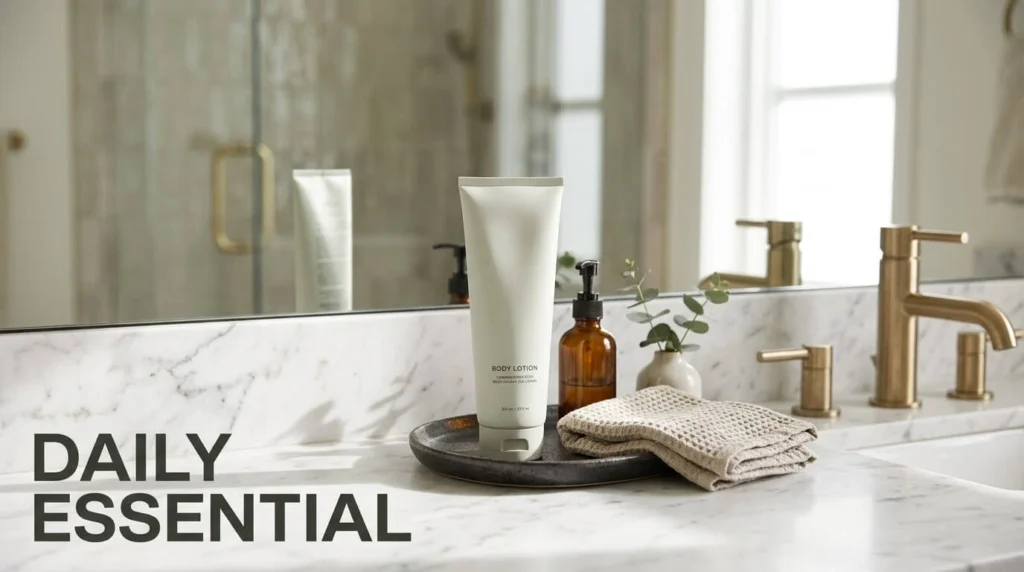
You step out of the shower, rub a bit of lotion on your arms, and an hour later your skin feels tight and flaky again. Sound familiar?
Most people blame their skin. The real problem is usually the product, or the way it’s being used. A good body lotion doesn’t just smell nice. It protects your skin barrier, holds in water, and keeps your skin comfortable all day.
In this guide, you’ll learn what body lotion actually does, how to read an ingredient label without a chemistry degree, which formula suits your skin type, and the habits that make the biggest difference. By the end, you’ll know exactly what to look for next time you’re standing in the skincare aisle.
What Is Body Lotion and What Does It Do?
Body lotion is a water-based moisturiser designed to hydrate, soften, and protect the skin on your body. It usually combines water, oils, and humectants (ingredients that draw moisture in) in a light formula that spreads easily.
Your skin’s outer layer works like a brick wall. The “bricks” are skin cells, and the “mortar” is a mix of natural fats that keeps water in and irritants out. When that mortar wears down through hot showers, cold weather, harsh soaps, or ageing, moisture escapes and skin turns dry, rough, or itchy.
A well-made body lotion does three jobs:
- Adds water to the top layer of skin
- Locks it in so it doesn’t evaporate
- Supports the barrier so your skin stays resilient
Body Lotion vs Body Cream vs Body Butter
People often mix these up, so here’s the simple version.
- Lotion: The lightest of the three. It’s high in water, absorbs quickly, and suits daily use, especially in warm weather or for normal to slightly dry skin.
- Cream: Thicker, with more oil. It works better for dry skin or colder months.
- Body butter: The richest option, often made with shea or cocoa butter. It’s best for very dry patches like elbows, knees, and heels.
If you only want one product for the whole year, a good lotion is the easiest place to start. You can always layer something richer on stubborn areas.
How to Choose the Best Body Lotion for Your Skin Type
There’s no single “best” product. The right one depends on your skin and your climate.
Body Lotion for Dry Skin
If your skin feels tight, looks dull, or flakes, look for a body lotion with ceramides, glycerin, shea butter, or hyaluronic acid. Ceramides help rebuild that protective barrier, while glycerin pulls water into the skin. Fragrance-free formulas are often gentler here, because dry skin is more easily irritated.
Body Lotion for Oily or Combination Skin
Yes, the skin on your body can be oily too, particularly on the back and chest. A light, gel-like or fast-absorbing lotion works best. Look for words like “non-comedogenic” and “lightweight.” Avoid heavy butters on areas prone to breakouts.
Body Lotion for Sensitive Skin
Keep the ingredient list short. Choose products labelled fragrance-free, dye-free, and hypoallergenic, and try a small patch on your inner arm for a day or two before using it all over. Oat-based ingredients like colloidal oatmeal are widely used to calm irritation.
Body Lotion for Mature Skin
Skin produces fewer natural oils with age, so richer formulas help. Ingredients like peptides, urea (in low concentrations), and plant oils can improve softness and bounce.
Ingredients Worth Looking For (and a Few to Be Careful With)
You don’t need to memorise a long list. Think in three categories.
Humectants draw water into the skin. Common examples are glycerin, hyaluronic acid, and panthenol.
Emollients soften and smooth. Think shea butter, squalane, and plant oils like jojoba or sweet almond.
Occlusives seal moisture in. Petrolatum, dimethicone, and beeswax all do this well.
A good body lotion often contains at least one from each group.
What to Be Careful With
- Heavy fragrance: It’s a common trigger for irritation, especially if you have eczema-prone skin.
- Drying alcohols: Ingredients such as “alcohol denat.” can leave skin feeling tight. (Fatty alcohols like cetyl alcohol are fine and actually soften skin.)
- Unnecessary dyes: Not harmful for everyone, but they add nothing to the formula.
If you have a diagnosed skin condition, check with a pharmacist or dermatologist before switching products.
How to Apply Body Lotion the Right Way
Even the best formula underperforms if you use it at the wrong time. These habits matter more than most people realise.
Apply It on Damp Skin
This is the simplest upgrade you can make. After showering, gently pat yourself with a towel, leaving your skin slightly damp, then apply your lotion within a few minutes. The product traps that surface water instead of letting it evaporate.
Use the Right Amount
A common mistake is using too little. For your whole body, you’ll typically need a generous palm-sized amount for each limb and a bit more for your torso. If your skin still feels tight after a few minutes, add a little more.
Massage Until It Absorbs
Use long, upward strokes and give extra attention to drier zones such as shins, elbows, hands, and feet. Gentle massage also helps the product spread evenly.
Be Consistent
Moisturising once a week won’t do much. Aim for once a day at minimum, and twice (morning and night) during winter or if your skin is very dry.
Common Body Lotion Mistakes to Avoid
Many people make a few of these without noticing:
- Taking very hot showers. Hot water strips natural oils. Lukewarm is kinder.
- Skipping lotion when skin looks fine. Prevention works better than repair.
- Choosing by scent alone. A lovely smell is a bonus, not a sign the product works.
- Ignoring sun protection. Some lotions include SPF, but if yours doesn’t, you still need sunscreen on exposed areas.
- Never switching products. Your skin changes with the seasons. A light lotion in summer may not be enough in January.
Seasonal Tips: Adjusting Your Body Lotion Routine
In summer, a light, fast-absorbing lotion is usually enough, and a gel-lotion can feel refreshing after sun exposure. In autumn and winter, central heating and cold air dry skin out quickly, so switch to a creamier formula or layer a richer product over your usual body lotion on problem areas. If you travel between climates, keep a small bottle handy so you can adapt quickly.
Frequently Asked Questions About Body Lotion
How often should I use body lotion?
Once a day is a good baseline. If your skin is very dry, apply it twice daily, ideally right after washing, when skin is still slightly damp.
Can I use body lotion on my face?
It’s best not to. Facial skin is thinner and more prone to breakouts, and body products can contain heavier fragrance or oils that don’t suit it. Use a moisturiser made for your face instead.
What’s the best time of day to apply body lotion?
After a bath or shower is ideal, whether that’s morning or evening. Many people prefer night, because the lotion can work undisturbed while they sleep.
Why does my skin still feel dry after using body lotion?
Common reasons include using too little product, applying it to completely dry skin, taking very hot showers, or choosing a formula that’s too light for your skin type. Try a richer product and apply it to damp skin. If dryness persists or becomes itchy or inflamed, speak with a healthcare professional.
Is expensive body lotion better than a cheaper one?
Not necessarily. Price often reflects branding and packaging. A simple, affordable lotion with glycerin and ceramides can outperform a luxury product with a long list of fancy extras. Read the ingredients rather than the price tag.
Final Thoughts
Choosing the right body lotion is about matching the formula to your skin, applying it at the right moment, and sticking with it. Start with your skin type, look for a balance of humectants, emollients, and occlusives, and apply it after every shower while your skin is still damp.
Give your new routine two to three weeks. You should notice softer, smoother, more comfortable skin without needing to reapply every few hours.
Ready to try it? Pick one lotion that fits your skin type from the guide above, use it daily for the next three weeks, and see the difference for yourself. Then share your experience in the comments: which body lotion has worked best for you?