

You have tried the thick creams, the “intense hydration” bottles and the lotions that promise 24-hour moisture. Yet your elbows are still rough, your shins flake by noon, and the tiny bumps on your upper arms won’t budge.
If that sounds familiar, you have probably heard people rave about amlactin lotion. It has a loyal following among dermatology patients and skincare fans, and it has been around for decades. But it isn’t a regular moisturizer, and using it like one is the most common mistake people make.
In this guide, you will learn what amlactin lotion actually does, how to apply it without irritation, and who should be careful with it. By the end, you will know whether it deserves a spot in your routine.
What Is AmLactin Lotion?
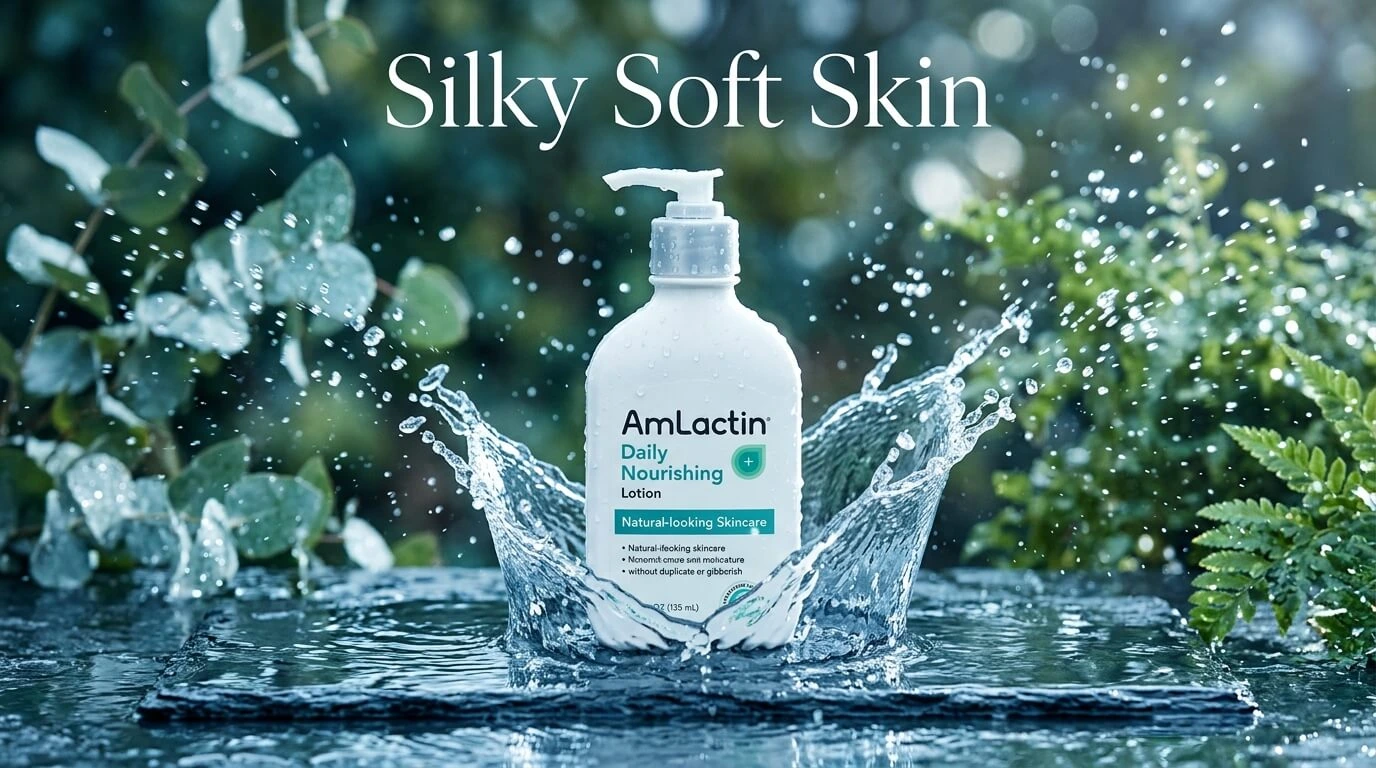
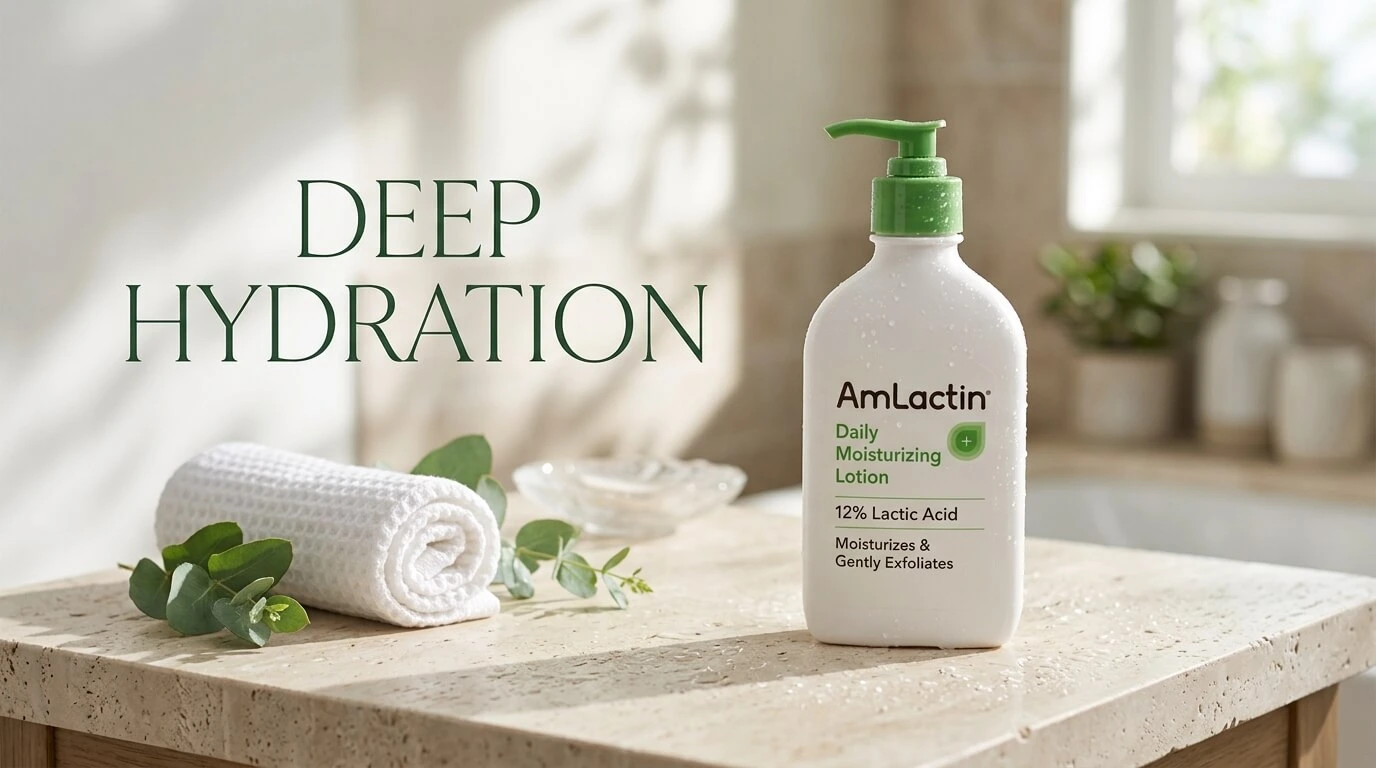
AmLactin lotion is an over-the-counter body moisturizer built around lactic acid, a gentle alpha hydroxy acid (AHA). The classic formulas contain 12% lactic acid, and some versions go higher, so always check the label of the exact product you buy.
Quick answer: AmLactin lotion is an exfoliating moisturizer that uses lactic acid to loosen dead skin cells while hydrating the skin underneath. It is mainly used for dry, rough, flaky or bumpy skin on the body.
The lactic acid does the exfoliating, and the lotion base does the moisturizing. That is why this product feels different from an ordinary cream. It works on the surface of the skin instead of only sitting on top of it.
How Does AmLactin Lotion Work?
Your skin sheds dead cells all the time. When dry skin or conditions like keratosis pilaris slow that process down, the dead cells pile up. The result is a dull, rough, sometimes scaly surface.
Lactic acid helps break the “glue” that holds those dead cells together. Once they loosen, they shed more easily, and the smoother skin underneath can hold moisture better.
Lactic acid is also a humectant, which means it pulls water into the skin. That is one reason amlactin lotion is often gentler than other exfoliating acids, even though it is still an active ingredient and deserves respect.
What Is AmLactin Lotion Used For?
People reach for amlactin lotion for a handful of common problems. Here are the main ones.
AmLactin Lotion for Dry, Flaky Skin
Everyday dryness, especially in winter or in air-conditioned rooms, is the most common reason people use it. Because it removes the dry top layer, moisturizer can actually absorb instead of sitting on flakes.
AmLactin Lotion for Keratosis Pilaris (Chicken Skin)
Those small, rough bumps on the upper arms, thighs or buttocks are caused by keratin plugging the hair follicles. Regular use of a lactic acid product is a well-known approach to softening them. It won’t cure the condition, and the bumps can return if you stop, but many people see visibly smoother skin within a few weeks.
AmLactin Lotion for Rough Heels, Knees and Elbows
Thick, hard-working areas build up dead skin fastest. A lotion with exfoliating power can soften these patches far better than a plain moisturizer.
Can You Use AmLactin Lotion on Your Face?
Generally, no. The body formulas are made for thicker skin on the arms, legs and torso. Facial skin is more delicate, and the fragrance and acid level can irritate it. If you want lactic acid for your face, choose a product made for faces and ask a dermatologist if you are unsure.
How to Use AmLactin Lotion Correctly
Here is where most people go wrong. They slather it on like a regular lotion, every day, all over, and then wonder why their skin stings. A slower start gives better results.
Quick answer: Apply a thin layer to clean, dry skin once a day, then build up to twice daily only if your skin tolerates it.
- Do a patch test. Put a small amount on your inner forearm and wait 24 hours. If you see redness, burning or itching, don’t use it.
- Start once a day. Many people do best applying it at night after a shower.
- Use a thin layer. More lotion doesn’t mean faster results, only a higher chance of irritation.
- Skip broken skin. Avoid cuts, scrapes, sunburn, eczema flare-ups or shaving nicks. Lactic acid will sting there.
- Be patient. Smoother skin usually shows up after one to two weeks of consistent use, and bumpy skin can take longer.
If your skin feels tight or looks red, take a few days off and then come back to it every other day.
Benefits of AmLactin Lotion
When used properly, here is what you can realistically expect:
- Smoother texture as dead skin cells shed more evenly
- Better hydration, since the lotion base and the lactic acid both help hold water in the skin
- Reduced roughness on elbows, knees and feet
- Softer-looking bumps for people with keratosis pilaris
- A better canvas for other products, because moisturizers absorb more easily on smoother skin
It is also easy to find, widely available in pharmacies, and usually cheaper than many specialty body treatments, which is part of why it has stayed popular for so long.
Side Effects and Who Should Be Careful
Amlactin lotion is generally well tolerated, but it is still an exfoliating acid. Be aware of these things.
Possible side effects include stinging, burning, redness, itching and dryness, especially in the first few days.
Sun sensitivity is the big one. AHAs can make your skin more sensitive to ultraviolet light. If you use amlactin lotion on areas that get sun, wear sunscreen and cover up when you can.
Talk to a doctor first if you:
- Are pregnant or breastfeeding
- Have very sensitive skin, eczema or psoriasis on the area
- Use prescription retinoids or other strong exfoliants on the same skin
- Are treating a child, since the label may not recommend it for young kids
This article is general information, not medical advice. If a skin problem is painful, spreading or not improving, a dermatologist is the right person to ask.
Tips to Get the Best Results From AmLactin Lotion
A few habits make a real difference:
- Don’t stack acids. Using amlactin lotion alongside scrubs, glycolic acid or salicylic acid on the same area can overdo it.
- Moisturize on top if needed. If your skin feels dry, a plain, fragrance-free cream layered over it can help.
- Skip it right after shaving. Freshly shaved skin has tiny nicks that make the lotion sting. Use it later in the day or the next evening.
- Stay consistent. Smooth skin fades quickly when you stop, so many people keep a maintenance routine of a few times a week.
Frequently Asked Questions
How long does amlactin lotion take to work?
Most people notice softer skin within one to two weeks. Stubborn roughness or keratosis pilaris bumps may take four weeks or more, and results depend on how consistently you use it.
Can I use amlactin lotion every day?
Yes, many people do, but build up gradually. Start with once daily or every other day, and step back if your skin feels irritated.
Is amlactin lotion good for keratosis pilaris?
It is one of the most commonly recommended over-the-counter options because lactic acid helps loosen the keratin buildup. It manages the condition rather than curing it, so you will likely need to keep using it to maintain results.
Can I use amlactin lotion with retinol?
It is best not to layer them on the same area at the same time, since both can dry out or irritate skin. If you use both, apply them on different nights, and ask a dermatologist if you are unsure.
Does amlactin lotion lighten dark spots?
It may help improve uneven texture and dullness over time, but it is not a dedicated treatment for dark spots. For stubborn discoloration, a dermatologist can suggest better options.
Final Thoughts
Amlactin lotion earns its reputation because it solves a problem ordinary moisturizers can’t: it deals with the dead skin buildup that keeps your skin rough, and it hydrates in the same step. Used gently, patiently and with sunscreen on sun-exposed areas, it can make a real difference to dry, bumpy body skin.
Start small, patch test first and give it a couple of weeks before judging the results. If you try amlactin lotion, share how it worked for you in the comments below, and tell us which area of your skin you are hoping to improve.