
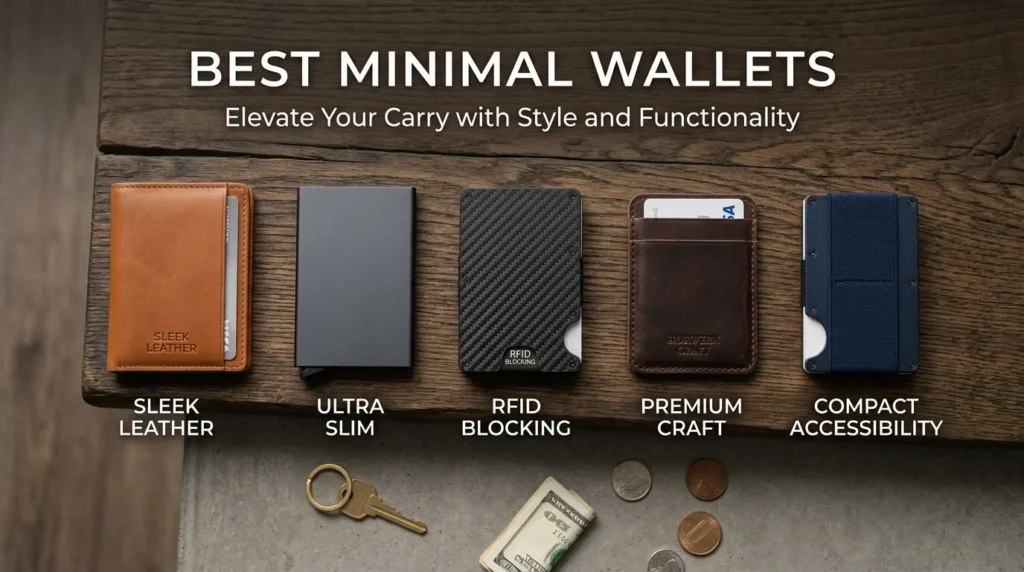
A wallet does not need to be bulky to be useful. In fact, carrying fewer cards and less cash can make everyday life noticeably easier. Best minimal wallets are designed around this simple idea: keep the essentials close while removing unnecessary bulk from your pocket or bag.
Whether you prefer leather, metal, fabric, or a modern card holder, there are plenty of compact options available today. The challenge is knowing which features actually matter. Is a thinner wallet always better? Should you choose a money clip or card sleeve? How much protection do you really need?
This guide explores the main types, materials, features, advantages, and buying considerations so you can choose a slim wallet that fits your lifestyle without sacrificing convenience.
1. What Is a Minimal Wallet?
A minimal wallet is a compact accessory designed to carry only the items you genuinely need. Instead of providing numerous compartments for receipts, coins, photographs, loyalty cards, and old membership cards, it focuses on essentials such as payment cards, identification, and a small amount of cash.
Think of it like packing a small travel bag for a one-day trip. You do not take your entire wardrobe; you take what you are actually going to use. A minimalist wallet follows the same philosophy.
Most designs are smaller and thinner than traditional bifold wallets. Some can hold only a few cards, while others include a money clip, cash strap, or small cash compartment.
Common items carried in a slim wallet include:
- Debit or credit cards
- Identification
- Driver’s license
- A few banknotes
- Transit or access cards
- One or two essential membership cards
The goal is not necessarily to own the smallest wallet possible. Instead, the goal is to create a comfortable balance between capacity, convenience, security, and appearance.
2. Why Are Slim Wallets So Popular?
The popularity of compact wallets comes largely from changing lifestyles. Many people now use smartphones for tickets, loyalty programs, digital identification, payments, and other everyday tasks.
As digital alternatives replace physical items, carrying a large wallet can feel unnecessary.
A slim design also creates a more comfortable pocket experience. A traditional wallet filled with cards and receipts can become surprisingly thick. It may press against your leg when sitting, create an obvious outline in clothing, or simply feel inconvenient when walking.
A smaller wallet solves many of these problems.
Less bulk means greater comfort. You can place it in a front pocket, jacket pocket, handbag, or small compartment without feeling as though you are carrying an extra accessory.
Minimal wallets can also encourage better organization. When space is limited, you naturally become more selective about what you carry.
3. Different Types of Minimal Wallets
There is no single design that works for everyone. Compact wallets come in several forms, each with its own strengths.
Card Holders
A card holder is among the simplest options. It typically consists of one or several slots designed for payment and identification cards.
This style is ideal if you rarely carry cash.
Money Clip Wallets
A money clip wallet combines card storage with a mechanism for holding banknotes. It offers a useful middle ground between a traditional wallet and a card holder.
If you regularly carry cash but dislike bulky designs, this can be a practical choice.
Slim Bifold Wallets
A compact bifold retains the familiar folding structure of a traditional wallet while reducing unnecessary thickness.
This option can be especially useful for people who want a familiar layout but still want to reduce pocket bulk.
Cash Strap Wallets
Instead of using a traditional bill compartment, these wallets use a strap to secure folded banknotes.
They can be extremely thin and are particularly suitable for people who carry only a small amount of cash.
Metal Card Wallets
Metal wallets often use aluminum, titanium, or stainless steel. They provide a distinctive appearance and can offer strong structural durability.
However, they may feel less flexible than leather or fabric options.
4. Choosing the Right Material
The material of a wallet affects its appearance, durability, flexibility, weight, and overall feel.
Leather
Leather remains one of the most popular choices because it combines classic appearance with durability.
Quality leather can develop a unique character over time. Small marks and changes in color can create a natural patina, making the wallet look increasingly personal.
However, leather wallets can vary greatly in quality. A cheap leather product may not offer the same longevity as a well-made wallet using better materials.
Aluminum
Aluminum wallets are lightweight and rigid. They are often used in modern card-storage systems and can provide a sleek, contemporary appearance.
They are especially appealing to people who prefer technical-looking accessories.
Titanium
Titanium is known for being lightweight and strong. A titanium wallet can be a good option for someone who values durability without wanting excessive weight.
The main drawback is usually cost, as titanium construction can be more expensive.
Fabric and Synthetic Materials
Fabric, nylon, and synthetic materials can create lightweight and flexible wallets.
These are often practical choices for casual lifestyles, travel, outdoor activities, or people who do not want to spend heavily on a wallet.
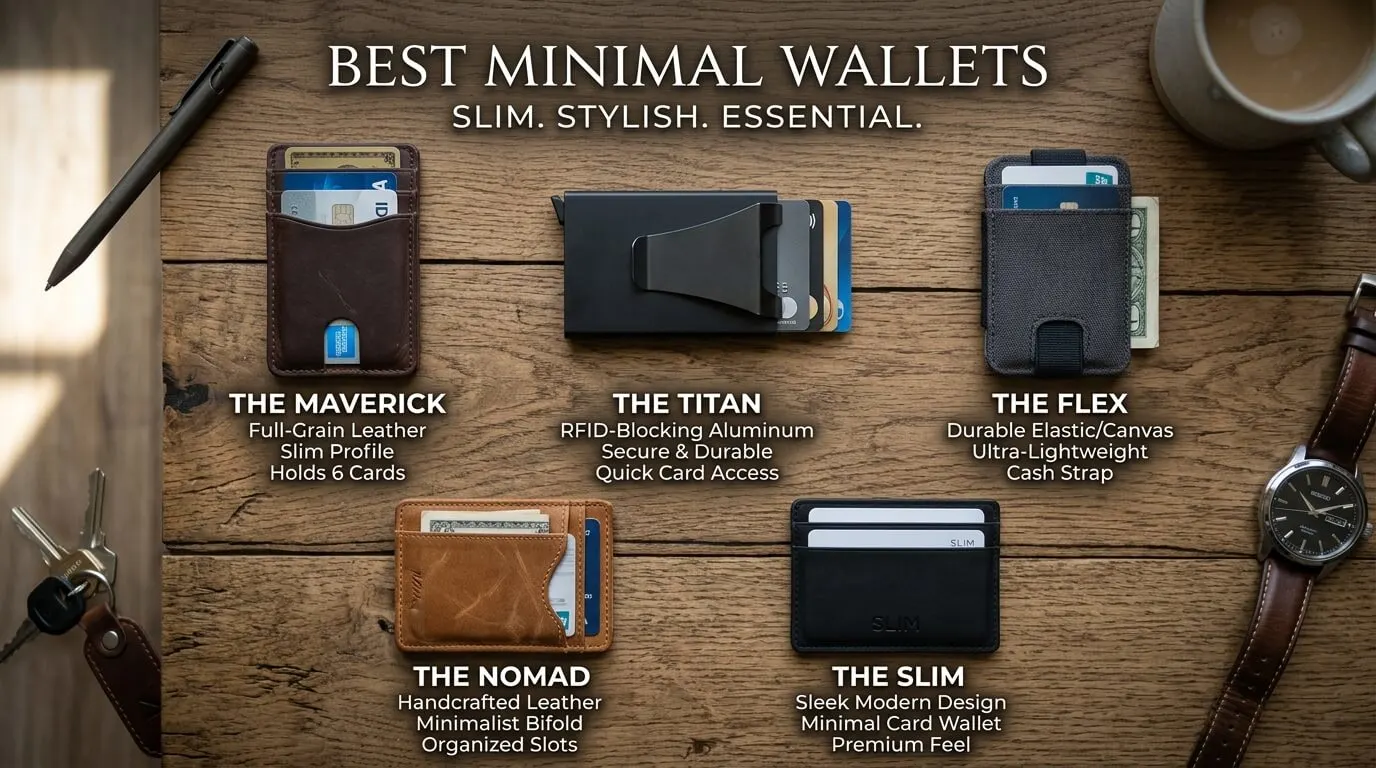
5. How Many Cards Should a Minimal Wallet Hold?
Capacity is one of the most important considerations.
A wallet that is too small can become frustrating. One that is too large defeats the purpose of going minimalist.
For many people, a capacity of around 4 to 8 frequently used cards is a practical starting point. Your ideal number may be higher or lower depending on your lifestyle.
Before buying, make a list of the cards you actually use.
For example:
- Identification
- Primary debit card
- Primary credit card
- Health or insurance card
- Transportation card
- One essential membership card
You may discover that several cards currently sitting in your wallet are rarely used.
This is where minimalist design becomes useful. It encourages you to separate essentials from things you carry simply because you have always carried them.
6. Security Features to Consider
A compact wallet can still provide useful security features.
One feature frequently discussed with modern wallets is RFID protection. RFID technology allows compatible cards to communicate wirelessly with readers. Some wallet designs incorporate materials intended to reduce unauthorized wireless reading.
However, security should not be the only factor in your purchase.
Physical construction matters too. Look for secure card retention, strong stitching where applicable, durable clips, and reliable closures.
Useful security-related features may include:
- RFID-blocking construction
- Secure card slots
- Strong cash clips
- Button or elastic closures
- Durable materials
- Concealed storage
- Good resistance to bending and wear
Remember that a wallet is only one part of personal security. You should also use sensible financial practices, protect your PINs, monitor transactions, and avoid carrying unnecessary identification.
7. Comfort and Pocket Size Matter More Than You Think
A wallet can look fantastic online but feel uncomfortable in real life.
Before choosing one, consider where you normally carry it.
A front-pocket user may prefer a very thin card holder. Someone who keeps a wallet in a jacket might appreciate slightly greater capacity.
The shape also matters.
A wallet with sharp corners can be uncomfortable against your body. A smooth, rounded design may be easier to carry for long periods.
Thickness is another important factor. Remember that the advertised thickness of an empty wallet does not necessarily represent its thickness when filled.
A wallet that looks extremely thin on its own may become considerably thicker once you add several cards and folded cash.
8. Minimal Wallets for Different Lifestyles
The ideal design depends heavily on your routine.
For Everyday Commuters
If you travel regularly, consider a wallet with secure card storage and easy access. A transit card slot can be particularly useful if you frequently use public transportation.
For Frequent Travelers
Travelers may need additional capacity for identification, payment cards, and emergency cash.
A slightly larger minimalist wallet can therefore be more practical than an ultra-thin card sleeve.
For Business Professionals
A leather card holder or refined slim bifold can provide a polished appearance without looking bulky.
If you attend meetings or formal events, material and finish may matter just as much as capacity.
For Outdoor Enthusiasts
People who spend time hiking, cycling, or participating in outdoor activities may prefer lightweight synthetic materials that can tolerate moisture and rougher conditions.
For Digital-First Users
If you primarily pay with your smartphone and rarely carry cash, a small card sleeve may be all you need.
9. Features Worth Paying For
Not every expensive feature adds real value. The best purchase is one that improves your daily experience.
Prioritize these qualities:
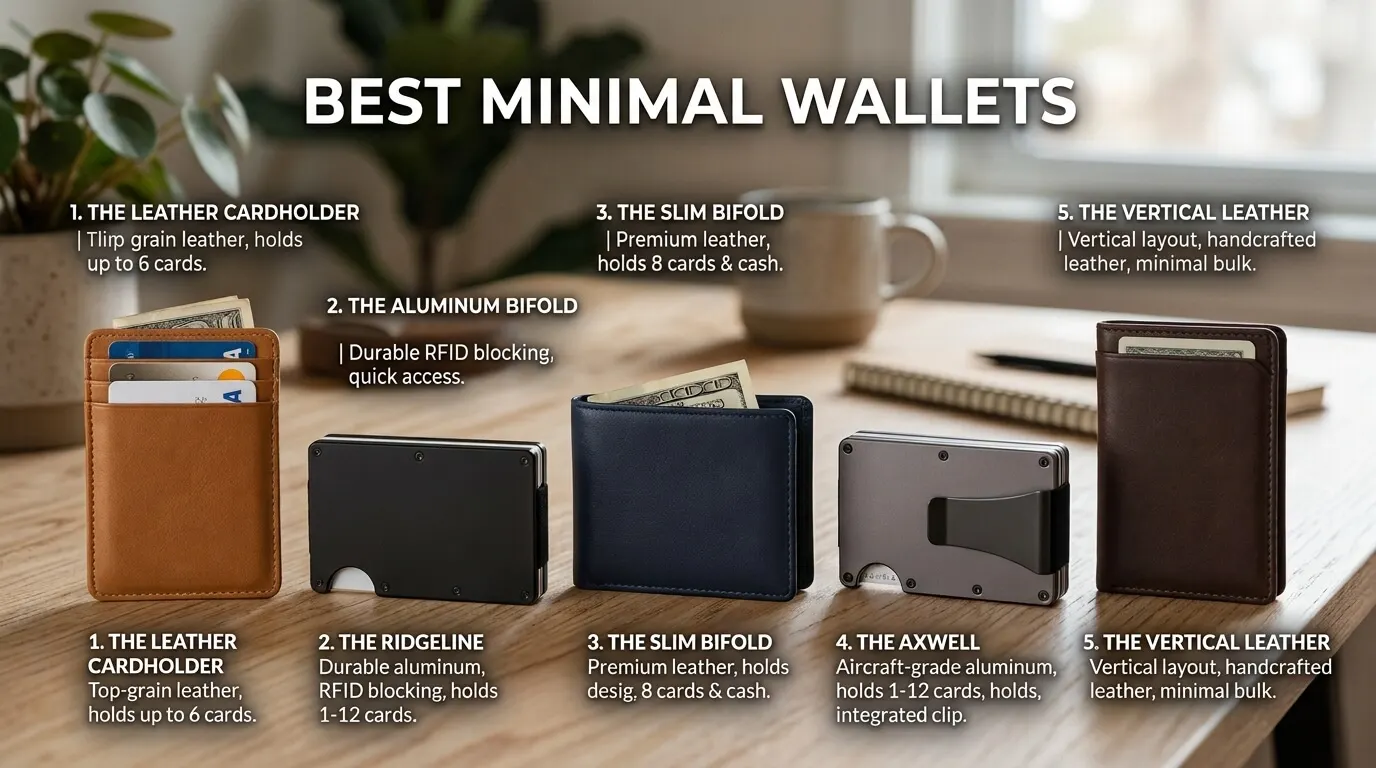
Durable construction: A wallet is handled almost every day, so stitching, edges, clips, and card slots should be well made.
Easy access: You should not have to fight with your wallet to remove your most frequently used card.
Appropriate capacity: More storage is not automatically better. Excess capacity often encourages unnecessary clutter.
Comfortable design: Smooth edges and sensible dimensions make a noticeable difference.
Reliable materials: Choose materials appropriate for your lifestyle rather than simply selecting the most expensive option.
Good organization: A well-designed wallet makes it obvious where each item belongs.
Some premium wallets also offer modular components, tracking accessories, quick-access mechanisms, or specialized card systems. These can be useful, but they are not essential for everyone.
10. How to Avoid Buying the Wrong Wallet
One of the biggest mistakes people make is choosing a wallet based entirely on appearance.
A beautiful wallet that does not fit your cards is not a good wallet.
Before buying, ask yourself a few simple questions:
How many cards do I actually carry?
Count them rather than guessing.
Do I carry cash?
If yes, determine approximately how much.
Where do I carry my wallet?
Front pocket, back pocket, jacket, handbag, or backpack?
Do I travel frequently?
If so, consider additional identification and emergency cash.
Do I need quick access?
If you regularly tap or present a card, choose a design that allows fast removal.
How important is appearance?
For professional settings, leather may feel more appropriate. For casual use, metal or synthetic materials can offer a modern look.
Taking a few minutes to answer these questions can prevent an expensive mistake.
11. How to Make Your Wallet Even More Minimal
Buying a slim wallet is only half the process. What you put inside it matters just as much.
Start by removing expired cards, old receipts, unused gift cards, duplicate identification, and loyalty cards that are available digitally.
Then separate rarely used items from everyday essentials.
You might keep emergency documents or spare cards somewhere secure at home rather than carrying them everywhere.
A simple decluttering method is the 30-day rule: if you have not used an item during the last month and do not expect to need it soon, consider removing it from your everyday wallet.
Avoid filling empty spaces simply because they are available.
A wallet should serve your routine rather than dictate it.
12. Final Thoughts: Finding the Best Minimal Wallet for You
The best minimalist wallet is not necessarily the thinnest, most expensive, or most technologically advanced option. It is the one that fits naturally into your daily routine.
For one person, that might mean a simple leather card holder. For another, it could be a metal wallet with a cash strap. Someone who travels regularly may need a compact bifold with slightly more room.
The right choice comes down to capacity, material, comfort, security, accessibility, and personal style.
Start with what you actually carry. Then choose a wallet that comfortably handles those essentials without encouraging unnecessary clutter. Once you experience the convenience of carrying only what you need, a bulky traditional wallet may start to feel like carrying a suitcase when all you needed was a small bag.
FAQs
1. What should I carry in a minimal wallet?
Most people only need identification, one or two payment cards, a transportation or access card if necessary, and a small amount of cash. The exact contents depend on your lifestyle.
2. Are minimal wallets better than traditional wallets?
They can be better for people who prefer less bulk and carry fewer physical items. Traditional wallets may still be more suitable for people who need coins, numerous cards, receipts, or larger amounts of cash.
3. How many cards can a slim wallet hold?
Capacity varies by design, but many compact wallets are intended for roughly four to eight cards. Always check the manufacturer’s recommended capacity before filling one.
4. Are RFID-blocking wallets worth buying?
RFID protection can be a useful feature for people who want an additional layer of protection for compatible contactless cards. However, it should be considered alongside construction, usability, and overall quality rather than treated as the only important feature.
5. What material is best for a minimalist wallet?
There is no universally best material. Leather offers a classic appearance and can age beautifully, while aluminum and titanium provide a modern, rigid construction. Fabric and synthetic materials can be lightweight and practical. The best option depends on your budget, lifestyle, and personal preferences.