
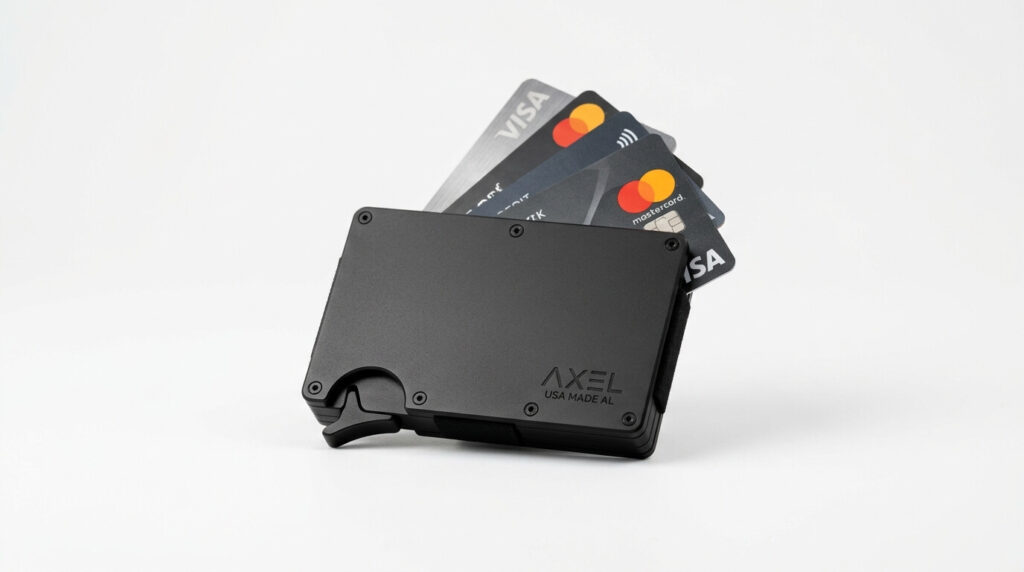
A wallet should carry what you need without becoming a bulky pocket brick. If you are tired of stuffed pockets, unnecessary cards, and oversized billfolds, a minimalist wallet could be the simple upgrade you have been looking for. The best minimal wallets combine a compact design with enough room for essential cards, cash, and identification.
But with so many shapes, materials, and features available, how do you know which one is right for you? In this guide, we will explore the most important features, materials, styles, security options, and buying considerations so you can choose a wallet that fits naturally into your everyday life.
1. Why Choose a Minimalist Wallet?
Traditional wallets are designed to carry almost everything. Old receipts, loyalty cards, multiple bank cards, photographs, spare change, and even business cards can slowly turn a simple wallet into a thick package.
A minimalist wallet takes the opposite approach. Instead of asking, “How much can I carry?” it asks, “What do I actually need?”
That small change in thinking can make a noticeable difference.
A slimmer wallet can offer several benefits:
- Less pocket bulk: A thin wallet is easier to carry in your front or back pocket.
- Better organization: You are encouraged to keep only essential items.
- Lightweight everyday carry: Fewer unnecessary items mean less weight.
- Cleaner appearance: A compact wallet usually looks more polished.
- Greater comfort: A thick wallet can become uncomfortable when sitting for long periods.
Think of a minimalist wallet like a small travel bag. You would not pack your entire bedroom for a weekend trip. You take the things you actually need. A slim wallet follows the same principle.
2. What Makes a Great Minimal Wallet?
Not every small wallet deserves to be called a good minimalist wallet. A wallet can be extremely thin but still be inconvenient, fragile, or difficult to use.
The best designs balance size, capacity, durability, accessibility, and security.
Slim Profile
Thickness is one of the most important factors. A wallet that becomes bulky after adding several cards defeats the purpose of minimalist design.
Look for a wallet that remains reasonably compact when filled with your normal everyday cards.
Easy Card Access
A wallet should not make you fight to remove your bank card.
Some designs use a central card slot, while others use a pull tab, thumb slot, or external card pocket. Choose whichever method feels natural to you.
Reliable Construction
A wallet is an everyday item. It may be placed on desks, carried in pockets, dropped occasionally, or exposed to moisture and friction.
Strong stitching, dependable hardware, and quality materials can significantly improve its lifespan.
Practical Capacity
More capacity is not always better. If a wallet is designed to hold 15 cards but you only carry five, you may be paying for space you never use.
A wallet should match your lifestyle rather than encourage you to carry more.
3. Different Types of Minimalist Wallets
There is no single design that works for everyone. Minimal wallets come in several formats, and each has its own strengths.
Card Holder Wallets
These are among the simplest options. They usually contain one or more card slots and have little or no space for cash.
They are ideal for people who primarily use cards or mobile payments.
Money Clip Wallets
A money clip wallet combines card storage with a mechanism for holding folded banknotes.
It can be a practical choice if you occasionally carry cash but do not want a traditional billfold.
Bifold Minimal Wallets
A slim bifold keeps the familiar folding design but removes unnecessary bulk.
This can be a good transition for someone moving away from a traditional wallet without wanting a completely different format.
Pop-Up Card Wallets
These wallets typically store cards inside a compact compartment and allow them to be pushed upward or outward for quick access.
They can be particularly convenient for people who frequently use payment cards.
Zip Wallets
A small zip wallet offers additional security for cards, cash, and small items.
It may be slightly thicker than an open card holder, but the extra closure can provide peace of mind.
4. How Many Cards Should a Slim Wallet Hold?
This is one of the most important questions to ask before buying.
Many people carry far more cards than they actually use. You might have an old membership card, expired insurance card, several loyalty cards, and payment cards that rarely leave your drawer.
Before buying a wallet, empty your current one and separate everything into three groups:
Essential:
Items you use regularly, such as identification, your main payment card, driver’s license, and perhaps a backup card.
Occasional:
Cards you use once in a while.
Unnecessary:
Expired cards, old receipts, duplicate loyalty cards, and anything you no longer need.
For many people, a wallet designed for roughly 4 to 8 cards is enough for everyday use. However, your ideal capacity depends entirely on your habits.
Don’t choose a wallet simply because it advertises an impressive card capacity. A minimalist wallet works best when you actually keep it minimal.
5. Best Materials for a Minimalist Wallet
The material affects appearance, durability, weight, texture, and price.
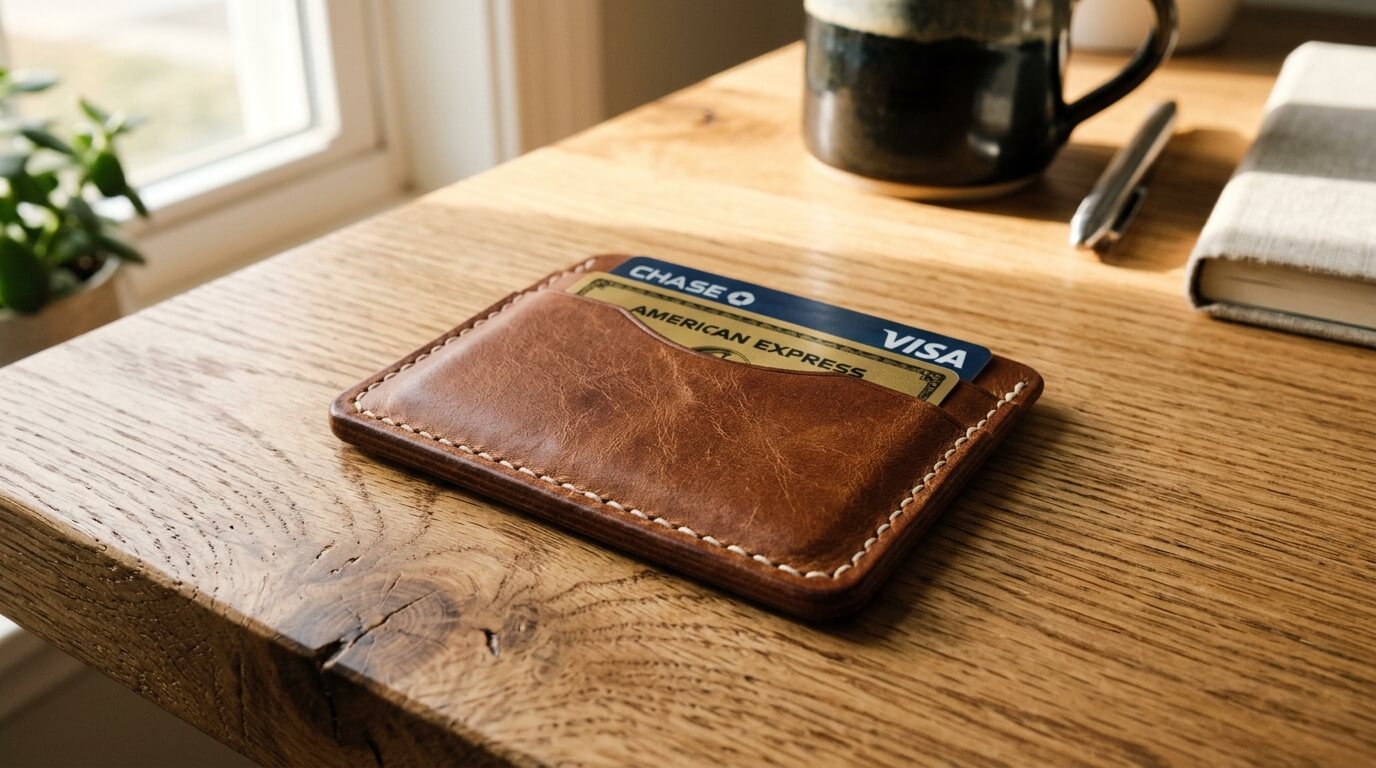
Leather
Leather remains a popular choice because it combines traditional style with a premium feel.
A quality leather wallet can develop a unique patina over time, meaning its appearance changes naturally with use.
Pros:
- Classic appearance
- Comfortable texture
- Can become more attractive with age
- Available in many styles
Cons:
- Can cost more
- May require occasional care
- Can absorb moisture
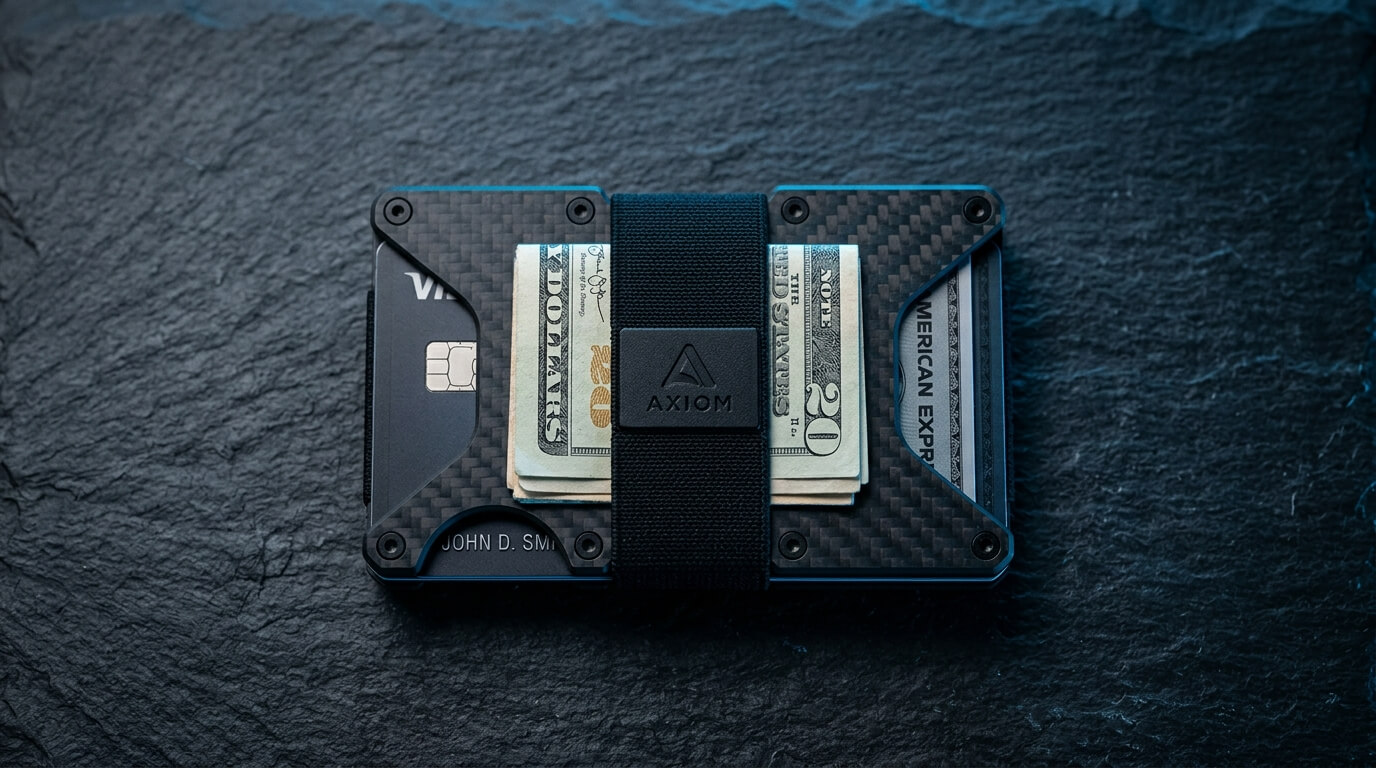
Aluminum
Aluminum wallets are lightweight and often have a modern appearance.
They can provide a structured protective shell around cards and are particularly popular among people who prefer contemporary designs.
Carbon Fiber
Carbon fiber-inspired wallets are known for their lightweight and technical appearance.
They can appeal to people who want something that looks modern rather than traditional.
Stainless Steel
Metal wallets made from stainless steel can provide excellent rigidity and durability.
The trade-off is that they may feel heavier or less flexible than leather or fabric alternatives.
Fabric and Nylon
Fabric wallets are often lightweight, flexible, and affordable.
They can be a practical option for casual everyday use, outdoor activities, and people who prioritize comfort over formal appearance.
6. RFID Protection: Is It Worth It?
RFID protection is frequently advertised as a feature of modern wallets.
RFID stands for radio-frequency identification. Some contactless cards use radio-frequency technology to communicate with compatible readers.
An RFID-blocking wallet is designed to reduce the ability of radio signals to communicate with cards while they are stored inside.
But is it essential?
The answer depends on your cards, location, and personal preferences.
If you frequently carry contactless cards and want an additional layer of protection, RFID-blocking construction may be appealing. However, it should not be the only factor you consider.
A poorly designed wallet with RFID protection is still a poor wallet.
Prioritize everyday usability, construction quality, size, capacity, and comfort first.
7. Minimal Wallets for Men and Women
Wallet design is becoming increasingly flexible. Many styles are suitable for anyone, regardless of gender.
For Men
Men often prefer slim wallets that fit easily into a front or back pocket without creating a noticeable bulge.
Leather card holders, metal wallets, and compact bifold designs are popular choices.
For Women
Women may prefer card holders, compact zip wallets, or small wallets that can fit inside handbags and crossbody bags.
The important thing is not whether a wallet is marketed for men or women. The important question is whether its size, capacity, appearance, and organization fit your needs.
For Everyone
A good minimalist wallet should make everyday life easier.
If you use mostly digital payments, a tiny card holder may be enough. If you regularly carry cash, a money clip or slim bifold may make more sense.
8. Choosing the Right Wallet for Travel
Travel changes your wallet requirements.
When traveling, you may need identification, payment cards, emergency cash, transportation cards, and other documents.
However, carrying everything in one wallet is not always a good idea.
Consider carrying only the cards you actually need during your trip.
For international travel, you may also want:
- A primary payment card
- A backup payment card
- Identification
- Some local currency
- Emergency cash stored separately
- Important travel information where appropriate
A compact wallet can be particularly useful while traveling because it reduces pocket bulk.
For added security, avoid keeping every important card and all your cash in one place. If your wallet is lost, having a backup payment method stored separately can make the situation much easier to handle.
9. Common Mistakes When Buying a Slim Wallet
Choosing a wallet based only on appearance is one of the most common mistakes.
A wallet may look fantastic in a product photo but become frustrating after a few weeks of use.
Buying Too Much Capacity
If you only carry five cards, purchasing a wallet designed for 15 cards may encourage unnecessary clutter.
Ignoring Cash Requirements
Some slim wallets have almost no space for banknotes.
If you regularly use cash, make sure the wallet has a suitable cash compartment, money clip, or folded-note section.
Choosing Looks Over Comfort
A beautiful metal wallet may not feel comfortable in your pocket.
Likewise, an ultra-thin wallet may not provide the organization you need.
Forgetting About Access
Can you quickly remove your main card?
Can you identify your cards without pulling everything out?
Convenience matters.
Not Considering Your Pocket
Front-pocket users often want a particularly slim and lightweight wallet. Back-pocket users may have different preferences.
Think about where you normally carry your wallet before buying.
10. How to Organize Your Minimal Wallet
Even the best wallet becomes bulky if you fill it with unnecessary items.
Start by removing everything.
Then ask yourself a simple question about every item:
“When was the last time I actually used this?”
If you cannot remember, it may not belong in your everyday wallet.
A Simple Everyday Setup
You could consider carrying:
- Identification
- Main payment card
- Backup payment card
- One frequently used membership or access card
- A small amount of cash if needed
Of course, this is only an example. Your ideal setup may be different.
Try to keep your wallet consistent. When you receive a new receipt, business card, or loyalty card, avoid automatically putting it inside.
A minimalist wallet is not just a product. It is a habit.
11. How Much Should You Spend?
Minimalist wallets are available at almost every price level.
You can find inexpensive fabric card holders, mid-range leather wallets, and premium designs made from metal or specialized materials.
But does a higher price automatically mean a better wallet?
Not necessarily.
Value comes from the combination of quality, usability, durability, and design.
An inexpensive wallet that lasts several years may be a better purchase than an expensive wallet that looks impressive but becomes uncomfortable.
Before spending more, consider what you actually receive for the additional cost.
You might be paying for:
- Better materials
- Stronger construction
- Improved card access
- Brand reputation
- More refined finishing
- Warranty or customer support
- Specialized security features
Set a budget first, then compare wallets based on practical features rather than branding alone.
12. How to Choose the Best Minimal Wallet for You
The “best” wallet is not necessarily the most expensive or most popular model. It is the one that fits your daily routine.
Use these questions as a simple buying checklist.
How many cards do I normally carry?
If the answer is four or five, look for a compact card holder rather than a large wallet.
Do I carry cash?
If yes, choose a wallet with a cash strap, clip, or folded-note compartment.
Where do I carry my wallet?
Front-pocket users may prioritize extreme slimness. Bag users may care more about organization.
Do I want leather or a modern material?
Leather offers a classic appearance, while metal, carbon-style materials, and nylon can provide a more contemporary look.
Do I want RFID protection?
If this feature matters to you, look for a reputable design that incorporates it without compromising usability.
How important is quick access?
If you frequently use one card, an external slot or quick-access mechanism may be worthwhile.
What matters most to me?
Make a short list of your top three priorities. For example:
- Slimness
- Durability
- Easy card access
Then compare wallets against those priorities.
A Practical Buying Formula
You can think of your decision like this:
Best wallet = your daily needs + comfort + durability + practical design
Not every wallet needs every feature. The goal is to find the right balance.
13. Frequently Asked Questions
1. What are the best minimal wallets for everyday use?
The best option depends on your habits. A simple card holder works well for people who rarely carry cash, while a slim bifold or money clip may be better for people who carry both cards and banknotes.
2. How many cards should I keep in a minimalist wallet?
For many people, around four to eight essential cards are enough. However, the ideal number depends on how often you use each card and how much space your wallet provides.
3. Are minimalist wallets better than traditional wallets?
They can be better for people who want less pocket bulk and simpler organization. However, traditional wallets remain useful for people who need to carry many cards, cash, receipts, or other items.
4. Is an RFID-blocking wallet necessary?
Not everyone needs RFID protection. It can be an appealing extra feature for people who carry contactless cards, but factors such as comfort, construction, capacity, and card accessibility should also be considered.
5. Can a minimalist wallet carry cash?
Yes. Some minimalist designs include money clips, cash straps, folded-note compartments, or small cash pockets. If you regularly use cash, choose a design specifically made to accommodate it.
14. Final Thoughts
Choosing among the best minimal wallets does not have to be complicated. Start with your everyday habits rather than trends. Decide how many cards you need, whether you carry cash, where you keep your wallet, and which materials you prefer.
The right minimalist wallet should almost disappear into your routine. It should be light enough to forget about, organized enough to make payments easy, and durable enough to handle everyday life.