
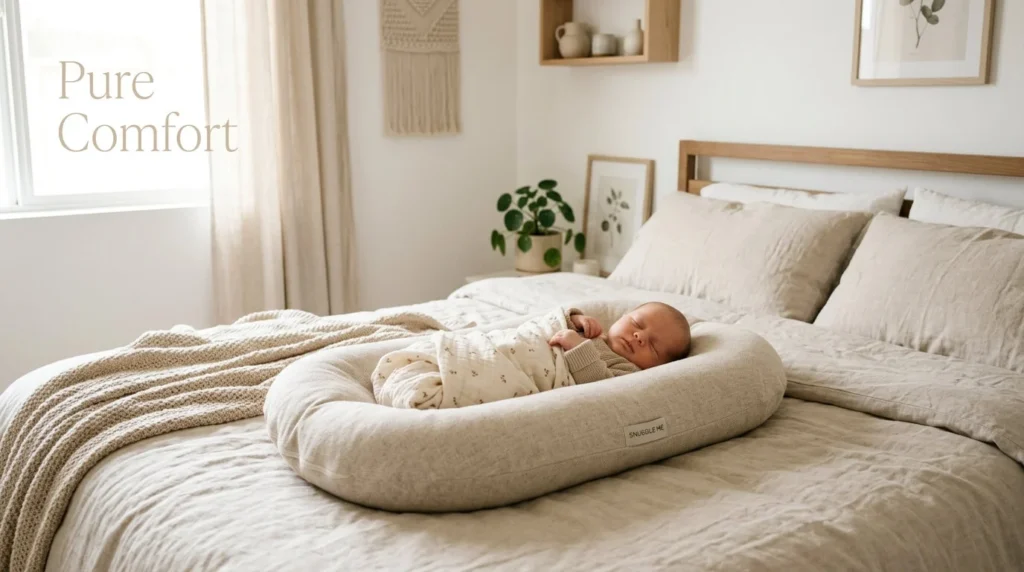
If you’ve spent any time scrolling baby registries or new-mom Instagram, you’ve probably seen it: a soft, cocoon-shaped bed with a newborn sleeping peacefully inside, captioned with hearts and “the best purchase we made.” That’s the Snuggle Me Lounger, and it’s become one of the most talked-about — and most misunderstood — items on baby gift lists.
Here’s the thing nobody tells you upfront: this product is incredible for exactly what it’s designed for, and genuinely risky when used the way it’s shown in half those photos. Before you add it to your cart (or return the one you already got as a gift), you need to know what it actually does, how to use it safely, and where it fits into your daily routine with a newborn. That’s exactly what this guide covers.
What Is a Snuggle Me Lounger?
The Snuggle Me Lounger is a padded, sling-style infant lounger made from an unpadded fabric hammock stretched over a firm foam base, with plush, supportive bolsters running along both sides. The design cradles a baby’s body gently, mimicking the snug feeling of being held. It’s made popular by the brand Snuggle Me Organic, which uses GOTS-certified organic cotton and chemical-free fill in its products.
Unlike a flat mat or a bouncer, the lounger’s curved sides create a cozy, enclosed feeling that a lot of babies find calming — which is exactly why it’s become such a registry favorite for newborns aged 0 to 6+ months.
Snuggle Me Lounger vs. Other Baby Loungers
Most baby loungers on the market fall into a similar category — padded, nest-like, and marketed for comfort. What sets a genuine Snuggle Me Lounger apart is the unpadded, breathable sling base (rather than a solid mattress-style pad) and its safety documentation. The newer Lounger Curve model, for example, was built to meet the CPSC’s Infant Sleep Products Rule for supervised use, something many cheaper knockoff loungers on the market don’t comply with. That distinction matters, because the CPSC has issued public warnings about non-compliant loungers that pose real suffocation and fall hazards.
Is the Snuggle Me Lounger Safe? The Honest Answer
This is the question every parent should ask before buying, and the answer requires nuance.
Direct answer: A Snuggle Me Lounger is safe for supervised, awake lounging and tummy time — but it is not a sleep product and should never be used for naps, overnight sleep, or co-sleeping.
Pediatric safety organizations, including the American Academy of Pediatrics (AAP) and the Consumer Product Safety Commission (CPSC), are consistent on this point: the only safe sleep surface for an infant is a firm, flat crib or bassinet with a tightly fitted sheet and nothing else in it. Padded loungers, no matter how well made, can pose suffocation risk if a baby rolls into the soft sides, or positional asphyxia if their head tips forward against padding. This isn’t unique to Snuggle Me — it applies to every padded lounger, nest, or pod on the market.
Snuggle Me Organic itself is upfront about this in its safety guidelines, stating clearly that its products are non-sleep items intended for supervised, awake bonding time, and that a baby who falls asleep inside one should be moved to a crib or bassinet right away.
Safe Usage Rules for the Snuggle Me Lounger
If you’re going to use one, keep these non-negotiables in mind:
- Always stay in the same room and keep your eyes on your baby while they’re in the lounger.
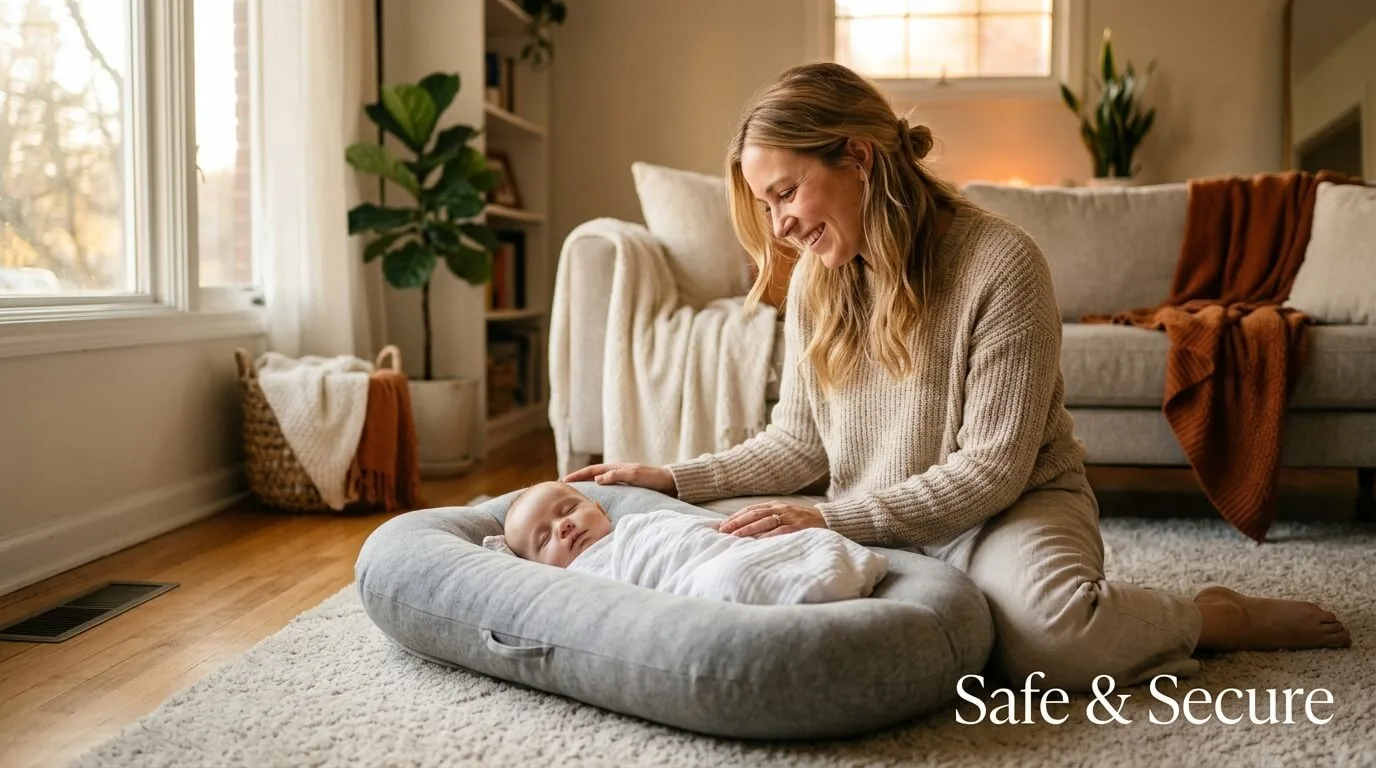
- Use it only on a firm, flat, ground-level surface — never on a bed, sofa, or elevated surface.
- Never place the lounger inside a crib, bassinet, or playard.
- Never add blankets, pillows, or extra bedding inside it.
- Move your baby to their crib the moment they start to doze off.
- Stop using it once your baby can roll, push up, or scoot, unless the manufacturer’s guidelines say otherwise for that model.
What the Snuggle Me Lounger Is Actually Good For
Used correctly, this product earns its popularity. Here’s where it genuinely shines:
Supervised Tummy Time and Play
The gentle curve gives babies just enough support to feel secure while they practice lifting their heads, which makes tummy time sessions less of a fight. Many parents find their baby tolerates tummy time longer in the lounger than flat on the floor.
A Safe “Set-Down” Spot During the Day
When you need both hands free — folding laundry, eating a meal, showering with the door cracked — the lounger gives your baby a comfortable, contained spot to hang out while you’re nearby and watching.
Diaper Changes and Everyday Handling
The raised, cushioned sides make it easier to change a squirmy newborn without them rolling off a flat changing surface.
Bonding and Sensory Time
Parents often use it on the floor during playtime, propped nearby during feeding prep, or as a cozy base for reading and singing to a newborn.
How to Choose the Right Snuggle Me Lounger
Not every lounger on the market is created equal, and picking the right one matters more than people realize.
Check for Safety Certification
Look specifically for a model that’s been tested against current CPSC standards, not just “voluntary safety testing.” The label and packaging should include manufacture date, tracking information, and clear usage instructions — cheap knockoffs often skip this entirely.
Look at the Fabric and Fill
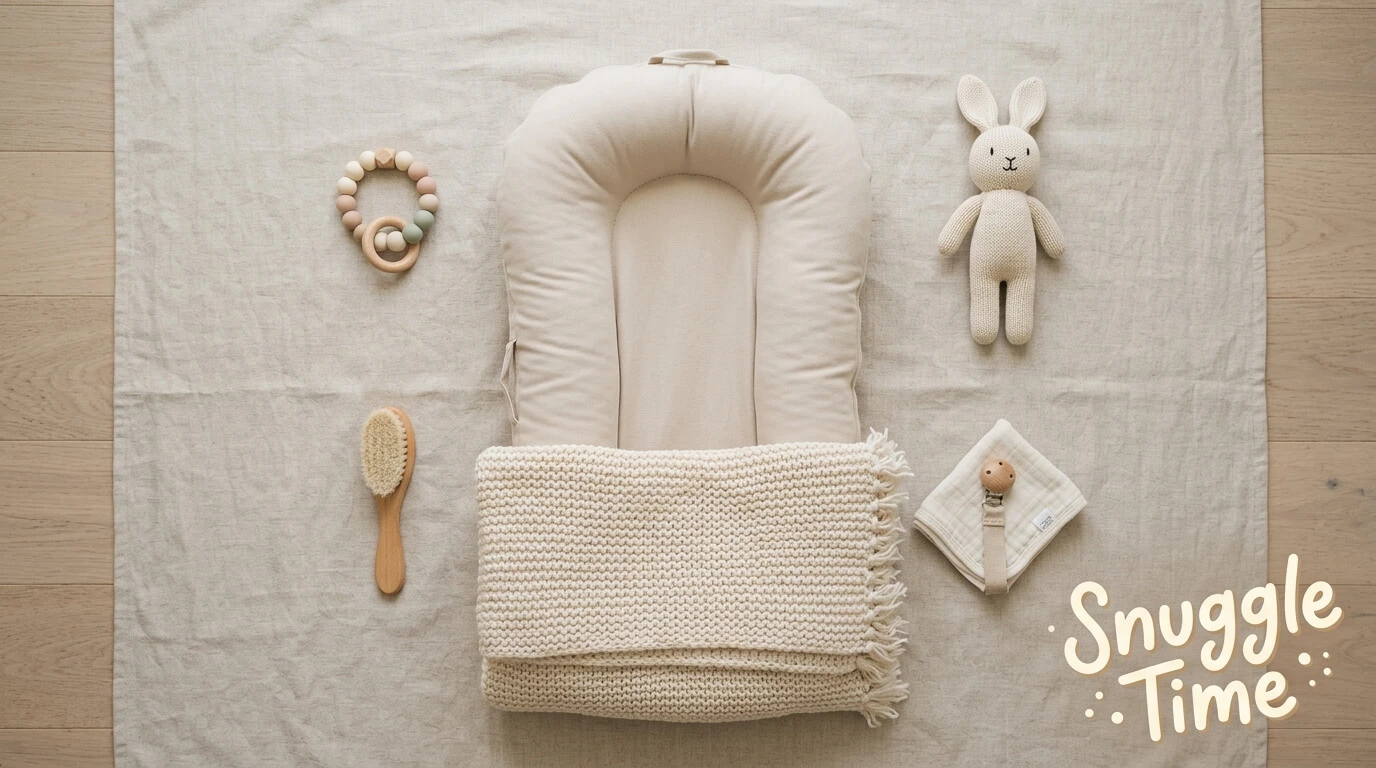
Organic cotton covers and breathable, chemical-free fill matter, especially since your baby will have direct skin contact with the material for extended stretches during the day. Removable, machine-washable covers are a practical must for the inevitable spit-up and blowouts.
Match It to Your Baby’s Age and Stage
Most loungers are designed for newborns up to around six months, or until a baby starts rolling or pushing up on their own — whichever comes first. Buying based on your baby’s current stage, not their eventual size, will save you money and hassle.
Common Mistakes Parents Make With Baby Loungers
- Using it for naps “just this once.” This is the single biggest cause of concern flagged by pediatric safety experts — one nap can turn into a habit, and the risk exists every time regardless of how many times it’s “worked” before.
- Leaving the room, even briefly. Babies move more than you’d expect, even in the first weeks.
- Placing it on a couch or bed for a “softer landing.” This increases fall risk and defeats the purpose of a firm, flat surface.
- Continuing use after baby starts rolling. Once mobility kicks in, the lounger’s usefulness — and safety — changes fast.
FAQ: Snuggle Me Lounger Questions Parents Ask Most
Can my baby sleep in a Snuggle Me Lounger? No. It’s designed strictly for supervised, awake use. The only safe sleep space for an infant is a firm, flat crib or bassinet with no extra padding, following AAP and CPSC safe sleep guidelines.
What age is the Snuggle Me Lounger meant for? Most models are designed for babies from birth up to around six months, or until they begin rolling, pushing up, or scooting — developmental milestones that signal it’s time to stop.
Is the Snuggle Me Lounger worth buying? For supervised playtime, tummy time, and hands-free moments during the day, many parents find it genuinely useful and comfortable. It’s not a sleep solution, so it shouldn’t replace a crib or bassinet on your registry.
How do I clean a Snuggle Me Lounger? Most come with a removable, machine-washable cover. Check the specific care label for your model, since fill materials and covers vary and some pieces are spot-clean only.
Are there safety recalls I should check before buying secondhand? Yes. Before buying used, check SaferProducts.gov and the CPSC’s website for any active recalls or warnings, and confirm the product hasn’t been altered or damaged.
Final Thoughts: Should You Add One to Your Registry?
A Snuggle Me Lounger can genuinely make the newborn stage a little easier — giving you a safe, cozy spot for supervised tummy time and those moments when you need a free hand. But it earns its place in your nursery only when you treat it exactly as intended: an awake-time tool, not a sleep surface. Keep your baby’s crib or bassinet as the only place for naps and nighttime sleep, and the lounger as a supervised daytime companion, and you get the best of what this product actually offers.
If you’re building out your newborn essentials list, weigh the lounger against your actual daily routine — some parents use theirs constantly, others barely touch it after the first month. Read the safety guidelines that come with your specific model, register for one only if it fits how you plan to spend your days, and always keep supervision as the rule, not the exception.
A personal note: when my sister had her first baby, the Snuggle Me Lounger became the thing that saved her sanity during the witching hours between 5 and 7pm. She’d set it up in the kitchen while she cooked dinner, chatting to the baby the whole time, and it gave her just enough hands-free time to function. What she never did — and what her pediatrician specifically warned her about at the two-week checkup — was let the baby nap in it, even during the day. That one boundary, staying firm on “awake time only,” made all the difference in using the product the way it was actually meant to be used.