
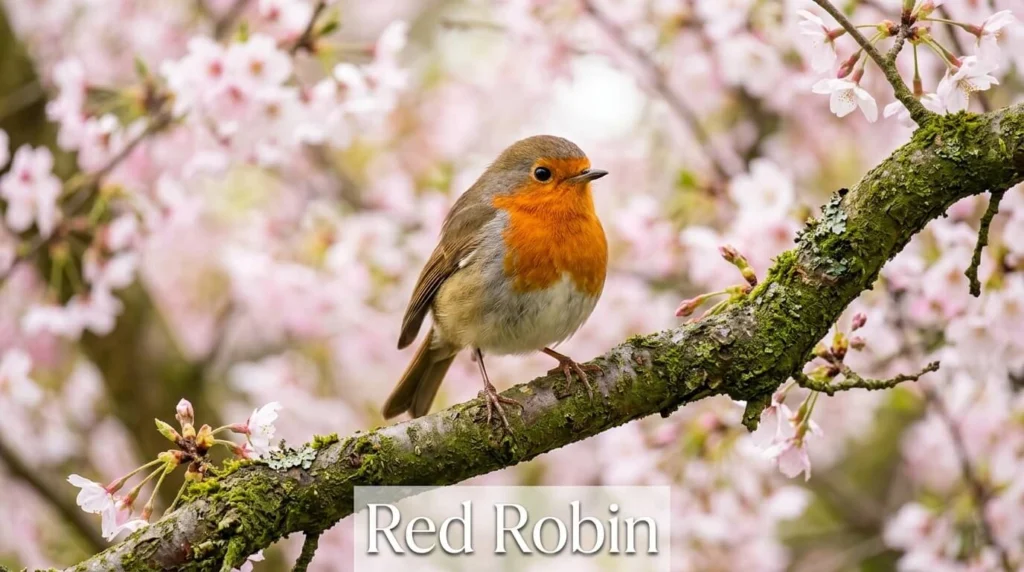
The red robin is one of those birds that can make an ordinary morning feel special. You may spot one hopping across a lawn, searching beneath leaves, or sitting quietly on a garden fence. Its bright reddish-orange breast, small size, and confident behavior make it surprisingly easy to recognize.
But how much do you really know about this familiar garden visitor? Is the red robin actually a robin everywhere in the world? What does it eat, where does it live, and why does it spend so much time on the ground?
In this guide, we will explore the red robin bird in detail, including its appearance, habitat, diet, nesting habits, behavior, lifespan, symbolism, and fascinating facts.
What Is a Red Robin Bird?
When people say “red robin,” they are usually referring to a robin with a distinctive reddish or orange-colored breast. However, the name can be slightly confusing because different parts of the world use the word robin for different birds.
In Britain and much of Europe, the familiar robin is the European robin, a small bird with an orange-red face and breast. Its scientific name is Erithacus rubecula. In North America, the bird commonly called the American robin is a different species, Turdus migratorius. Despite sharing the name, the two birds belong to different groups.
The European robin is particularly famous for appearing in gardens, parks, woodland edges, and countryside areas. It is often comfortable around people, which makes it one of the best-known birds in Britain.
Think of a robin as a tiny garden companion. It may not actually follow you around, but it often appears when you are digging soil because freshly disturbed ground can expose worms and other food.
One important point: the red or orange breast is not simply a decorative feature. It plays a role in recognition and territorial behavior, particularly among adult birds.
What Does a Red Robin Look Like?
The appearance of a red robin is one of the easiest ways to identify it.
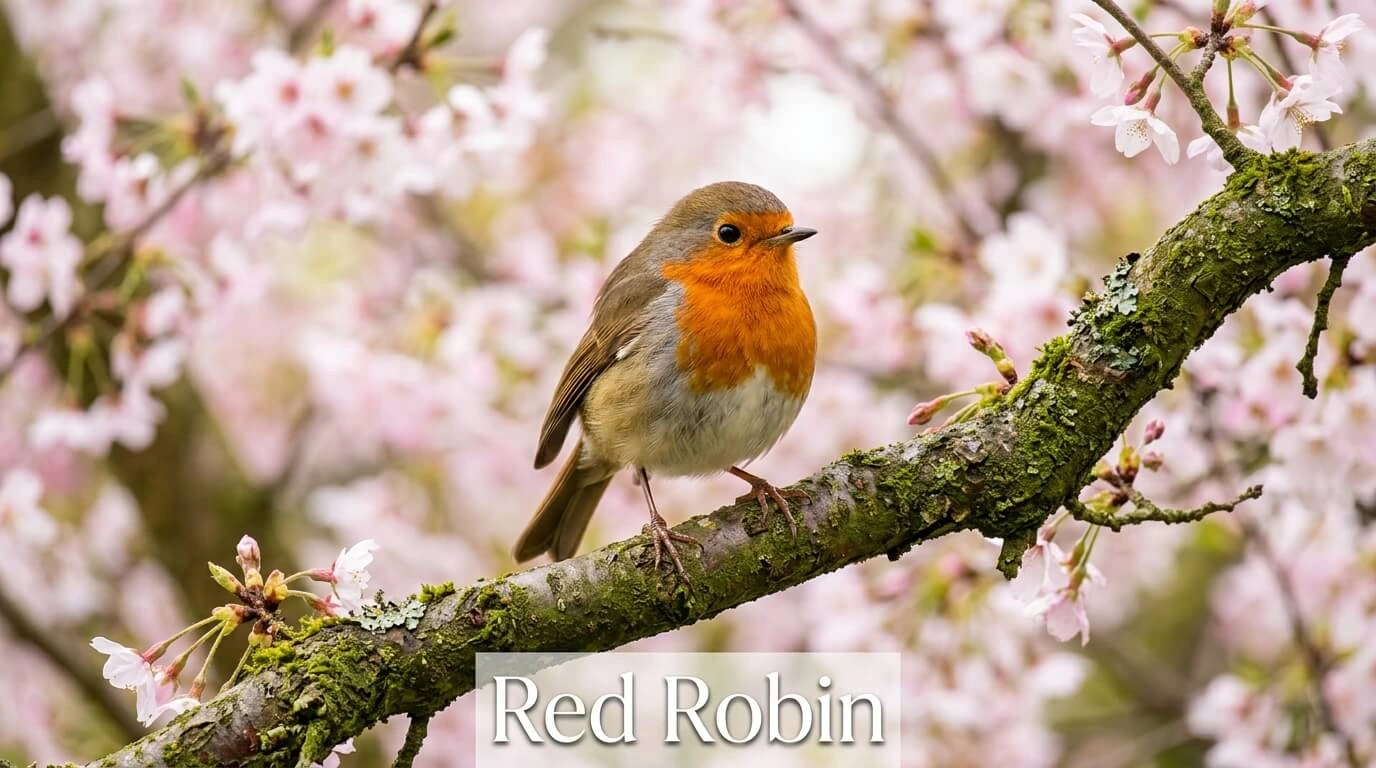
The European robin has a relatively round body, thin legs, a small pointed bill, and a large-looking head. Its most noticeable feature is the orange-red coloring across the face, throat, and upper breast.
The rest of its body is much more subdued. Its back is generally brown or olive-brown, while the underside can appear pale or grayish. This combination allows it to blend into woodland vegetation while still having a striking appearance when viewed closely.
Young robins look different from adults. Instead of having the familiar bright breast, juveniles tend to have mottled brown plumage. Their feathers help them remain less noticeable while they are growing.
Size also matters. A European robin is a small bird, usually around the size of a sparrow, although its rounded shape can make it look larger.
Its eyes are another interesting feature. They are dark and prominent, giving the bird an alert appearance. When a robin stands on the ground and watches you closely, it can seem as though it is studying everything you do.
Where Do Red Robins Live?
European robins can be found across a large part of Europe and into parts of western Asia and North Africa. They occupy a wide variety of environments, but they particularly appreciate places where vegetation, shelter, and food are available.
You may encounter them in:
- Gardens
- Woodlands
- Parks
- Hedges
- Farmland
- Orchards
- Scrubland
- Cemeteries
- Urban green spaces
Their adaptability is one reason they remain so familiar to people.
A garden with shrubs, trees, leaf litter, and open soil can provide almost everything a robin needs. It can search for food on the ground, hide among vegetation, and find sheltered locations for nesting.
Habitat variety is important. A completely paved garden offers little for a robin, while a garden with natural areas can become a useful feeding and resting place.
What Does a Red Robin Eat?
A red robin has a varied diet. During warmer months, it commonly searches for insects and other small creatures. In colder periods, berries and other plant foods can become more important.
Its diet can include:
- Earthworms
- Beetles
- Spiders
- Caterpillars
- Flies
- Small insects
- Larvae
- Berries
- Seeds and other plant material
Earthworms are especially important because they provide a rich source of protein. This explains why robins are often seen on lawns and patches of freshly turned soil.
Have you ever noticed a robin appearing shortly after someone starts gardening? There is a good reason for that. Digging can bring worms and other small organisms closer to the surface.
Robins do not always rush around while feeding. They may sit quietly on a low branch, observe their surroundings, and suddenly drop to the ground when they notice potential food.
Their feeding strategy is a mixture of patience and quick movement. It is almost like a hunter waiting for the right moment rather than constantly searching without a plan.
How Do Red Robins Behave?
Despite their charming appearance, robins can be surprisingly territorial.
An adult robin may defend an area against other robins, especially during the breeding season. The bright breast can become an important visual signal during territorial encounters.
A robin may sing, display itself, chase another bird, or engage in aggressive behavior when defending its territory.
This is one of the reasons you may see a robin apparently “owning” a particular corner of a garden. Another robin entering that area may not receive a friendly welcome.
Robins are also curious birds. They can become accustomed to people and may approach relatively closely when they believe food or insects are available.
However, familiarity should not be confused with domestication. A wild robin is still a wild bird and should be allowed to behave naturally.
Red Robin Songs and Communication
One of the most enjoyable things about having robins nearby is hearing them sing.
Their song can sound delicate and varied, with clear notes and changing phrases. Robins often sing from elevated positions such as branches, fences, rooftops, or other suitable perches.
Birdsong serves several purposes, including:
- Defending territory
- Attracting or communicating with mates
- Signaling presence
- Communicating during social interactions
Robins can sing during different times of the year, and their songs are especially noticeable during the breeding season.
Their calls are different from their songs. Short calls can communicate alarm, contact, or other information.
Why does bird communication matter? Imagine trying to manage a neighborhood without roads, phones, or signs. Birds rely heavily on sound and visual signals to communicate where they are and what is happening around them.
Nesting and Breeding Habits
During breeding season, robins become particularly busy.
Unlike some birds that build obvious nests high in trees, European robins often choose surprisingly low or sheltered nesting locations. They may nest in cavities, banks, sheds, walls, or dense vegetation.
A suitable nesting place usually provides some protection from weather and predators.
The female typically builds the nest using materials such as:
- Moss
- Grass
- Leaves
- Roots
- Fine plant material
- Hair or other soft materials
The nest is shaped into a small cup that provides a protected environment for the eggs.
Choosing the right location is critical. A nest that is too exposed can become vulnerable to predators, while one in a damp or unstable place may be unsuitable for raising young.
Robins may produce more than one brood during a breeding season when conditions are favorable.
Red Robin Eggs and Chicks
Robin eggs are small and generally have a pale appearance with subtle markings that can vary.
After hatching, the chicks are dependent on their parents. They cannot immediately find food or protect themselves, so adult robins must repeatedly bring food to the nest.
This creates an exhausting period for the parents.
The adults need to:
- Find food.
- Return to the nest.
- Feed the chicks.
- Watch for predators.
- Repeat the process throughout the day.
Young robins do not look like miniature adults. Their early plumage is usually mottled brown, helping them remain less conspicuous.
As they mature, they gradually develop the distinctive coloring associated with adult robins.
This transformation is one of the most interesting things to observe if you are fortunate enough to see young birds safely from a distance.
Red Robins in Gardens and Backyards
Robins are particularly comfortable around gardens, making them popular with birdwatchers.
If you want your garden to become more attractive to them, you do not necessarily need expensive equipment. A natural garden can be more useful than a perfectly manicured one.
Consider providing:
Natural feeding areas: Leave some areas of soil, leaf litter, and plants where insects can live.
Dense vegetation: Shrubs and native plants can provide shelter and potential nesting locations.
Fresh water: A shallow birdbath can offer drinking and bathing opportunities, particularly during dry weather.
Safe spaces: Avoid creating unnecessary hazards for birds, especially around windows and domestic animals.
Reduced pesticide use: Insecticides can reduce the insects that robins naturally depend on for food.
A garden for birds is somewhat like a small neighborhood. Food is the supermarket, shrubs are the houses, trees are the high-rise buildings, and water is the community fountain.
You do not have to make your garden perfect. Sometimes a little wildness is exactly what wildlife needs.
Migration and Seasonal Changes
Not every robin behaves in exactly the same way throughout the year.
Some European robins remain within the same general territory year-round, while others move seasonally. The behavior can depend on factors such as geography, climate, age, and available food.
Birds living in colder northern regions may be more likely to move during winter, while populations in milder areas may remain closer to their breeding territories.
Seasonal changes also affect their diet and behavior.
During warmer months, insects and worms can be plentiful. As temperatures fall, birds may rely more heavily on fruits and other available food sources.
Winter can be especially demanding. Shorter days mean less time to find food, while cold temperatures increase the amount of energy birds need to maintain their body temperature.
How Long Do Red Robins Live?
Like many small wild birds, robins face numerous challenges during their lives.
Predators, disease, harsh weather, food shortages, habitat changes, and accidents can all affect survival.
Although some robins can live for several years, many young birds do not survive their first year. This is one reason birds can produce multiple offspring over their lifetime.
Their small size does not mean they are helpless. Robins are alert, adaptable, and capable of responding quickly to threats.
Wildlife survival is a numbers game as well as a test of adaptability. Every successful nesting season helps maintain the population despite the many dangers individual birds face.
Red Robin Symbolism and Cultural Importance
Robins have developed a strong place in folklore, literature, art, and popular culture.
Their bright breast and friendly appearance have often been associated with ideas such as:
- Hope
- Renewal
- Spring
- Friendship
- Home
- Comfort
- New beginnings
In Britain, the robin is particularly familiar and has become a beloved part of everyday wildlife.
The bird’s association with winter and Christmas is also especially strong. Robin illustrations frequently appear on seasonal cards and decorations.
Why did this little bird become such a cultural favorite?
Part of the answer may simply be visibility. Robins live close to people and can remain active during winter, meaning generations of people have had opportunities to observe them.
A bird that repeatedly appears in your garden naturally becomes part of your sense of home.
Fascinating Red Robin Facts
Here are some interesting facts that make robins even more remarkable.
1. The European robin and American robin are different species. Sharing the word “robin” does not mean they are closely identical birds.
2. Young European robins lack the famous orange-red breast. Their mottled brown appearance develops into adult plumage later.
3. Robins are strongly territorial. Adults can defend feeding and breeding areas against rivals.
4. They are excellent ground foragers. Lawns, leaf litter, and exposed soil can provide valuable feeding opportunities.
5. Robins can become comfortable around humans. Their willingness to forage near people is one reason they are so familiar.
6. Their diet changes with the seasons. Insects and worms are important when available, while fruits can become more valuable during colder periods.
7. Robins can nest in unusual locations. Sheltered spaces close to the ground can sometimes be suitable.
8. Their songs are an important part of their social lives. Singing can help establish territory and communicate with other birds.
9. A natural garden can help them. Plants and undisturbed areas encourage insects and provide shelter.
10. Their orange breast is one of their most recognizable features. It makes adult European robins especially easy to identify.
How You Can Help Red Robins
Helping robins does not require turning your garden into a wildlife reserve.
Small changes can make a meaningful difference.
Start by growing a variety of plants. Native plants are often especially useful because they support local insects and other wildlife.
You can also leave some natural material in the garden rather than removing every leaf and twig. These materials can support insects and provide opportunities for birds to forage.
A shallow source of clean water can also help.
During difficult weather, naturally occurring food may become harder to find. If you choose to provide supplementary food, use suitable bird food and keep feeding areas clean.
Avoid harmful chemicals whenever possible. A garden that supports insects naturally can provide food for robins without relying heavily on artificial feeding.
It is also important to remember that wildlife should be observed rather than handled. If you find a nest, avoid disturbing it.
The best way to help a wild bird is often surprisingly simple: give it a safe place to live and let nature do the rest.
Why Red Robins Continue to Fascinate Us
There is something special about a small bird that can live so close to people while remaining completely wild.
The red robin combines a memorable appearance with interesting behavior. Its orange-red breast catches your attention, but its territorial nature, feeding habits, nesting behavior, and seasonal adaptations make it far more fascinating than its size might suggest.
The next time you see one hopping across your garden, pause for a moment. That little bird may be searching for a worm, defending its territory, looking for nesting material, or simply watching the world around it.
Sometimes the most interesting wildlife is the wildlife living right outside your window.
Frequently Asked Questions
1. What is a red robin bird?
A red robin commonly refers to a robin with a reddish or orange breast. In Britain and Europe, the term usually refers to the European robin, Erithacus rubecula.
2. What does a red robin eat?
Robins eat a variety of foods, including earthworms, insects, spiders, larvae, caterpillars, berries, and other small natural food sources.
3. Are red robins friendly to humans?
Robins can become comfortable around people and may approach closely, especially in gardens. However, they remain wild birds and should not be treated like pets.
4. Where do red robins build their nests?
European robins can build nests in sheltered places such as dense vegetation, cavities, banks, sheds, walls, and other protected locations.
5. How can I attract red robins to my garden?
You can make your garden more attractive by providing natural vegetation, sheltered areas, clean water, insect-friendly plants, and patches of soil or leaf litter where robins can forage.
Conclusion
The red robin is much more than a familiar bird with a colorful breast. It is an adaptable, territorial, intelligent, and fascinating part of the natural world. From its search for earthworms to its beautiful song and carefully chosen nesting sites, almost every part of its life tells an interesting story.
If you see one in your garden, take a moment to watch it. You might be surprised by how much is happening in the life of this small and remarkable bird