
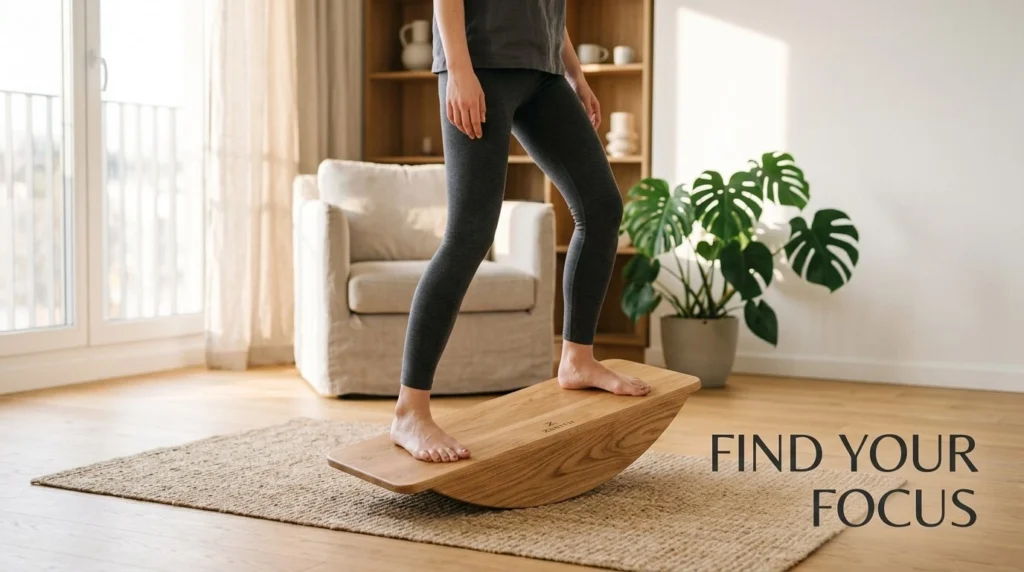
A balance board is a simple but surprisingly versatile fitness tool that can challenge your stability, coordination, strength, and concentration. Whether you are new to exercise, looking for a fun home workout, or interested in improving athletic performance, this compact piece of equipment can fit easily into your routine.
But what exactly does it do, and is it really worth using? The answer depends on your goals. A balance board can turn ordinary standing exercises into an active challenge, almost like asking your body to constantly solve a small movement puzzle.
1. What Is a Balance Board?
A balance board is a fitness and training device designed to make you work to maintain stability. Most models consist of a flat platform that moves, tilts, rolls, or rotates underneath your feet.
Unlike standing on a normal floor, you cannot simply remain still. Your ankles, legs, hips, and core must make small adjustments to keep you upright.
That constant adjustment is what makes balance training useful.
You do not necessarily need a long workout. Even a few minutes can make your muscles work differently from a conventional exercise session.
In simple terms, a balance board teaches your body to stay controlled while the surface beneath you is moving.
2. How Does a Balance Board Work?
When you step onto an unstable surface, your body immediately begins making tiny corrections. Your feet respond first, followed by your ankles, knees, hips, and core.
Think of it like balancing a pencil on your fingertip. You continually move your finger to prevent the pencil from falling. Your body performs a similar job when you stand on an unstable platform.
Several systems work together:
Proprioception: This is your body’s awareness of where its different parts are positioned.
Core control: Your abdominal and back muscles help keep your upper body stable.
Ankle stability: Your lower legs and feet make frequent adjustments.
Coordination: Your brain and muscles must communicate quickly.
This combination makes balance training different from simply standing on one leg or walking normally.
3. Main Benefits of Balance Training
Improved Stability
Regular practice can help you become more comfortable controlling your body when your position changes.
This can be useful during everyday activities such as climbing stairs, walking on uneven ground, or changing direction quickly.
Better Coordination
A balance board requires your brain and muscles to work together continuously. Over time, practicing controlled movements may improve your ability to coordinate different parts of your body.
Stronger Supporting Muscles
Although balance exercises may look easy, maintaining control can involve the ankles, calves, thighs, hips, and core.
The goal is not simply to stay upright. You are teaching these muscles to react and stabilize efficiently.
Greater Body Awareness
Balance exercises encourage you to pay attention to posture, foot position, weight distribution, and movement.
That awareness can be useful in many other physical activities.
An Engaging Home Workout
One major advantage is convenience. A balance board takes up relatively little space, making it suitable for many home exercise areas.
You can use it for short sessions while gradually increasing the difficulty.
However, a balance board is not a replacement for a complete fitness program. Strength training, cardiovascular activity, mobility work, and appropriate rest still matter.
4. Types of Balance Boards
Not every board moves in the same way. Choosing the right style can make a significant difference, especially for beginners.
Wobble Boards
A wobble board usually has a rounded or semi-rounded base. It can tilt in different directions and is often used for basic stability exercises.
Roller Boards
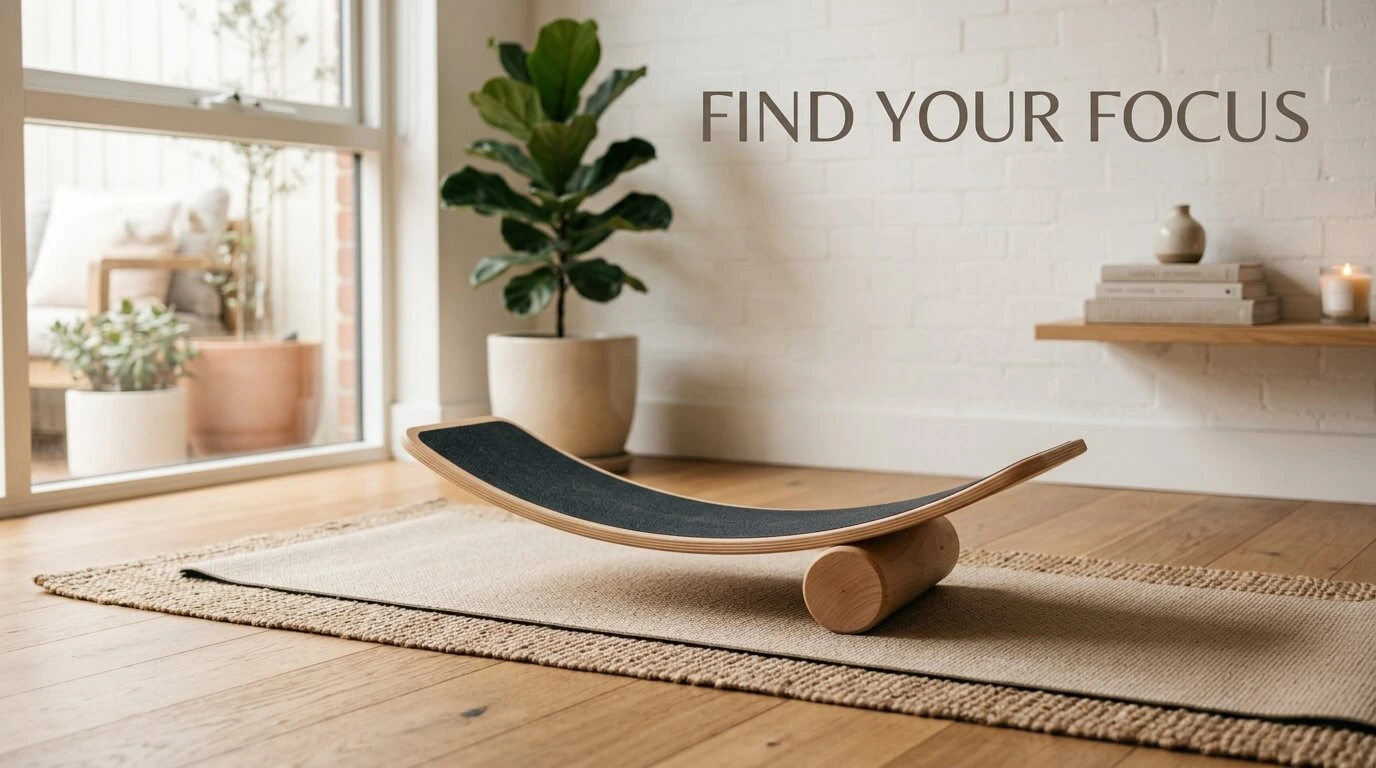
These have a platform that sits on top of a separate roller. The board can move forward and backward, creating a more demanding challenge.
Rocker Boards
A rocker board generally moves along one primary direction. Because its movement is more predictable, it can be a useful starting point for people who are new to balance equipment.
Inflatable Balance Trainers
Some balance trainers use an air-filled surface. The softer, moving surface creates instability while offering a different training experience.
Sport-Specific Balance Equipment
Some boards are designed with particular sports or rehabilitation-style training in mind. These models may offer adjustable difficulty or specialized shapes.
For beginners, a stable and predictable design is generally easier to learn than a highly unstable model.
5. Balance Board Exercises for Beginners
You do not need complicated movements when starting. In fact, mastering the basics is more important than trying advanced tricks.
Basic Two-Foot Stand
Place the board on a suitable surface and step onto it carefully.
Keep your feet approximately hip-width apart. Look forward and keep your knees slightly bent.
Try to remain balanced for 10–30 seconds.
Focus: Maintain relaxed breathing rather than holding your breath.
Controlled Weight Shifts
Once you can stand comfortably, slowly shift your weight from one foot to the other.
Move gradually instead of making sudden movements.
Focus: Keep your upper body controlled while allowing your ankles and legs to respond naturally.
Gentle Squats
When basic standing becomes comfortable, try shallow squats.
Keep your knees aligned with your feet and lower yourself slowly.
Focus: Quality matters more than depth.
Single-Leg Practice
This is considerably more challenging.
Start by practicing near a sturdy support. Lift one foot only when you feel confident enough to do so.
Try holding the position briefly before switching sides.
6. Intermediate Exercises to Try
Once basic exercises become easy, you can increase the challenge.
Squat Holds
Lower into a comfortable squat and hold the position for several seconds.
This combines lower-body control with stability.
Slow Arm Movements
While standing on the board, slowly raise your arms overhead or move them from side to side.
Changing your upper-body position can make maintaining balance more difficult.
Controlled Lunges
If your equipment and skill level allow it, controlled lunge movements can add another challenge.
Start slowly and use support if needed.
Eyes-Forward Balance
Keeping your eyes focused on one point can help you develop control.
Do not immediately attempt eyes-closed exercises. Removing visual information significantly increases the difficulty and can increase the risk of falling.
Progress gradually. The objective is controlled movement, not simply surviving as long as possible on the board.
7. Balance Boards for Sports and Athletic Training
Balance training can be useful for people involved in sports that require rapid movement and changes in direction.
Athletes may use balance exercises as part of broader training for:
- Coordination
- Body control
- Foot and ankle stability
- Movement awareness
- Reaction training
- Single-leg control
Sports such as skiing, skating, surfing, football, basketball, tennis, and martial arts involve dynamic movement. Having good control over your body can therefore be valuable.
However, balance-board exercises should complement sport-specific practice rather than replace it.
For example, a football player still needs running, sprinting, ball work, strength training, and tactical practice.
8. Using a Balance Board at Home
One reason people like this equipment is convenience.
You can usually store a compact board in a closet or under suitable furniture when it is not being used.
A simple home session might include:
Warm-up: 3–5 minutes of light movement.
Basic balance: 2–3 short rounds.
Weight shifts: 2 rounds.
Bodyweight squats: 2 rounds.
Single-leg practice: Short attempts on each side.
Cool-down: Gentle mobility exercises.
You can also incorporate brief practice into your daily routine rather than treating every session as a long workout.
For instance, you might practice for five minutes several times a week.
9. How to Choose the Right Board
Choosing the right equipment depends on your experience, goals, available space, and comfort level.
Consider Your Experience
If you are completely new to balance training, look for a design that offers predictable movement.
Advanced users may prefer equipment with greater instability.
Check the Weight Capacity
Always check the manufacturer’s stated weight limit before purchasing or using a board.
Look at the Surface
A textured or grippy platform can help reduce unwanted foot movement.
Consider Construction
A well-made board should feel solid and suitable for its intended use.
Think About Storage
If you live in a smaller home, dimensions and storage requirements may matter.
Don’t Buy Difficulty Just for the Sake of It
A highly challenging board is not automatically better.
The best equipment is one that allows you to perform exercises with control while gradually improving your ability.
10. Common Mistakes to Avoid
Starting Too Fast
Many beginners immediately attempt advanced movements.
Instead, spend time learning basic balance.
Using a Poor Surface
Avoid practicing on unsuitable or slippery flooring.
A stable setup can make the experience much safer.
Locking Your Knees
Rigid legs make it harder to react to movement. Keeping your knees slightly relaxed generally allows better control.
Looking Down Constantly
It is natural to watch your feet at first, but gradually learning to look forward can improve body awareness.
Ignoring Fatigue
Balance can deteriorate when you become tired.
If your movements become uncontrolled, take a break.
Trying Tricks Before Learning the Basics
Jumping, spinning, or other advanced movements are unnecessary for most beginners.
Master control before adding complexity.
11. Safety Tips for Beginners
Safety should always come first.
Before starting, make sure there is enough open space around you. Remove objects that could cause you to trip.
If possible, practice near a sturdy support such as a stable countertop or railing.
Do not use furniture that can easily move or tip over.
Wear suitable footwear or follow the equipment manufacturer’s guidance regarding barefoot use.
Start with short sessions and increase difficulty gradually.
If you experience unusual pain, dizziness, or significant discomfort, stop the exercise and consider seeking appropriate professional advice.
People recovering from an injury or dealing with a condition that affects balance should get guidance from a qualified healthcare or fitness professional before using unstable training equipment.
12. How Often Should You Practice?
There is no single schedule that works for everyone.
A beginner might start with 5–10 minutes several times per week. As confidence and control improve, the duration or difficulty can be increased gradually.
Consistency is more important than exhausting yourself.
You might think of balance training like learning a musical instrument. Playing for a short period regularly can be more useful than practicing intensely once and then stopping for weeks.
The same principle applies here.
Start small, stay consistent, and progress when the current level feels comfortable.
13. Frequently Asked Questions
What is a balance board good for?
A balance board can help train stability, coordination, body awareness, and supporting muscle control. It can be used as part of a broader fitness routine.
Is a balance board suitable for beginners?
Yes. Beginners can start with simple two-foot standing and controlled weight shifts. Choosing an appropriate difficulty level is important.
How long should I stand on a balance board?
Start with short intervals, such as 10–30 seconds at a time, and take breaks. As your control improves, you can gradually increase the duration.
Can a balance board help athletes?
It can be a useful addition to athletic training by challenging stability, coordination, and controlled movement. It should complement rather than replace sport-specific training.
Is a balance board enough for a complete workout?
Not usually. It can be a useful training tool, but a balanced fitness routine should generally include appropriate cardiovascular exercise, strength work, mobility, and recovery.
14. Final Thoughts
A balance board may look simple, but it can provide a surprisingly challenging workout for stability and coordination. Its biggest strength is versatility: beginners can start with basic standing exercises, while experienced users can gradually introduce more demanding movements.
The key is not to rush. Treat the board as a tool for developing control rather than a test of how long you can avoid falling.
Start with the basics, practice consistently, and increase difficulty only when you can perform each movement confidently.