

You’ve probably done this before. You buy a mascara because the ad promised lashes that go on forever, and by lunchtime you have smudges under your eyes and clumps that look like tiny spiders. Then you decide mascara just isn’t for you.
The problem usually isn’t you. It’s a mismatch between the formula, the wand and your natural lashes, plus a few small application habits nobody ever explains.
This guide covers what mascara is made of, how to pick the right type, how to apply it cleanly, and how to take it off without damaging your lashes. By the end, you’ll know how to get the look you want from a product that costs less than lunch.
What Is Mascara and How Does It Work?
Mascara is a cosmetic product applied to the eyelashes to darken, thicken, lengthen or curl them. It comes in a tube with a wand or brush that coats each lash with a pigmented formula.
Most mascaras are a mix of waxes, oils, pigments and film-forming polymers. The waxes give the formula body and hold, the pigment gives colour, and the polymers help it dry into a flexible layer on each lash. Some formulas add fibres to make lashes look longer, and others add conditioning ingredients like panthenol.
That’s why two tubes can behave so differently. A wax-heavy formula builds volume fast. A water-based formula feels lighter but may need more coats.
Types of Mascara: Which One Fits Your Lashes?
Choosing the right type matters more than choosing the right brand. Here are the main categories.
Volumizing Mascara
This is for thin or sparse lashes. Volumizing formulas are thicker and deposit more product, so lashes look fuller. The trade-off is that they can clump if you layer too much.
Lengthening Mascara
If your lashes are short but already dense, a lengthening formula is usually the better choice. These tend to have a thinner texture and sometimes contain fibres that extend past the lash tip. Look for a slim wand that can reach the tiny lashes in the corners.
Curling Mascara
Curling formulas pair a dry-setting formula with a curved or angled brush. They suit straight lashes that tend to droop. Hold the wand at the base for a few seconds before sweeping up, and the curl lasts longer.
Waterproof Mascara
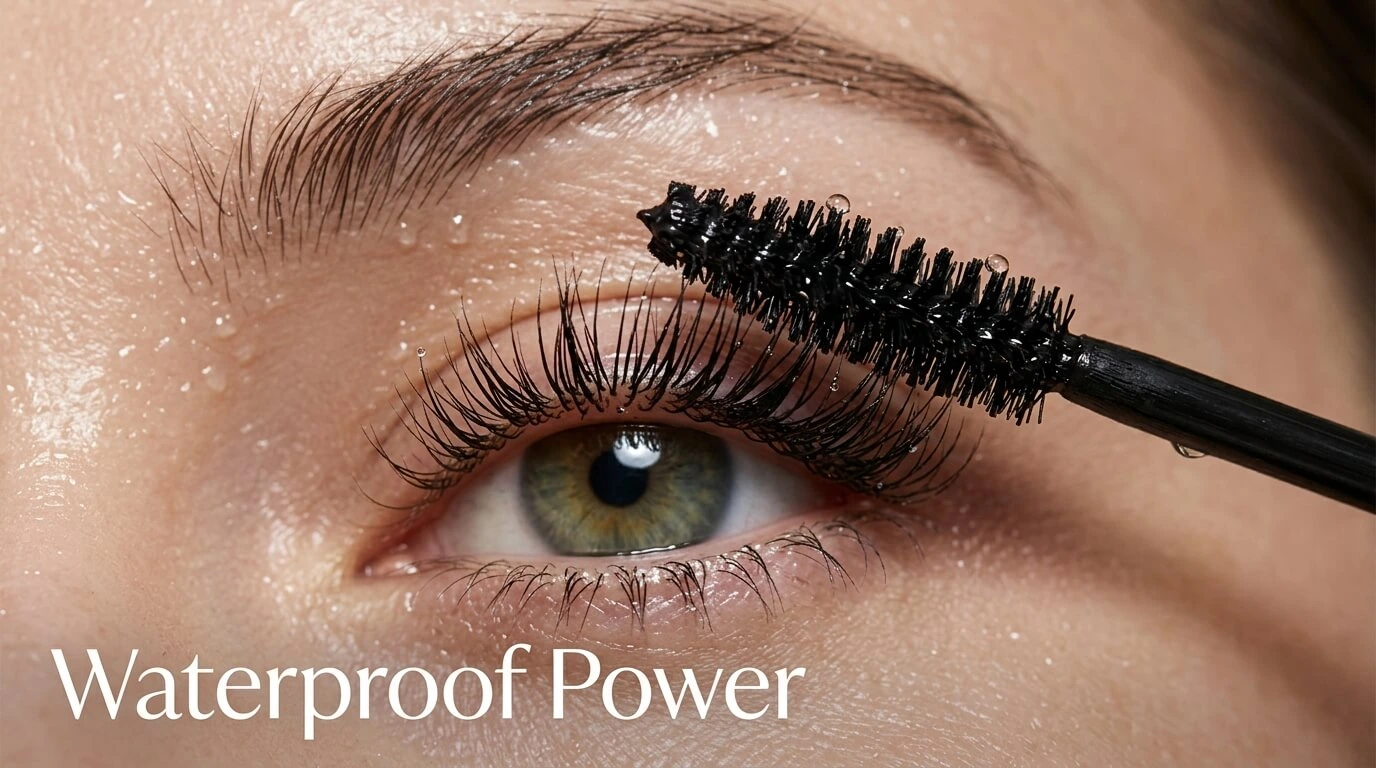
Waterproof mascara resists water, sweat and tears, which makes it the usual pick for weddings, holidays and humid weather. It’s harder to remove and can dry out lashes with daily use, so many people save it for special days.
Tubing Mascara
Tubing mascara forms tiny flexible tubes around each lash instead of a continuous film. You take it off with warm water, which is gentler on the lashes. It’s a good pick for sensitive eyes or for anyone who dislikes tugging at their lashes with remover.
How to Choose the Best Mascara for Your Needs
Brand names matter less than a few practical questions. Ask yourself these before buying.
What do your lashes do naturally? Short, thin lashes need volume. Long but straight lashes need curl. Dense lashes that already look full only need definition.
How sensitive are your eyes? If you wear contacts or get irritated easily, look for products labelled ophthalmologist-tested and fragrance-free. Avoid fibre formulas, because tiny fibres can fall into the eye.
What kind of wand do you like? Wand shape changes the result:
- Large, dense brushes give the most volume.
- Slim or tapered brushes separate and define.
- Curved brushes follow the shape of the lash line and lift.
- Silicone brushes tend to cause less clumping.
What does your day look like? A morning commute is easy on any formula. A long day outdoors, or a rainy event, calls for a waterproof one.

How to Apply Mascara Without Clumps
Good application can improve even a mediocre mascara. Here’s a simple routine that works for most people.
- Curl first. Use an eyelash curler before applying mascara, never after, because curling coated lashes can make them snap.
- Wipe the wand. Remove the excess on the rim of the tube or on a tissue. Too much product on the wand is the most common cause of clumping.
- Start at the roots. Wiggle the wand gently at the base of the lashes, then sweep up and outward. This builds thickness where it counts.
- Use the tip for corners. Hold the wand vertically to coat the small lashes at the inner corner and the bottom lashes.
- Wait, then add a second coat. Give the first coat about 30 seconds to set. Applying wet mascara over wet mascara is what causes clumps.
- Separate with a clean brush. If lashes stick together, brush through them with a clean spoolie while the formula is still slightly damp.
One small habit makes a big difference: don’t pump the wand in and out of the tube. It pushes air in, dries the formula faster and shortens the life of the product. Twist the wand gently instead.
Common Mascara Mistakes to Avoid
Even experienced makeup wearers fall into a few of these.
- Keeping a tube for too long. Mascara is used near a moist, sensitive area, so bacteria can build up. Eye health organisations generally advise replacing it every three months.
- Sharing mascara. It can pass bacteria between people, so keep yours to yourself.
- Adding water or saliva to revive a dry tube. This introduces bacteria. If it’s dried out, it’s time for a new one.
- Applying it in a moving car or on the train. An accidental poke to the eye can scratch the cornea.
- Sleeping in it. It can irritate the eyes and may cause lashes to become brittle or fall out.
How to Remove Mascara Safely
Taking mascara off properly matters as much as putting it on.
For regular formulas, a gentle eye makeup remover on a cotton pad is enough. Hold the pad on closed eyelids for about ten seconds so the formula softens, then wipe downward without rubbing.
For waterproof mascara, use an oil-based or micellar remover. The oil dissolves the waxes, so you don’t need to scrub. Rubbing hard is what pulls out lashes and leaves the skin around your eyes red.
Tubing mascara only needs warm water and a gentle press with a cloth. That’s one of its biggest selling points.
Mascara FAQs
How often should I replace my mascara?
Replace it about every three months. Throw it out sooner if it smells odd, turns clumpy or dry, or if your eyes feel irritated after use.
Is waterproof mascara bad for your lashes?
Not by itself, but it can be if you remove it roughly or wear it every day. Use a gentle oil-based remover and rotate with a regular formula when you can.
Can mascara cause eye infections?
It can contribute to them if the tube is old, shared or contaminated. Replacing it regularly and never adding liquid to the tube lowers the risk. If you develop redness, swelling or discharge, stop using it and see a doctor.
What is the best mascara for sensitive eyes?
Choose a fragrance-free, ophthalmologist-tested formula without fibres. Tubing mascara is also popular with sensitive eyes because it comes off with warm water.
How do I stop mascara from smudging?
Make sure your eyelids are oil-free before you start, let each coat set before adding the next, and consider a waterproof or smudge-resistant formula if you have oily lids or watery eyes.
Final Thoughts
The right mascara isn’t the one with the loudest advertising. It’s the one that suits your lashes, your eyes and your daily routine. Pick a formula for what your lashes need, apply it in thin layers, replace it every few months and remove it gently.
Check the mascara you’re using today. If it’s older than three months, or it clumps no matter what you do, swap it for a type from this guide and see how different your lashes look. Then share your favourite in the comments, so other readers can try it too.