
Marketing is everywhere. When a business posts on social media, sends an email, creates an advertisement, improves its website, or offers a discount, it is using marketing. But what does marketing really mean, and why does it matter so much?
At its heart, marketing is about understanding people and connecting them with products, services, or ideas that can provide value. It is not simply about selling something. Good marketing begins by asking a simple question: What does the customer actually need?
Think of marketing like a bridge. One side represents a business, while the other represents its customers. Marketing helps build the bridge between them.
What Is Marketing?
Marketing is the process of identifying customer needs, communicating value, creating awareness, and encouraging people to choose a product, service, or brand.
Many people think marketing is simply advertising. Advertising is certainly part of marketing, but marketing is much broader.
It can include:
- Market research
- Product development
- Pricing
- Branding
- Advertising
- Social media
- Email communication
- Customer service
- Sales promotion
- Public relations
- Content creation
Imagine you own a small bakery. Making delicious cakes is only one part of running the business. You also need to understand what customers want, decide what prices are reasonable, create an attractive identity, tell people about your bakery, and provide a good experience.
All of these activities are connected to marketing.
Why Marketing Matters
Why would an excellent product fail while an average product becomes popular? One major reason can be marketing.
A business can have a fantastic product, but if nobody knows it exists, sales may remain low. Marketing helps businesses become visible and communicate their value.
Good marketing can help a business:
- Reach potential customers
- Build brand awareness
- Increase sales
- Introduce new products
- Understand customer preferences
- Create customer loyalty
- Stand out from competitors
- Build a positive reputation
Marketing is especially important in crowded markets. Customers often have dozens of choices. A clear marketing strategy helps a business explain why its offering deserves attention.
However, effective marketing is not about shouting louder than everyone else. It is about saying the right thing to the right people at the right time.
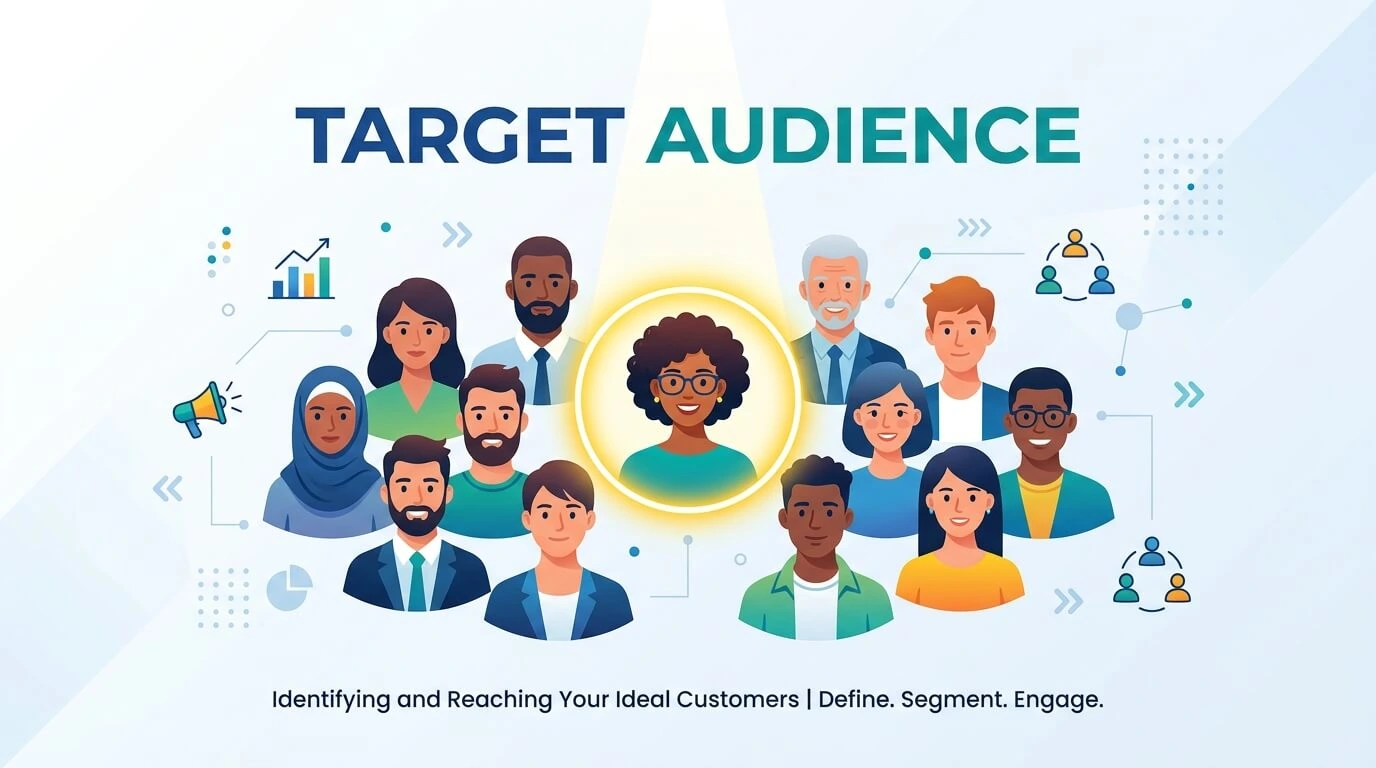
Understanding Your Target Audience
One of the most important marketing fundamentals is knowing who you are trying to reach.
A business cannot realistically appeal equally to everyone. Different people have different needs, budgets, interests, lifestyles, and buying habits.
For example, a company selling luxury watches may focus on customers interested in premium design and craftsmanship. A company selling affordable school supplies may focus on students, parents, or teachers.
A target audience is the particular group of people a business wants to reach.
Businesses may consider factors such as:
- Age
- Location
- Income
- Interests
- Lifestyle
- Shopping habits
- Problems and needs
- Online behavior
Understanding an audience makes communication more relevant.
Instead of saying, “Our product is great,” a business can explain how the product solves a specific problem. That difference can make marketing much more effective.
The Marketing Mix
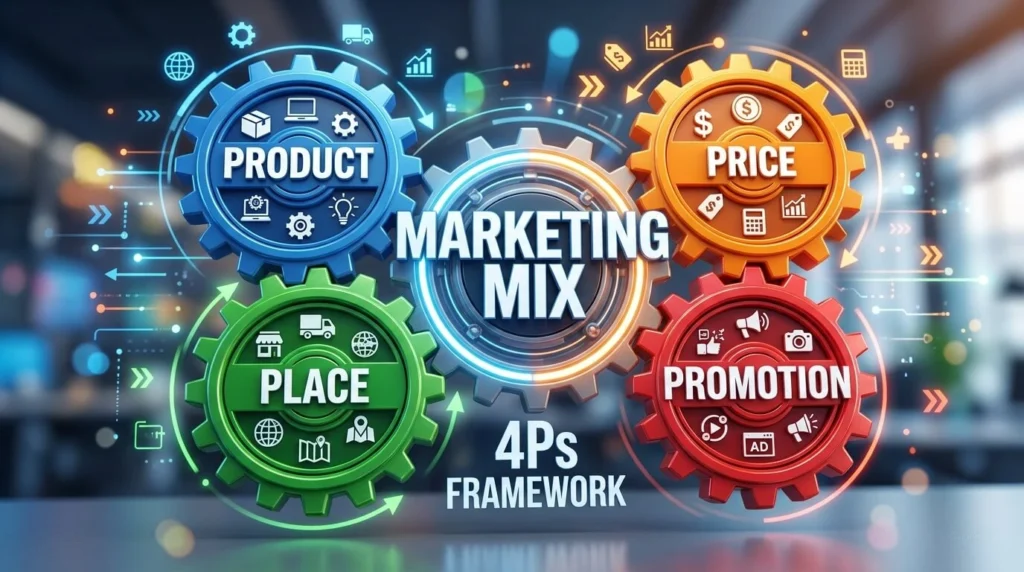
The marketing mix is another important part of marketing fundamentals. Traditionally, it is explained through the 4 Ps: Product, Price, Place, and Promotion.
Product
The product is what a business offers to customers. It may be a physical item, a service, an experience, or even an idea.
Businesses should consider quality, design, features, packaging, usefulness, and customer needs.
Price
Price determines how much customers pay.
Pricing affects how people perceive a product. A very low price may attract budget-conscious buyers, while a premium price may communicate exclusivity or quality.
The right price should consider costs, competitors, customer expectations, and perceived value.
Place
Place refers to how and where customers can access a product.
A product might be sold through:
- Physical stores
- Websites
- Marketplaces
- Social media
- Distributors
- Mobile applications
Convenience matters. Even an excellent product can struggle if customers cannot easily find or purchase it.
Promotion
Promotion is how a business communicates with potential customers.
It can include advertising, social media posts, email marketing, public relations, special offers, videos, and content marketing.
The four Ps work together. Changing one can affect the others.

Building a Strong Brand
A brand is more than a logo or business name. It represents how people recognize and perceive a business.
Think about brands you remember immediately. You may recognize their colors, packaging, slogans, tone, or overall personality without even seeing their full name.
A strong brand can create familiarity and trust.
Important elements of branding include:
- A memorable name
- Consistent visual identity
- Clear messaging
- A recognizable personality
- Reliable customer experience
- A clear value proposition
Consistency is particularly important. If a company looks professional on its website but communicates poorly on social media, customers may receive mixed signals.
Branding should answer a simple question: Why should customers remember and trust this business?
The Role of Market Research
Marketing should not be based entirely on guesses.
Market research helps businesses collect information about customers, competitors, trends, and market conditions.
Research can involve surveys, interviews, customer feedback, online behavior, competitor analysis, and sales data.
Suppose a restaurant wants to introduce a new menu. Instead of guessing which dishes customers will prefer, it can study existing sales, ask customers for feedback, and examine local trends.
Research can help answer questions such as:
- What do customers want?
- What problems are they experiencing?
- What prices are acceptable?
- Who are the main competitors?
- What trends are developing?
- Where do potential customers discover products?
Good research reduces uncertainty and helps businesses make more informed decisions.
Content and Digital Marketing
The internet has changed the way businesses communicate with customers.
Digital marketing allows businesses to reach people through websites, search engines, social media, email, video platforms, and other online channels.
Content marketing is one part of this broader area. Businesses create useful or entertaining content to attract and engage an audience.
Examples include:
- Blog articles
- Videos
- Tutorials
- Social media posts
- Infographics
- Guides
- Podcasts
- Newsletters
The goal should not always be to make an immediate sale. Sometimes the goal is to answer a question, solve a problem, or build familiarity.
For example, a furniture company could publish an article explaining how to choose the right dining table. The reader may not buy anything immediately, but the useful information can create trust and make the company more memorable.
Useful content gives people a reason to pay attention.
Customer Relationships and Trust
Marketing does not end when someone makes a purchase.
Successful businesses understand the importance of customer relationships.
A satisfied customer may return, recommend the business to friends, leave a positive review, or become a long-term supporter of the brand.
Customer relationships can be strengthened through:
- Helpful support
- Honest communication
- Personalized experiences
- Loyalty programs
- Follow-up messages
- Reliable products
- Quick responses to complaints
Trust is especially valuable because customers are increasingly exposed to advertisements and promotional messages.
If a business makes exaggerated promises, customers may become skeptical. Honest marketing creates stronger relationships because it focuses on delivering what was promised.
Setting Marketing Goals
Marketing activities should have a purpose.
Instead of saying, “We want more customers,” a business can create a specific goal such as increasing website visitors, generating leads, improving repeat purchases, or growing brand awareness.
Good marketing goals should be clear and measurable.
For example:
- Increase website traffic by 20% in three months.
- Generate 100 new leads this quarter.
- Increase email subscribers by 500.
- Improve repeat purchases over six months.
Clear goals make it easier to decide which marketing activities are working.
They also prevent businesses from spending money simply because a particular marketing channel looks popular.
Measuring Marketing Success
How do you know whether marketing is working?
The answer comes from measurement.
Businesses can track different marketing metrics, depending on their goals.
Common measurements include:
- Website traffic
- Sales
- Leads
- Conversion rate
- Customer retention
- Email open rates
- Social media engagement
- Advertising costs
- Return on investment
For example, getting thousands of social media views may sound impressive. But if those views never lead to meaningful engagement, website visits, inquiries, or sales, the campaign may not be achieving its real objective.
Numbers provide useful clues, but businesses should also consider customer feedback and the quality of relationships they are building.
Common Marketing Mistakes
Even experienced businesses can make marketing mistakes.
One common mistake is trying to market to everyone. When a message is designed for everyone, it may connect strongly with no one.
Another mistake is focusing only on selling. Customers usually want to understand how something can help them, not simply hear a list of promotional claims.
Other common problems include:
- Ignoring customer feedback
- Copying competitors too closely
- Using inconsistent branding
- Failing to measure results
- Choosing channels without a clear strategy
- Making unrealistic promises
- Neglecting existing customers
- Creating content without understanding the audience
A useful marketing strategy does not need to be complicated. It needs to be focused, consistent, customer-centered, and measurable.
The Future of Marketing
Marketing continues to change as technology and consumer behavior evolve.
Artificial intelligence, automation, personalization, short-form video, voice search, social commerce, and data analysis are influencing how businesses communicate with audiences.
At the same time, some fundamentals remain surprisingly stable.
People still want useful products. They still value good experiences. They still look for trustworthy businesses. And they still respond to messages that understand their needs.
Technology may change the tools, but understanding people remains at the heart of marketing.
Businesses that combine new technology with genuine customer understanding are likely to be better positioned for the future.
Conclusion
Marketing fundamentals provide the foundation for almost every successful marketing strategy. From understanding an audience and developing the right offer to building a brand and measuring results, each part plays an important role.
You do not need a huge budget to understand marketing. You need curiosity, research, consistency, and a willingness to listen to customers.
Ultimately, effective marketing is not about convincing everyone to buy something. It is about creating value, communicating that value clearly, and building relationships with the people who need what you offer.
Frequently Asked Questions
1. What are the basic fundamentals of marketing?
The basic fundamentals include understanding customers, researching the market, creating value, developing a strong brand, choosing appropriate pricing and distribution, promoting the offering, building relationships, and measuring results.
2. What are the 4 Ps of marketing?
The traditional 4 Ps are Product, Price, Place, and Promotion. Together, they help businesses plan how to offer and communicate products or services to customers.
3. Why is understanding the target audience important?
Understanding the target audience helps businesses create more relevant products, messages, offers, and experiences. It can also reduce wasted marketing effort.
4. Is digital marketing the same as marketing?
No. Digital marketing is one part of marketing that uses online channels such as websites, search engines, email, and social media. Marketing also includes offline activities and broader business decisions.
5. How can a business know whether its marketing is successful?
A business can measure success using goals and relevant metrics such as sales, leads, website traffic, conversion rates, customer retention, engagement, and return on investment.