
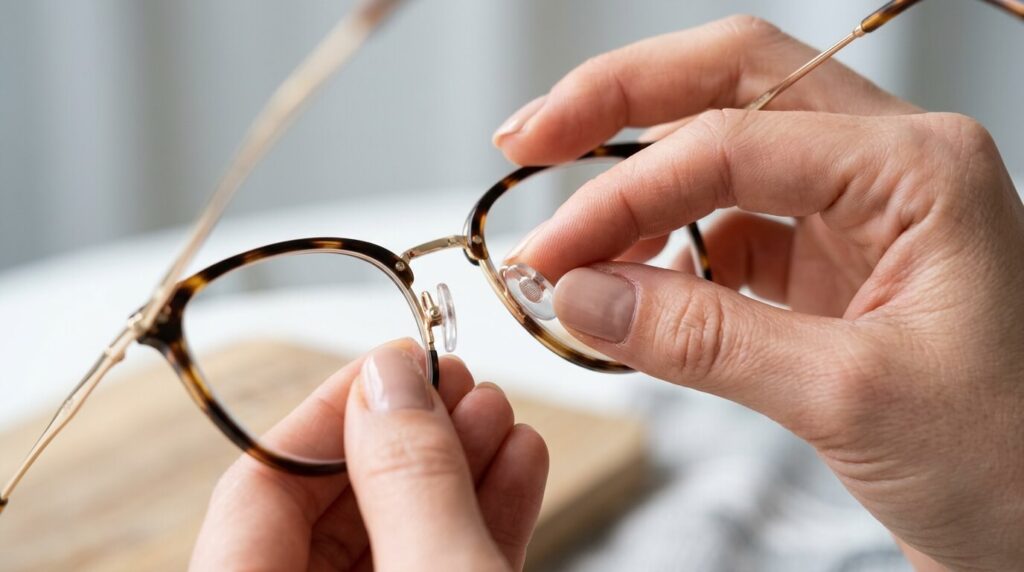
How to Fix Loose Glasses
If your glasses keep sliding down your nose, feel crooked, or wobble every time you move your head, you are not alone. Frames can become loose through everyday use, accidental drops, temperature changes, or simply because the screws and hinges gradually wear down.
The good news? Many minor problems can be corrected at home with a little patience and the right approach. Think of your glasses like a small piece of furniture: a tiny loose screw can make the whole thing feel unstable. However, some adjustments are better left to an optician, especially when the frame is expensive, damaged, or made from a material that can easily break.
This guide explains practical ways to fix loose glasses, what tools you may need, common mistakes to avoid, and when professional help is the safest option.
1. Why Do Glasses Become Loose?
Glasses are handled many times throughout the day. You put them on, take them off, clean them, place them on a table, and sometimes accidentally sit on them. Over time, this repeated movement can affect the frame.
Common causes include:
- Loose hinge screws
- Worn or stretched hinges
- Bent temple arms
- Loose nose pads
- A frame that has gradually changed shape
- Accidental drops or impacts
- Frequent one-handed removal
- Heat exposure
- Normal wear and tear
Sometimes the problem is surprisingly simple. A tiny screw may have loosened slightly, making one side of the frame feel unstable.
Other times, the frame itself has become distorted. In that situation, tightening a screw won’t completely solve the problem.
2. Signs Your Glasses Need Adjustment
How do you know whether your glasses are simply dirty or actually loose?
One obvious sign is that they slide down your nose repeatedly. You may find yourself pushing them back into place throughout the day.
Other signs include:
- One lens sits higher than the other.
- One temple feels tighter than the other.
- The arms move too freely.
- The frame feels unstable when you walk.
- The glasses become crooked after being worn.
- A hinge makes a clicking or rattling sound.
- Nose pads move when touched.
- The frame no longer sits comfortably behind your ears.
If your vision seems different because the lenses are no longer positioned correctly, don’t ignore the issue. Even if the lenses themselves are perfectly fine, an improperly positioned frame can make wearing glasses uncomfortable.

3. Tools You May Need
Before attempting a repair, gather a few basic tools.
Useful items include:
- Small eyeglass screwdriver
- Microfiber cloth
- Replacement eyeglass screws
- Small tweezers
- Soft, clean surface for working
- Lens-safe cleaning solution
An eyeglass screwdriver is especially useful because standard household screwdrivers may be too large for tiny frame screws.
Work over a table rather than a carpet or sink. If a tiny screw falls, finding it on a hard surface is much easier.
Place a microfiber cloth underneath the glasses. It protects the lenses from scratches and prevents the frame from sliding around.
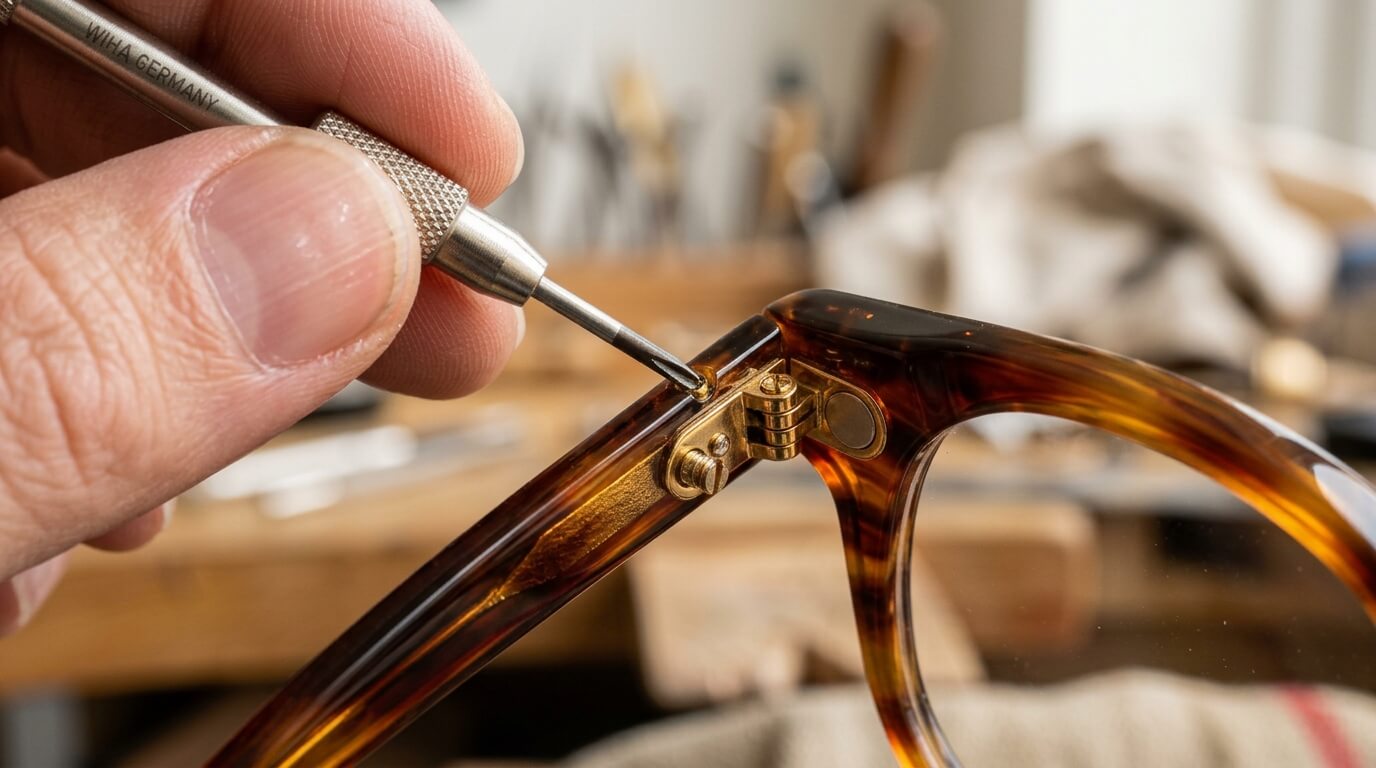
4. How to Tighten Loose Glasses Screws
A loose screw is one of the easiest glasses problems to address.
Start by examining the hinges where the temple arms connect to the front of the frame. If you notice movement or hear a slight rattle, the hinge screw may be loose.
Follow these steps:
- Put the glasses on a clean, flat surface.
- Identify the loose screw.
- Select a screwdriver that fits the screw head correctly.
- Hold the frame gently.
- Turn the screwdriver slowly clockwise.
- Stop as soon as the screw feels secure.
- Open and close the arm several times to test it.
Don’t keep turning after the screw is tight.
Over-tightening can cause problems. You could damage the screw head, strip the frame material, or make the hinge too stiff.
If the screw keeps becoming loose shortly after tightening, the screw or hinge may be worn. In that case, replacing the screw or having the hinge checked is a better solution.
5. How to Fix Loose Temples
The temples are the arms of your glasses that rest over your ears. When they become loose, the glasses may feel unstable or fall forward.
First, check whether the hinge is responsible. If the hinge moves excessively, tightening the screw may help.
If the temple itself has changed shape, however, be careful.
Do not aggressively bend the arm.
Different frames respond differently to pressure. Plastic frames can crack, while metal frames can bend permanently if excessive force is applied.
If one arm is noticeably wider or more open than the other, an optician can usually make a controlled adjustment using the appropriate tools.
A professional adjustment is particularly sensible for expensive frames because replacing a broken frame can cost far more than having it adjusted.
6. How to Adjust Glasses That Slide Down
Glasses that constantly slide down can be frustrating, especially when you’re reading, working, exercising, or looking down.
Several things can cause this problem.
First, clean your glasses. Oil from your skin can build up on the nose pads, frame, and lenses. This can make the glasses feel more slippery.
Wash the frame according to the manufacturer’s recommendations and dry it with a clean microfiber cloth.
If the glasses still slide, check the nose pads.
Nose pads that are too far apart may allow the frame to move. Metal frames with adjustable nose pads can often be adjusted by an optician.
For some frames, replacement nose pads may improve the fit.
Anti-slip accessories can also provide a temporary solution. These include small silicone grips designed for glasses.
However, don’t use household glue or other strong adhesives on the frame. They can damage the finish and make future repairs difficult.
7. How to Fix Loose Nose Pads
Nose pads can become loose, discolored, cracked, or detached over time.
If the pad itself is moving, examine the tiny screw or mounting arm connecting it to the frame.
If the screw is visibly loose, you may be able to tighten it carefully with an appropriate precision screwdriver.
If the pad is damaged, replacing it is usually better than trying to glue it back into position.
Replacement pads are available in different shapes and materials, including silicone and plastic. The correct choice depends on your frame.
Never put household adhesive directly onto a nose pad or lens. It can create a permanent mess and may damage the surrounding material.
If the mounting bracket is bent or broken, professional repair is recommended.
8. How to Handle Bent or Crooked Frames
A crooked frame is more complicated than a loose screw.
You may notice that one lens sits higher, one temple touches your face differently, or the bridge doesn’t sit evenly on your nose.
It’s tempting to simply bend the frame back into place. But that can be risky.
Frames can break surprisingly easily when pressure is applied in the wrong place.
Plastic frames are especially sensitive to temperature and pressure. Metal frames can sometimes be adjusted more easily, but they can still become permanently damaged.
If the frame is only slightly misaligned and you have experience making glasses adjustments, extremely gentle handling may be possible. Otherwise, visiting an optician is the safer option.
Many optical stores can make small frame adjustments quickly, and some may offer basic adjustments at little or no cost.
9. Temporary Fixes for Loose Glasses
What if you’re away from home and your glasses suddenly become loose?
You may need a temporary solution.
A few short-term options include:
- Use a glasses repair kit if available.
- Carry spare screws in your eyewear case.
- Use silicone temple grips.
- Use temporary anti-slip accessories.
- Keep the glasses in their case when you’re not wearing them.
A small eyewear repair kit can be surprisingly useful. Many kits contain miniature screwdrivers, screws, nose pads, and other small components.
However, temporary repairs shouldn’t become permanent solutions.
For example, using tape around a broken temple might get you through a few hours, but it won’t restore the original strength of the frame.
10. Mistakes to Avoid When Adjusting Glasses
DIY repairs can be useful, but certain mistakes can turn a small problem into an expensive repair.
Avoid these common mistakes:
Using the Wrong Screwdriver
A screwdriver that doesn’t fit properly can damage the screw head. Always use the correct size.
Over-Tightening Screws
Tight doesn’t mean extremely tight. Stop once the screw is secure.
Bending the Frame Forcefully
Never use sudden pressure to reshape your glasses.
Using Super Glue
Strong adhesives can damage frames, coatings, and moving parts. They can also make professional repairs harder.
Adjusting Glasses Without Protecting the Lenses
Place a soft cloth underneath your glasses while working.
Applying Heat Without Knowing the Frame Material
Heat can damage lenses, coatings, plastic, and certain frame finishes. Don’t heat your glasses unless you’re using a method specifically recommended for that frame.
Ignoring Repeated Problems
If the same screw keeps loosening, there may be a deeper issue. Repeatedly tightening it isn’t necessarily the answer.
11. When Should You Visit an Optician?
Not every glasses problem should be handled at home.
Professional assistance is recommended if:
- The frame is cracked.
- A hinge is broken.
- A lens is loose.
- The frame is badly bent.
- A nose-pad mount has broken.
- The screw won’t stay in place.
- The glasses are expensive or delicate.
- The frame contains complicated moving parts.
- You aren’t confident making the adjustment.
An optician has specialized tools designed for eyewear. They can often identify the exact cause of the problem rather than simply treating the symptom.
For example, if one side keeps becoming loose, the issue might not be the screw itself. The hinge could be worn or damaged.
12. How to Prevent Glasses From Becoming Loose
Prevention is much easier than repair.
Handle your glasses with both hands whenever possible. Removing them with one hand repeatedly can put uneven pressure on the temples and hinges.
When you’re not wearing them, place them inside a protective case rather than leaving them on a desk or bed.
Avoid placing your glasses lens-down. This can scratch the lenses and put unnecessary pressure on the frame.
You should also clean your glasses regularly using appropriate eyewear-cleaning methods.
Keep them away from excessive heat. Leaving glasses in a hot vehicle, for example, can expose the frame and lens coatings to conditions they weren’t designed to withstand.
Finally, consider getting your glasses professionally checked occasionally. A quick adjustment can prevent a minor fitting issue from becoming a bigger problem.
Conclusion
Learning how to fix loose glasses can save you time and prevent everyday frustration. Simple issues, such as a slightly loose hinge screw, can often be handled carefully with the right precision tool. Problems involving bent frames, damaged hinges, or broken mounts are better handled by an optician.
The most important rule is simple: don’t force the frame. Your glasses may look sturdy, but their tiny components are delicate. Treat them gently, make small adjustments, and seek professional help when the problem goes beyond a basic repair.
FAQs
1. Can I tighten loose glasses myself?
Yes. If the problem is simply a loose hinge screw, you can usually tighten it carefully with a suitable eyeglass screwdriver. Avoid over-tightening.
2. Why do my glasses keep sliding down my nose?
Dirty nose pads, an incorrect frame fit, worn nose pads, or loose temples can cause glasses to slide. Cleaning them may help, but persistent slipping may require professional adjustment.
3. Can I use super glue to repair loose glasses?
It’s generally not recommended. Super glue can damage the frame, interfere with moving parts, and make future professional repairs more difficult.
4. How often should glasses be adjusted?
There is no fixed schedule. If your glasses become crooked, loose, uncomfortable, or repeatedly slide down, it’s a good time to have them adjusted.
5. Should I repair a bent glasses frame at home?
Minor adjustments may sometimes be possible, but forceful bending can crack or permanently damage the frame. For significant bends, professional adjustment is the safer choice.