

A mirror can do much more than show you your reflection. The right one can make a small room feel larger, brighten a dark corner, improve your daily routine, and even become an important part of your interior design.
Among the many styles available, a full length mirror is especially practical because it lets you see your entire outfit from head to toe. Whether you are getting ready for work, checking an outfit before going out, decorating a bedroom, or trying to create the feeling of a larger space, a tall mirror can be surprisingly useful.
But how do you choose the right size? Should you lean it against the wall or mount it? Is a framed design better than a frameless one? And where should you put it for the best visual effect?
This guide answers those questions and explains everything you need to know before buying and using a full-length mirror.
1. What Is a Full Length Mirror?
A full-length mirror is designed to provide a reflection of most or all of your body at once. Unlike a small dressing mirror that may only show your face and upper body, a tall mirror gives you a complete view from head to toe.
These mirrors are commonly used in bedrooms, dressing areas, hallways, walk-in wardrobes, bathrooms, clothing stores, studios, and entryways.
The basic idea is simple, but the designs can vary greatly. You can find rectangular, arched, oval, irregular, minimalist, decorative, and full-body standing styles.
Some models have a simple frame, while others include shelves, hooks, storage areas, lights, or adjustable stands.
Think of a tall mirror as a window that reflects your room instead of showing the outdoors. When positioned correctly, it can influence how spacious, bright, and balanced your interior feels.
2. Why Every Home Can Benefit From One
Why is a tall mirror such a popular home accessory? The answer is a combination of practicality and decoration.
First, it makes getting dressed easier. You can see your entire outfit instead of checking different parts of your appearance in several smaller mirrors.
Second, it can visually expand a room. A mirror reflects furniture, walls, windows, and light, creating the impression of additional space.
Third, it can increase brightness. When placed opposite or near a window, a reflective surface can bounce natural light around the room.
Fourth, it adds decorative value. A carefully selected frame can complement your furniture, flooring, curtains, and other accessories.
Finally, it is extremely versatile. You do not necessarily need a large bedroom to enjoy one. A hallway, dressing corner, or unused wall can be transformed with the right design.
For renters, a leaning model can also be useful because it may not require permanent installation.
3. Choosing the Right Size
Size is one of the most important factors to consider.
A mirror should be large enough to provide a useful reflection without making the room feel crowded. Before shopping, measure the wall or floor area where you intend to place it.
Height is particularly important. A mirror designed for full-body viewing should generally be tall enough to show your head, shoulders, torso, legs, and feet comfortably.
Width depends on your available space and personal preference. A narrow design is suitable for tight areas, while a wider mirror can provide a more generous viewing area and make a stronger visual statement.
You should also consider the surrounding furniture.
For example, placing an extremely wide mirror beside a small bedside table may make the furniture appear unbalanced. On the other hand, a large wall can sometimes look empty when paired with a very narrow mirror.
A good approach is to use masking tape to outline the approximate dimensions on your wall. Stand several feet away and see how the proposed size feels before purchasing.
Remember: measurements on a product page may describe the entire frame rather than the actual reflective surface. Always check both dimensions.
4. Popular Mirror Shapes and Designs
You are not limited to the traditional rectangular style.
Rectangular Mirrors
Rectangular designs are timeless and practical. Their straight edges make them easy to position against walls, wardrobes, dressers, and doors.
They are particularly suitable for modern, minimalist, and traditional interiors.
Arched Mirrors
An arched top adds softness and architectural character. This style works particularly well in bedrooms, dressing areas, and modern entryways.
Oval Mirrors
Oval designs have curved edges and can create a softer appearance than rectangular models. They are a good choice if your room already contains rounded furniture or decorative elements.
Irregular Mirrors
Organic and asymmetrical shapes can become a focal point in contemporary interiors. They are less conventional and can give a room a creative personality.
Decorative Mirrors
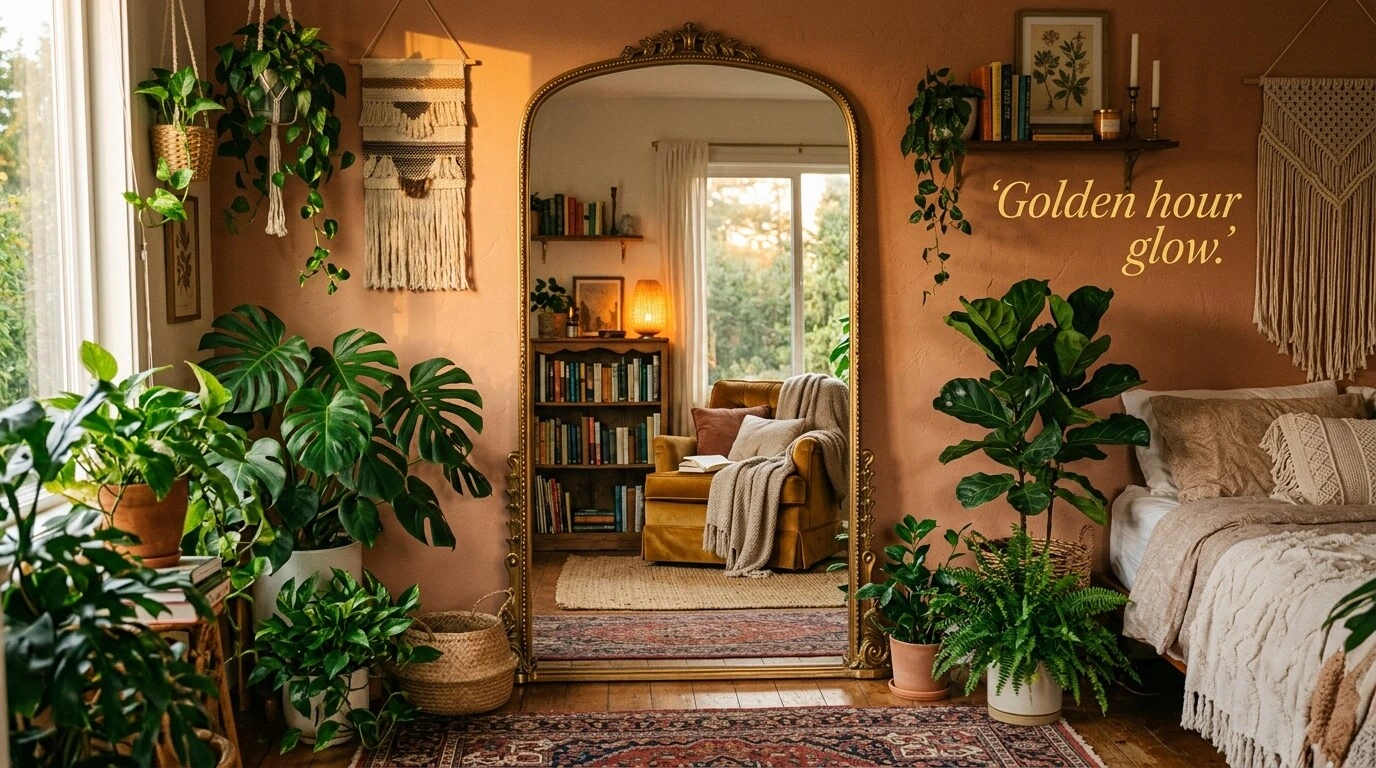
Some mirrors feature ornate frames, metallic finishes, carved details, or decorative borders. These work especially well in classic, luxury, or vintage-inspired spaces.
The best shape is ultimately the one that complements your existing room rather than competing with it.
5. Framed vs Frameless Mirrors
One of the simplest decisions is whether you want a frame.
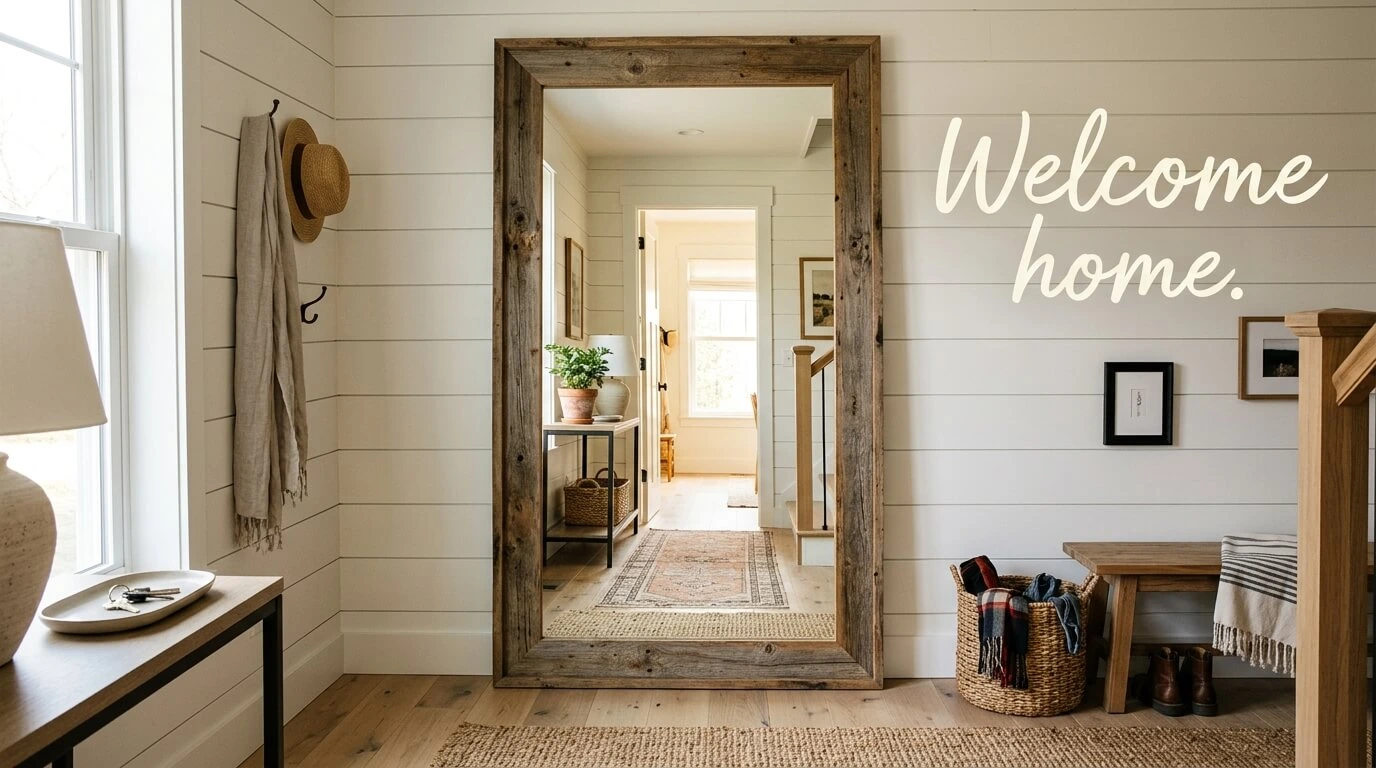
Framed mirrors offer additional personality. A wooden frame can create warmth, while black metal can provide a modern industrial appearance. Gold and brass finishes can add a more luxurious touch.
Frameless mirrors, meanwhile, have a cleaner and more minimalist appearance. Because there is less visual detail around the reflective surface, they can blend naturally into contemporary rooms.
A frame also affects perceived size. Two mirrors with identical glass dimensions can look very different when one has a thick decorative border.
When choosing a frame, consider the other finishes in your room.
For example, if your furniture has warm wood tones, a wooden frame may create a cohesive appearance. If you already have black metal lighting fixtures, a black frame can tie everything together.
You do not have to match every finish perfectly. In fact, a little contrast can make an interior more interesting.
6. Best Materials and Finishes
The quality of a mirror is not determined only by its appearance.
The glass should provide a clear reflection without noticeable distortion. This is especially important when you are using the mirror to evaluate clothing or posture.
The frame material also matters.
Wood can provide warmth and a natural appearance.
Metal is generally associated with contemporary, industrial, or minimalist interiors.
Plastic or composite frames may be lightweight and budget-friendly while offering a wide variety of styles.
Frameless glass creates a clean appearance and can work especially well in modern spaces.
Pay attention to the backing and overall construction too. A beautiful reflective surface is not very useful if the frame feels unstable or the structure is poorly made.
If you are buying online, read the dimensions, material information, customer feedback, and installation instructions carefully.
7. Where to Place Your Mirror
Placement can completely change how a mirror affects a room.
Bedroom
The bedroom is one of the most common locations. You can place the mirror near your wardrobe, dressing table, or an open wall.
If space is limited, a slim design beside the wardrobe can provide a practical dressing area without taking up much room.
Hallway
A tall mirror near the entrance is useful for checking your appearance before leaving home. It can also make a narrow hallway appear wider.
Dressing Room
If you have a dedicated dressing space, a large mirror becomes almost essential. Good lighting around the mirror can make the area more functional.
Living Room
A decorative mirror can serve as a design feature in a living room. Positioning it where it reflects an attractive part of the room can create depth.
Entryway
An entryway mirror combines practicality and decoration. Add a small console, plant, or bench nearby to create a welcoming arrangement.
However, avoid placing a mirror where it reflects clutter. A mirror does not only reflect light—it reflects whatever is in front of it.
8. Full-Length Mirrors for Different Rooms
Different rooms require different approaches.
In a small bedroom, choose a slim design that does not interfere with walking space.
In a large bedroom, a wider decorative model can become a major focal point.
For an apartment, consider a leaning mirror that can be moved when necessary.
In a walk-in wardrobe, prioritize clarity, size, and lighting over decorative details.
For a hallway, a narrow vertical design can provide the reflection you need without blocking movement.
In a modern living room, an unusual shape or minimalist frame can function almost like artwork.
For a traditional home, consider a wooden or decorative frame that complements existing architectural details.
The important thing is to match the mirror to the function of the room.
9. How Mirrors Make Rooms Look Bigger
One of the most useful benefits of mirrors is their ability to create a sense of visual depth.
Imagine walking into a small room. If the walls are solid and there are few reflective surfaces, the room can feel closed in.
Now imagine placing a large mirror on one wall. Suddenly, the reflection creates another visual layer. The room appears to continue beyond the glass.
This does not physically increase the floor area, of course. Instead, it changes how your eyes interpret the space.
Placement matters enormously.
A mirror opposite a window can reflect daylight. A mirror facing a well-decorated wall can repeat an attractive visual element.
However, avoid reflecting messy shelves, piles of clothes, or crowded corners. Doing so can make the room feel busier rather than larger.
For narrow spaces, vertical mirrors can emphasize height, while wide mirrors may emphasize horizontal space.
10. Leaning, Hanging, or Freestanding?
There are three common ways to use a large mirror.
Leaning Mirror
A leaning mirror rests against the wall. It has a relaxed, contemporary appearance and is easy to reposition.
It can work especially well in bedrooms and dressing spaces.
However, because it is not permanently attached, safety should be considered carefully.
Wall-Mounted Mirror
A mounted mirror provides a more secure and finished appearance. It is a good option for homes where the mirror will stay in one location.
Correct mounting hardware is essential. The type of wall and weight of the mirror should determine the appropriate fixing method.
Freestanding Mirror
Freestanding designs have their own support system. They can often be moved around and may include adjustable angles.
They are particularly useful for dressing areas where flexibility is important.
Before selecting a style, think about whether you value mobility, stability, or a clean built-in appearance most.
11. Styling Ideas for Modern Interiors
A mirror does not need to stand alone.
You can create a stylish corner by combining it with a small bench, plant, rug, artwork, or side table.
For a minimalist look, keep the area around the mirror uncluttered.
For a warm bedroom, combine a wood-framed mirror with soft textiles and natural materials.
For a modern room, choose clean lines and neutral finishes.
For a glamorous look, consider a decorative metallic frame and carefully positioned lighting.
You can also use lighting to enhance the mirror itself.
Wall lights positioned beside the reflective surface can provide balanced illumination. Avoid relying only on a strong overhead light because it may create harsh shadows.
A useful rule is to treat the mirror as part of the room’s composition rather than simply a functional object.
12. Safety and Installation Tips
Safety should never be overlooked, especially with large glass objects.
Secure heavy mirrors properly. If a mirror is designed for wall mounting, use suitable hardware for both the mirror’s weight and your wall type.
Be careful with leaning models. A large mirror can become dangerous if it slips or falls.
Keep pathways clear. Do not position a freestanding mirror where people frequently walk or where it can easily be knocked over.
Check the surrounding area. Avoid placing fragile objects where they could fall against the glass.
Follow manufacturer instructions. Installation requirements vary between products.
If the mirror is particularly heavy or expensive, professional installation can be worthwhile.
Safety becomes even more important in homes with children or pets.
13. Cleaning and Maintaining Your Mirror
Keeping a mirror clean is relatively simple, but the wrong technique can leave streaks.
Start by removing loose dust with a soft, dry microfiber cloth.
Use a suitable glass-cleaning solution sparingly. Instead of soaking the surface, apply the cleaner to the cloth when appropriate and wipe gently.
Avoid allowing excessive moisture to collect around the frame or edges, particularly on framed mirrors.
For stubborn marks, clean them carefully rather than scrubbing aggressively.
A microfiber cloth usually works well because it can remove fingerprints and dust without leaving much lint.
Do not use abrasive materials that could scratch the surface.
Regular light cleaning is better than waiting until the mirror becomes heavily marked.
If the mirror has decorative or delicate framing, check the manufacturer’s care instructions because some materials may require different cleaning methods.
14. Common Buying Mistakes to Avoid
Buying a mirror may seem straightforward, but several mistakes are surprisingly common.
Ignoring Measurements
A mirror that looks perfect online may be too large or too small for your actual space.
Choosing Style Over Function
An attractive mirror is not useful if it does not provide enough viewing area.
Forgetting the Frame
Remember that the frame can add several inches to the overall dimensions.
Ignoring Lighting
A mirror placed in a dark corner may not be very practical for getting dressed.
Not Considering Reflection
Always think about what the mirror will reflect.
Overlooking Safety
Large glass objects should be installed or positioned securely.
Buying Without Checking Construction
Look beyond photographs. Pay attention to materials, weight, backing, hardware, and customer feedback.
Using the Wrong Size for the Room
A tiny mirror on a huge empty wall can look lost, while an oversized model can overwhelm a compact room.
The best purchase balances size, quality, function, safety, and design.
15. How to Choose the Perfect Full Length Mirror
If you are still unsure which mirror to choose, narrow your decision down to five questions.
1. Where will it go?
Measure the available space before shopping.
2. How will you use it?
For outfit checks, prioritize a clear and sufficiently large reflection. For decoration, focus more on shape and frame.
3. What style does your room have?
Choose a design that complements your furniture and existing finishes.
4. Do you need flexibility?
If you frequently rearrange your room, a freestanding or leaning design may be useful.
5. What is your budget?
Decide how much you are comfortable spending and compare construction quality rather than choosing based solely on appearance.
A more expensive mirror is not automatically better. Likewise, the cheapest option may not provide the durability or clarity you need.
Look for the best balance between quality and price.
Conclusion
A full length mirror is one of those home accessories that can combine everyday usefulness with strong decorative appeal. It helps you check your complete outfit, adds depth to a room, reflects light, and can make an empty wall feel intentionally designed.
The key is choosing the right size, shape, frame, placement, and installation method for your space. Whether you prefer a minimalist frameless design, a warm wooden frame, an elegant arched style, or a movable standing model, there is an option for almost every interior.
Think of your mirror as both a practical tool and a piece of interior design. When you place it thoughtfully, it can change not only how you see yourself but also how you experience the room around you.
Frequently Asked Questions
1. What is the ideal size for a full length mirror?
The ideal size depends on your height, available wall space, and how much of your body you want to see. Choose a mirror tall enough to provide a comfortable head-to-toe reflection while leaving enough surrounding space for practical use.
2. Where is the best place to put a full length mirror?
Bedrooms, dressing areas, hallways, and entryways are popular locations. A good position is somewhere that provides sufficient viewing distance and, when possible, reflects natural or attractive light.
3. Is a leaning mirror safe?
A leaning mirror can be safe when positioned correctly, but large or heavy mirrors should be secured according to the manufacturer’s instructions. Extra care is recommended in homes with children and pets.
4. Do mirrors really make a room look bigger?
Yes, mirrors can create the visual impression of greater space by reflecting the room and adding depth. The effect is strongest when the mirror is positioned thoughtfully and reflects light or an attractive part of the room.
5. How do I keep a full length mirror streak-free?
Use a soft microfiber cloth and an appropriate glass cleaner. Clean gently and avoid excessive moisture around the edges and frame. Regular light cleaning helps prevent fingerprints and buildup.