

If you sleep on your side, you already know that finding the right pillow can make a surprisingly big difference. A pillow that is too flat may leave your neck tilted downward, while one that is too high can push your head upward. The result can be an uncomfortable morning, stiff shoulders, or a sore neck.
The good news? You do not need to choose a pillow based only on its appearance or price. The right option depends on your sleeping position, body shape, mattress firmness, and personal comfort preferences.
Think of your pillow as a small bridge between your head and mattress. Its job is to keep that bridge level while supporting you throughout the night.
1. Why Side Sleepers Need a Special Pillow
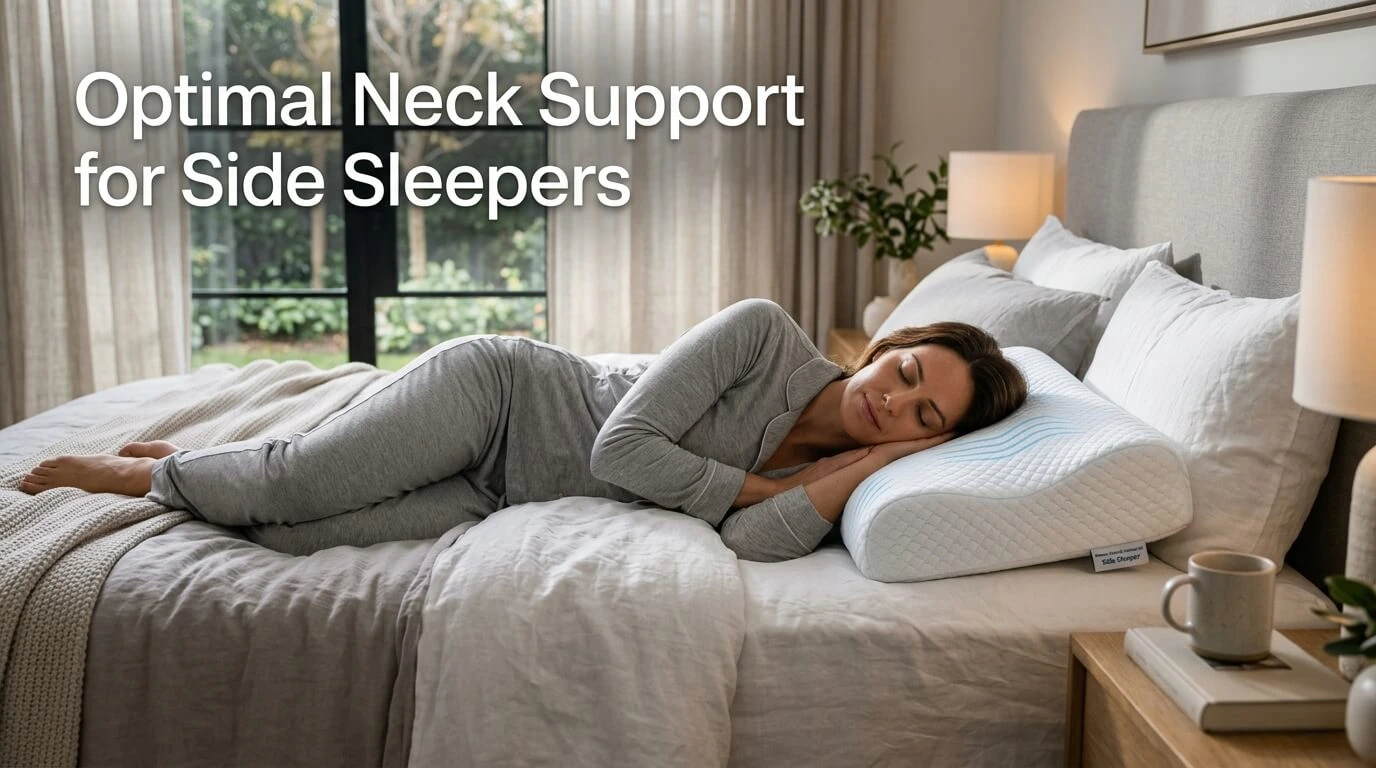
Side sleeping creates a larger gap between your head and the mattress than back or stomach sleeping. Your shoulder takes up space between your head and the bed, so a very thin pillow may not provide enough support.
When your pillow is too low, your head can fall toward the mattress. When it is too high, your head may be pushed away from the mattress. Neither position is ideal for maintaining a comfortable sleeping posture.
A suitable pillow should fill the space naturally without forcing your neck into an awkward angle.
The main goal is simple: keep your head, neck, and spine comfortably aligned while you sleep.
2. What Makes a Pillow Suitable for Side Sleeping?
A good pillow for side sleeping usually combines adequate loft, supportive filling, and comfortable firmness.
Look for a pillow that:
- Supports your head without sinking excessively
- Fills the space between your head and mattress
- Keeps your neck in a neutral position
- Provides enough room for your shoulder
- Maintains its shape during the night
- Feels comfortable rather than overly rigid
Your personal preference still matters. Some people enjoy a firm, structured pillow, while others prefer a softer surface with a supportive core.
There is no single pillow that works perfectly for every side sleeper.
3. Choosing the Right Pillow Height
Height, often called loft, is one of the most important factors.
Side sleepers often benefit from a medium-to-high loft because of the space created by the shoulder. However, the ideal height varies depending on your body and mattress.
A person with broad shoulders may need more height than someone with a smaller frame. Similarly, a firm mattress may require a different pillow height than a soft mattress.
How can you check the height?
Lie in your normal sleeping position and ask whether your head feels level with your body. Your neck should not feel like it is being pushed upward or allowed to collapse downward.
If possible, choose an adjustable pillow. These designs allow you to add or remove filling until the height feels right.
4. Firmness and Neck Support
Firmness is another important consideration.
A pillow that is extremely soft may feel wonderful when you first lie down, but it can lose its shape under the weight of your head. On the other hand, an extremely firm pillow may feel uncomfortable around the ear and shoulder.
For many side sleepers, medium-firm support offers a useful balance.
Why does firmness matter?
Your pillow needs to resist enough pressure to maintain its shape. At the same time, it should provide enough cushioning to prevent pressure points.
A useful approach is to think about support and softness as two different things. A pillow can have a soft outer surface while still containing a supportive inner material.
5. Best Pillow Materials for Side Sleepers
Different materials create very different sleeping experiences.
Memory foam is popular because it can contour around the head and neck. It generally provides stable support and is less likely to flatten quickly.
Latex offers responsive support and tends to return to its original shape quickly. It can be a good option if you dislike the slow-sinking feeling associated with some memory foam pillows.
Down and feather alternatives can feel soft and luxurious. However, some very soft options may require frequent adjustment to maintain sufficient support.
Polyester fiberfill is usually affordable and available in many firmness levels. Some adjustable versions can be customized by removing or adding filling.
Buckwheat filling is another option. The individual hulls can shift around your head and provide a firmer, more structured feel.
The best material depends on whether you prioritize contouring, breathability, softness, responsiveness, or adjustability.
6. Memory Foam vs Latex vs Down Alternatives
Choosing between common materials can be confusing, so it helps to compare their general characteristics.
| Material | Support | Feel | Best For |
|---|---|---|---|
| Memory Foam | High | Contouring | Stable neck support |
| Latex | High | Responsive | People who dislike sinking |
| Down | Low to medium | Very soft | Plush comfort |
| Down Alternative | Medium | Soft | Budget-friendly comfort |
| Buckwheat | High | Firm and adjustable | Structured support |
| Fiberfill | Medium | Customizable | Affordable options |
Memory foam is often a strong choice for people who want consistent support. Latex may suit sleepers who want something more responsive.
If softness is your top priority, a down or down-alternative pillow may feel attractive, but you should make sure it still provides enough height and support.
7. Pillow Shape and Shoulder Comfort
Shape can be just as important as material.
Traditional rectangular pillows work well for many people. However, contoured pillows can provide additional support around the neck.
Some pillows are specifically designed with higher edges and a lower center. This shape can help keep the neck supported while giving the head a comfortable resting area.
Side sleepers should also consider shoulder pressure. A pillow that is too narrow or too firm may feel uncomfortable around the ear and shoulder.
An adjustable design can be especially useful because you can change the filling to create a personalized sleeping surface.
8. How Your Mattress Affects Your Pillow
Here is something many people overlook: your mattress changes how your pillow should feel.
If your mattress is very firm, your shoulder may not sink very far into it. This can increase the space between your head and mattress, making a taller pillow more suitable.
A softer mattress allows the shoulder to sink deeper. As a result, you may need slightly less pillow height.
This is why buying a pillow based solely on someone else’s recommendation can be misleading.
Your pillow and mattress work as a team. Imagine them as two puzzle pieces. If one changes, the other may need to change too.
9. Common Pillow Mistakes Side Sleepers Make
Many people unknowingly choose a pillow that works against their sleeping position.
Choosing a pillow that is too flat is one of the most common mistakes. It may feel comfortable initially but fail to provide enough support throughout the night.
Choosing an excessively high pillow can create the opposite problem by pushing the head upward.
Another mistake is buying a pillow simply because it is marketed as “orthopedic” or “premium.” Marketing terms do not automatically mean a pillow will suit your individual needs.
You should also avoid keeping a pillow long after it has lost its shape. Even a high-quality pillow eventually needs replacing.
10. How to Choose a Pillow for Your Body Type
Your body proportions can influence the ideal pillow.
Broad-shouldered sleepers often need additional loft because there is more distance between the mattress and head.
Smaller-framed sleepers may find very tall pillows uncomfortable and could prefer a lower or adjustable option.
Your sleeping habits matter too. If you spend most of the night on your side but occasionally move onto your back, an adjustable pillow may offer greater flexibility.
The best choice is not necessarily the most expensive one. It is the pillow that supports your natural sleeping position without creating pressure or awkward angles.
11. Care, Cleaning, and Pillow Lifespan
Even a good pillow needs proper care.
Always check the manufacturer’s washing instructions before cleaning. Some covers can be machine washed, while certain foam pillows should not be submerged in water.
A washable pillow cover can help protect the pillow from sweat, oils, dust, and everyday buildup.
You should also regularly check whether your pillow has developed lumps, permanent dents, or noticeable loss of support.
If folding or pressing the pillow no longer allows it to recover its original shape, it may be time to consider replacing it.
12. Final Tips for Finding Your Ideal Pillow
Finding the best pillow for side sleepers is ultimately about balance.
You want enough height to fill the space created by your shoulder, enough firmness to maintain support, and enough cushioning to remain comfortable throughout the night.
Before buying, consider your shoulder width, mattress firmness, preferred sleeping position, pillow material, and desired firmness.
If you are uncertain, an adjustable pillow can be a practical starting point because you can modify the loft instead of committing to one fixed height.
Remember, the perfect pillow is not necessarily the one with the most impressive advertising. It is the one that quietly does its job while you sleep.
Conclusion
A comfortable pillow can transform the experience of side sleeping. The right height, firmness, material, and shape can help create a more supportive and comfortable sleeping environment.
Instead of focusing only on brands or price, pay attention to how the pillow fits your body and mattress. Once you find the right combination, you may wonder why you waited so long to replace your old pillow.
FAQs
1. What type of pillow is best for side sleepers?
A supportive medium-to-high loft pillow is often a good starting point for side sleepers. Memory foam, latex, and adjustable pillows can provide useful support, depending on personal preference.
2. Should side sleepers use a firm pillow?
Many side sleepers prefer medium-firm support because it helps maintain pillow height without feeling excessively hard. However, the ideal firmness depends on your comfort preferences and body shape.
3. How high should a pillow be for side sleeping?
There is no universal height. Your pillow should fill the space between your head and mattress while keeping your neck comfortably aligned. Shoulder width and mattress firmness can affect the ideal loft.
4. Is memory foam good for side sleepers?
Yes, memory foam can be a good option because it provides contouring and stable support. It is especially useful for sleepers who prefer a pillow that maintains its shape.
5. How often should a side sleeper replace a pillow?
The lifespan varies by material and quality. Replace your pillow when it becomes permanently flat, lumpy, uncomfortable, or no longer provides adequate support. Check the manufacturer’s recommendations as well.