
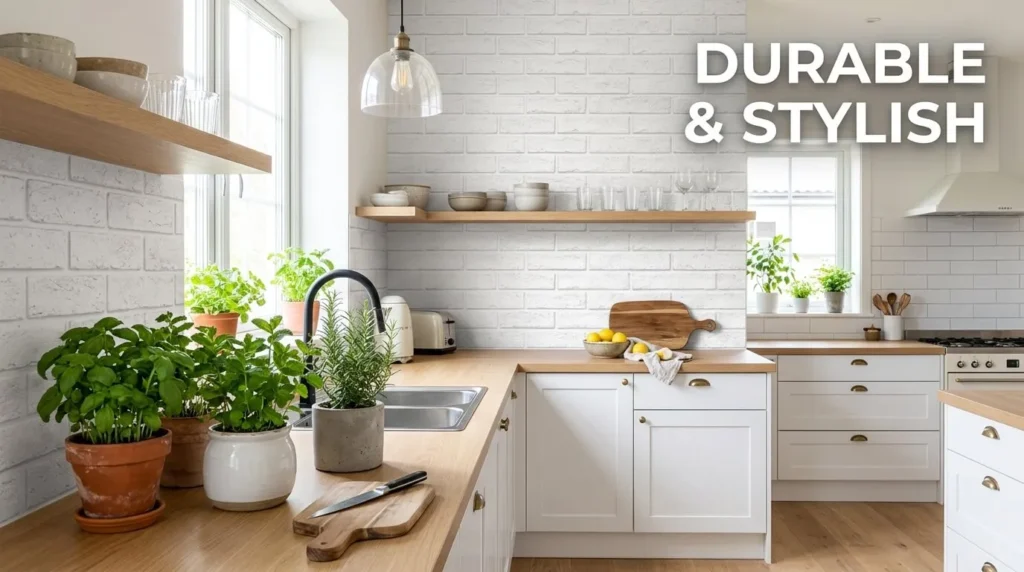
You painted the bathroom wall last spring. Now it’s flaking again, with a dark patch creeping in near the shower. Re-tiling would cost a small fortune and take a week of mess, so you put it off.
This is exactly where a PVC wall panel earns its reputation. It’s a lightweight, waterproof covering that goes up in a day, wipes clean in seconds, and doesn’t need grout or repainting.
In this guide you’ll learn what these panels are, which type suits which room, what they really cost, and how to install them without the mistakes that ruin the finish.
What Is a PVC Wall Panel?
A PVC wall panel is a lightweight, water-resistant board made from polyvinyl chloride that covers interior walls and ceilings. It usually comes in tongue-and-groove strips or large sheets, fixes with adhesive or battens, and needs no grout, plaster or paint.
Most panels are hollow-core or solid, between 5 mm and 10 mm thick, with a printed, embossed or glossy surface. Strips typically run 2.4 to 3 metres long, so one person can carry and cut them alone.
Common sizes and thicknesses
Strip panels are commonly 250 mm to 400 mm wide, and sheet panels can reach 1,200 mm. Thicker panels feel sturdier and resist dents better, which matters in hallways and kids’ rooms. Thinner ones are fine for ceilings and low-traffic bathroom walls.
Why Choose a PVC Wall Panel Over Tiles or Paint?
Homeowners rarely pick PVC wall panels for looks alone. They pick them because the practical benefits are hard to ignore:
- Moisture resistance: The surface doesn’t absorb water, so it handles steam and splashes well.
- Fast installation: A small bathroom can often be finished in a day, versus several days for tiling.
- Easy cleaning: A damp cloth and mild soap do the job. There’s no grout to scrub.
- Budget-friendly: Panels usually cost less than good tiles, and you save on labour too.
- Low maintenance: No repainting, no re-grouting, no sealing.
There is one honest trade-off. PVC doesn’t have the premium, natural feel of stone or ceramic. A good-quality panel looks tidy and modern, but if you want that luxury-hotel look, you’ll want to choose your finish carefully.
Types of PVC Wall Panels
Choosing the right style matters as much as choosing the right room.
Plain and printed panels
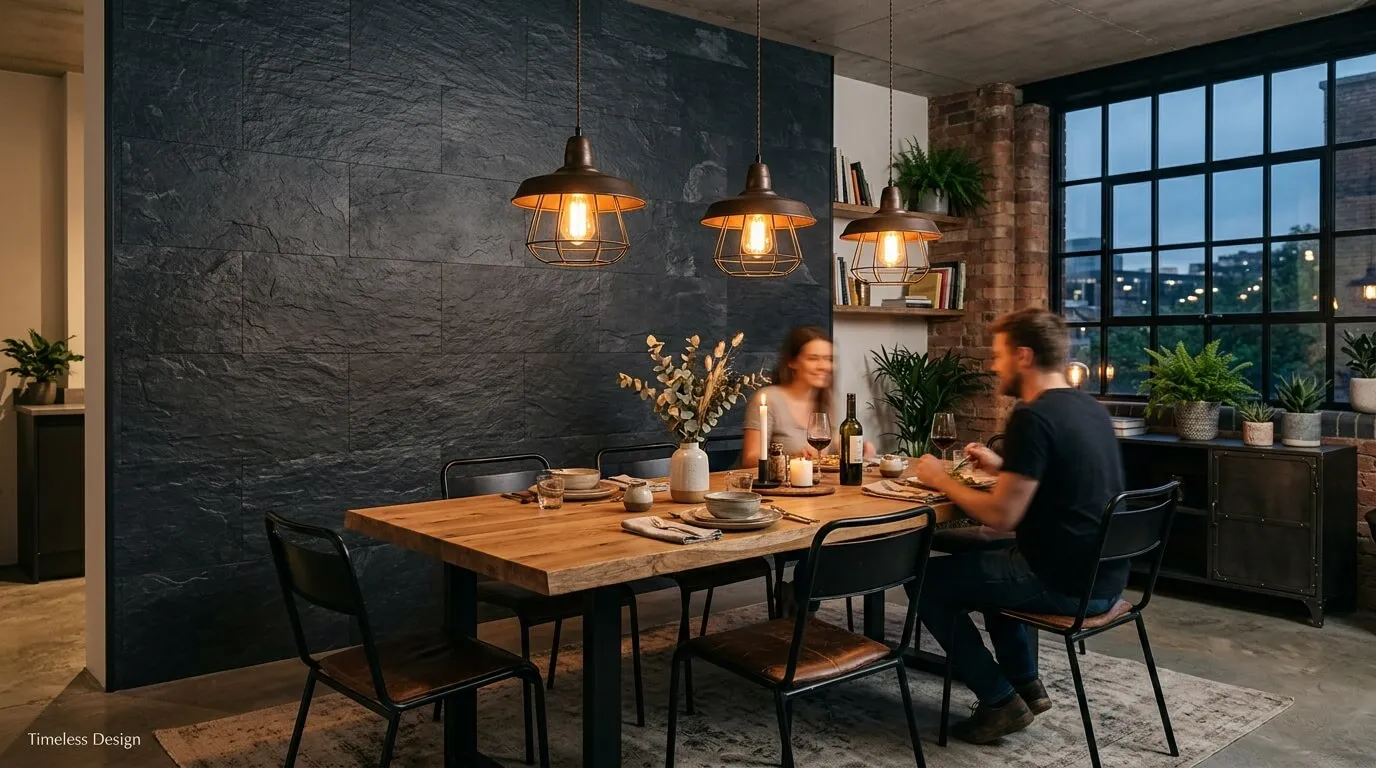
Plain white and pastel panels are the most popular for bathrooms and kitchens. Printed versions mimic wood, marble or concrete. They’re a good option if you want a warmer look without the price of real materials.
3D PVC wall panels
These have a raised, geometric or wave pattern. They work well as a feature wall behind a sofa or bed because they add depth and catch the light. They’re usually decorative rather than moisture-focused, so they suit living rooms and offices better than shower areas.
Tongue-and-groove cladding vs. large sheets
Tongue-and-groove strips slot together and hide the fixings. They suit ceilings and uneven walls. Large sheets, sometimes called shower wall panels, have fewer joints, which means fewer places for water to get in. For a full shower enclosure, sheets are usually the better choice.
Where Can You Use a PVC Wall Panel?
- Bathrooms and shower areas: The classic use, thanks to the waterproof surface.
- Kitchens: Great behind a sink or worktop as a splashback. Keep panels well away from gas hobs and open flames.
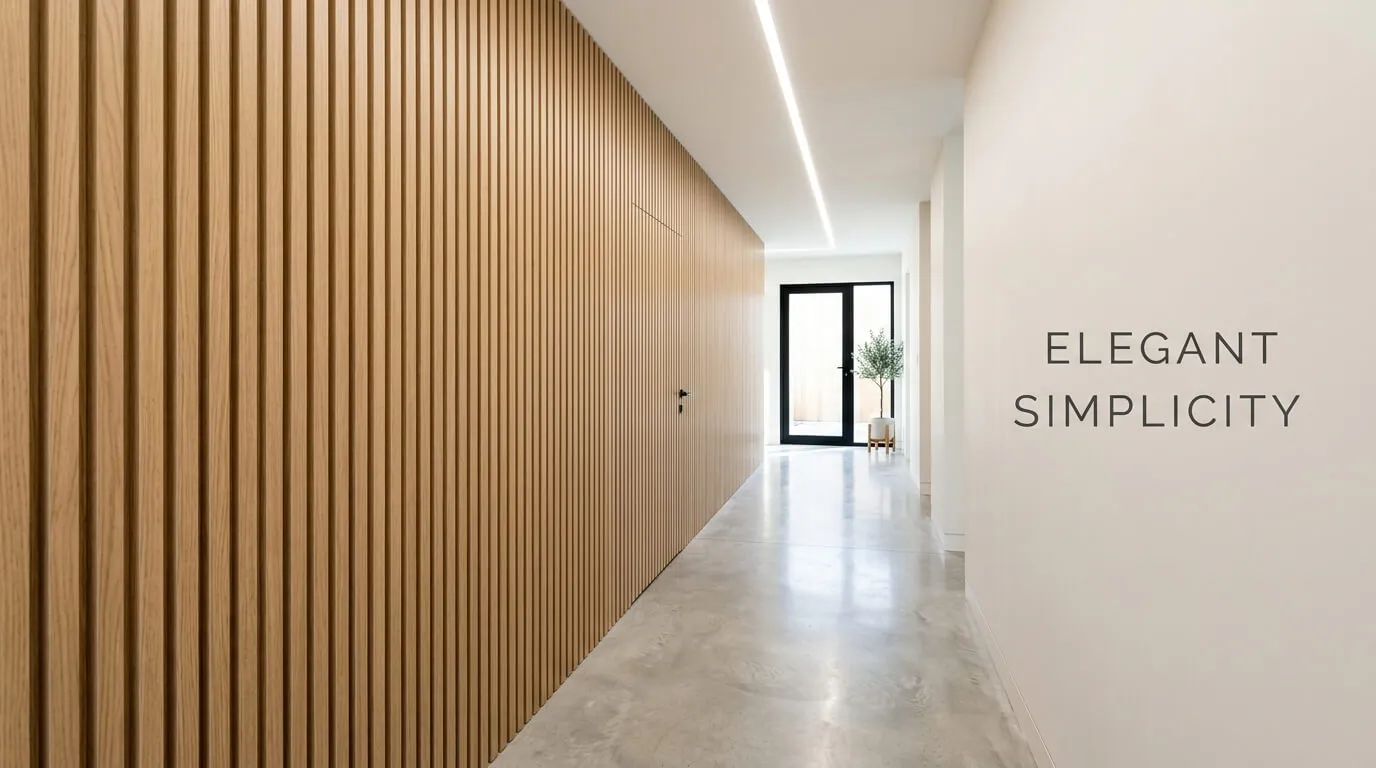
- Hallways and stairwells: Tough surfaces hold up against scuffs and bags.
- Living rooms and bedrooms: 3D and wood-effect panels create a feature wall quickly.
- Shops, salons and offices: Easy to wipe and quick to install with minimal downtime.
Check the product’s fire rating before buying, especially for commercial spaces. Reputable manufacturers list it clearly, and if a seller can’t tell you, that’s a red flag.
How Much Does a PVC Wall Panel Cost?
Prices vary widely by country, thickness and finish, so treat any figure as a starting point and always get local quotes. As a rough guide:
- Budget panels: Thin, plain-coloured, best for ceilings and light use.
- Mid-range panels: Thicker, with a better print and firmer joints. This is the sweet spot for most homes.
- Premium and 3D panels: Heavier, more detailed, and priced accordingly.
Remember to budget beyond the panels themselves. Trims, corner pieces, adhesive and cutting blades can add 15 to 25 percent to the total. Ordering about 10 percent extra covers cuts and mistakes.
How to Install a PVC Wall Panel Step by Step
You don’t need to be a professional. If you can measure accurately and keep a saw straight, you can do this.
What you’ll need
A tape measure, spirit level, fine-tooth saw or utility knife, silicone sealant or panel adhesive, trims, and a pencil. If your wall is uneven, add timber battens.
The installation steps
- Let the panels acclimatise. Leave them in the room for 24 to 48 hours so they adjust to the temperature.
- Prepare the wall. It must be clean, dry and free of loose paint or damp. Fix any moisture source first, because panels hide problems, they don’t cure them.
- Mark your starting line. Use a spirit level. Walls are rarely perfectly straight, so trust the level, not the corner.
- Fit the first panel. Start in a corner with the groove facing out, and secure it with adhesive or clips.
- Slide the rest into place. Each panel locks into the previous one. Press gently but firmly.
- Cut around sockets and pipes. Measure twice before you cut.
- Finish with trims and sealant. Seal edges and corners in wet areas so water can’t creep behind the panels.
Leave a small expansion gap of a few millimetres at the edges. PVC expands slightly with heat, and without room it can bow over time.
How to Care for Your PVC Wall Panels
Wipe with a soft cloth and mild soapy water. Avoid abrasive pads and strong solvents, which can dull the surface. In bathrooms, run an extractor fan or open a window after showers. Good airflow protects the sealant and keeps the wall behind the panel dry.
Well-fitted panels commonly last 10 to 20 years, depending on quality and conditions.
Common Mistakes to Avoid
- Fixing panels over a damp wall without solving the moisture problem.
- Skipping the expansion gap.
- Buying the cheapest thin panel for a high-traffic area.
- Forgetting to seal joints in wet zones.
- Ignoring the fire rating in kitchens or commercial spaces.
PVC Wall Panel FAQs
Are PVC wall panels waterproof?
The panel itself is water-resistant and doesn’t absorb moisture. Full protection depends on sealing the joints and edges properly, especially in showers.
Can I install a PVC wall panel over existing tiles?
Yes, if the tiles are firmly attached and reasonably flat. Clean them well and use suitable adhesive or fit battens over them first.
Are PVC wall panels safe?
Modern panels from reputable manufacturers are widely used in homes. Look for products with clear fire ratings and quality labelling, and ensure good ventilation during installation.
How long does a PVC wall panel last?
With proper installation and care, 10 to 20 years is realistic. Cheaper, thinner panels may wear sooner in busy areas.
Do PVC wall panels look cheap?
Not if you choose well. Thicker panels with a quality print or matte finish look neat and modern, and cheap-looking results usually come from poor fitting or thin material.
Final Thoughts
A PVC wall panel won’t suit every project, but for bathrooms, kitchens and feature walls it’s hard to beat on speed, cost and low upkeep. Pick the right thickness for the room, fix any damp first, seal the joints, and you’ll have a finish that looks sharp for years.
Ready to start? Measure your wall today, order about 10 percent extra, and compare two or three sample panels in your own lighting before you commit. Have questions about your specific room? Drop them in the comments and I’ll help you choose.