

Introduction
Have you ever seen a beautifully woven chair and wondered what material it is made from? If so, you may have come across a rattan chair. These chairs are known for their natural appearance, lightweight construction, comfortable design, and timeless appeal.
Rattan furniture has been used for generations, but it continues to fit beautifully into modern homes. From dining rooms and bedrooms to patios and balconies, woven seating can add warmth and character almost anywhere.
So, what is a rattan chair, and why has this type of furniture remained popular for so long? In this guide, we will explore its material, construction, advantages, styles, uses, maintenance requirements, and the things you should consider before buying one.
What Is a Rattan Chair?
A rattan chair is a chair made using rattan, a naturally occurring climbing palm that grows mainly in tropical regions of Asia, Africa, and Australia. Its long, flexible stems can be shaped and woven to create furniture.
Unlike solid timber furniture, rattan seating often has an open, woven appearance. This gives it a lighter visual feel while still providing a strong structure.
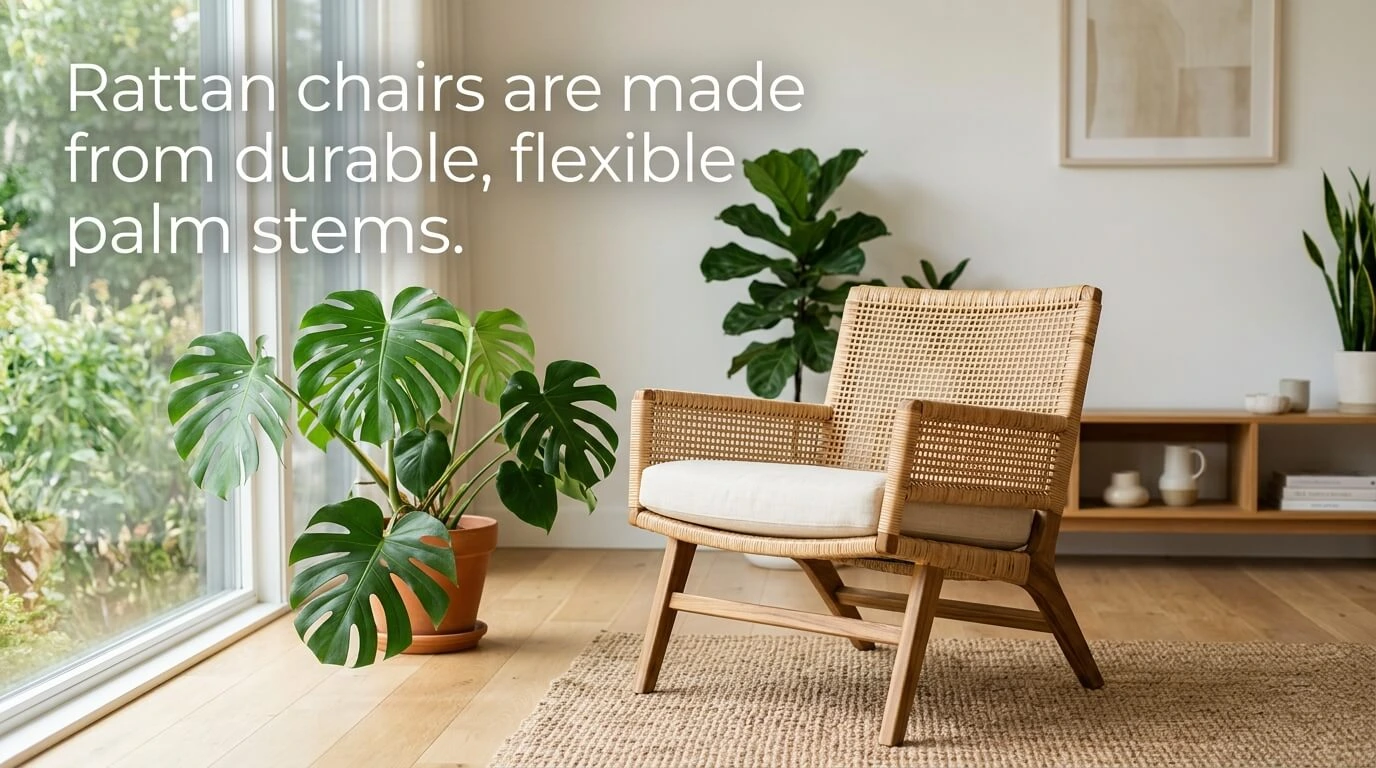
Rattan can be used to create the frame, seat, backrest, or decorative sections of a chair. Some designs use rattan throughout the entire chair, while others combine it with wood, metal, fabric, or cushions.
Think of rattan as nature’s version of a flexible building material. It can be bent, shaped, and woven into attractive forms while retaining enough strength for everyday furniture.
Because of its natural texture, a rattan chair can make a room feel warmer and more relaxed. It works particularly well with neutral colors, plants, natural fabrics, and wooden furniture.
What Is Rattan Made From?
Rattan comes from climbing palms belonging to several genera of the palm family. Unlike bamboo, which is a grass, rattan is a woody vine-like palm.
The stems are harvested, cleaned, dried, and processed before being used for furniture. Depending on the furniture design, manufacturers may use different parts of the plant.
The outer skin can sometimes be used for woven details and binding, while the inner portion can be processed into other furniture components.
One reason rattan has become popular is its flexibility. When treated correctly, the material can be curved into elegant shapes without losing its structural qualities.
This makes it suitable for furniture designs featuring rounded backs, curved arms, intricate weaving, and decorative patterns.
How Are Rattan Chairs Made?
Creating a rattan chair involves several stages. First, suitable rattan stems are selected and prepared. They are cleaned and dried to remove excess moisture.
The material may then be softened so that craftspeople can bend it into the desired shape. Once the basic frame has been formed, smaller strips or strands can be woven into the seat and back.
Traditional craftsmanship plays an important role in many rattan designs. Skilled workers can create detailed patterns by weaving individual strands together.
After construction, the chair may receive a protective coating or finish. Some products are also painted or stained to achieve a particular appearance.
Finally, cushions may be added for extra comfort.
The result is furniture that combines natural texture, craftsmanship, and practical functionality.
Rattan vs. Wicker: What Is the Difference?
People often use the words rattan and wicker as though they mean exactly the same thing, but they actually describe different things.
Rattan is a material, while wicker is a weaving technique.
Wicker furniture can be made from several different materials, including rattan, bamboo, willow, paper fiber, and synthetic materials.
In simple terms, imagine rattan as the ingredients and wicker as the recipe. The material provides the raw substance, while weaving determines how that material is turned into furniture.
Therefore, a chair described as a “wicker chair” may be made from rattan, but not every wicker chair is necessarily made from natural rattan.
Understanding this distinction can help you shop more confidently.

Popular Types of Rattan Chairs
There is no single style of rattan chair. Modern manufacturers and traditional craftspeople produce many different designs.
Rattan Dining Chairs
These chairs are designed for dining tables. They often feature woven backs or seats and can give a dining room a relaxed, natural atmosphere.
Rattan Armchairs
Armchairs provide additional support through their wider sides and armrests. They can work well in living rooms, bedrooms, reading corners, and reception areas.
Rattan Lounge Chairs
A lounge chair generally has a more relaxed shape and is designed for sitting comfortably for longer periods. Adding a soft cushion can make it even more inviting.
Rattan Rocking Chairs
Rattan rocking chairs combine the traditional rocking mechanism with woven construction. They can create a cozy spot for reading or relaxing.
Rattan Accent Chairs
An accent chair is often chosen as much for its appearance as for seating. A beautifully designed woven chair can become a focal point in a room.
Rattan Outdoor Chairs
Some rattan-style chairs are designed for balconies, gardens, patios, and other outdoor spaces. However, buyers should check whether the furniture is specifically made for outdoor exposure.
Benefits of Rattan Chairs
Why choose rattan when there are so many other furniture materials available?
There are several reasons.
1. Natural Appearance:
Rattan has a warm, organic texture that can make interiors feel more welcoming.
2. Lightweight Construction:
Many rattan chairs are relatively easy to move around. This can be particularly useful when rearranging a room.
3. Attractive Designs:
The material can be bent and woven into a wide range of shapes and patterns.
4. Versatile Style:
Rattan can complement coastal, tropical, bohemian, rustic, Scandinavian, contemporary, and traditional interiors.
5. Comfortable With Cushions:
Although woven seating can be comfortable on its own, cushions can provide additional support and softness.
6. Long-Lasting When Properly Maintained:
Good-quality rattan furniture can remain attractive for many years when protected from unsuitable conditions.
7. Timeless Appeal:
Unlike some highly fashionable furniture styles, natural woven furniture tends to maintain its visual appeal across different design trends.
Where Can You Use a Rattan Chair?
One of the biggest advantages of rattan furniture is its versatility.
Living Room
A rattan armchair can introduce texture and contrast into a living room. Pair it with a soft cushion and a small side table to create a comfortable reading area.
Bedroom
A woven chair can be placed near a window, dressing table, or empty corner. It can also serve as a convenient place to sit while getting ready.
Dining Room
Rattan dining chairs can soften the appearance of a traditional wooden or modern dining table.
Balcony
A small woven chair can turn an unused balcony into a relaxing seating area.
Garden or Patio
Outdoor-rated rattan furniture can be useful for entertaining guests or enjoying time outside.
Cafés and Restaurants
Rattan-style seating is also popular in hospitality spaces because it creates a relaxed and welcoming atmosphere.
Natural and Synthetic Rattan
When shopping for woven furniture, you may encounter both natural rattan and synthetic alternatives.
Natural rattan comes directly from the plant. It has an authentic organic appearance and unique variations in color and texture.
Synthetic versions are usually made from materials such as polyethylene or other plastics. They are designed to reproduce the appearance of natural woven furniture while offering different performance characteristics.
Natural rattan can be an excellent choice for indoor furniture where it can be protected from excessive moisture and harsh conditions.
Synthetic rattan can be more suitable for outdoor furniture when it has been specifically manufactured for outdoor use.
However, don’t judge a chair only by whether it looks like natural rattan. Always check the manufacturer’s material information, intended use, and care instructions.
How Comfortable Are Rattan Chairs?
Comfort depends heavily on the chair’s design.
A well-designed chair can be extremely comfortable, particularly when its seat angle, back support, and dimensions are appropriate for the user.
However, a beautifully woven chair isn’t automatically comfortable. Some designs have firm seats that may feel uncomfortable during long periods of sitting.
This is where cushions make a major difference.
A seat cushion can add softness, while a back cushion can provide additional support. For dining chairs, a thinner cushion may be more practical, while a lounge chair can accommodate thicker padding.
When possible, sit in the chair before buying it. Ask yourself: Does your back feel supported? Are your feet comfortably positioned? Do the armrests feel natural?
A chair should look good, but it should also feel good.
How to Choose the Right Rattan Chair
Choosing the right chair involves more than selecting the design you like most.
Consider the Location
First decide where the chair will be used. Indoor furniture has different requirements from outdoor seating.
Check the Construction
Look closely at the joints and woven sections. The chair should feel stable and shouldn’t wobble when you sit in it.
Look at the Weaving
Good weaving should generally look consistent and secure. Loose or damaged sections may become worse with regular use.
Think About Size
Measure your available space before purchasing. A large armchair may look impressive in a showroom but overwhelm a small bedroom or balcony.
Check Weight Capacity
Always follow the manufacturer’s recommended weight limit.
Consider the Cushion
If the chair includes a cushion, check its thickness, fabric, removable cover, and cleaning instructions.
Match Your Interior
Natural shades work beautifully with earthy interiors, while painted finishes can provide a stronger decorative statement.
How to Clean and Maintain Rattan Furniture
Rattan doesn’t require complicated maintenance, but regular care can make a significant difference.
Start by removing dust regularly with a soft brush or vacuum attachment. This prevents dirt from building up between woven sections.
For light cleaning, use a slightly damp cloth with mild soap. Avoid soaking natural rattan because excessive moisture can damage the material or encourage problems associated with prolonged dampness.
After cleaning, allow the chair to dry completely.
Avoid harsh chemicals unless the manufacturer specifically recommends them. Strong cleaning products can damage finishes and affect the appearance of the material.
Keep natural rattan away from prolonged direct sunlight and excessive humidity when possible. If you use it outdoors, follow the manufacturer’s outdoor-care instructions carefully.
Synthetic outdoor furniture may tolerate weather better, but it still benefits from regular cleaning and protection.
Are Rattan Chairs Durable?
Yes, a quality rattan chair can be durable, but durability depends on several factors.
The quality of the material, construction, finishing, frequency of use, and environment all matter.
A well-made indoor chair that is kept dry and properly maintained may last for many years. On the other hand, natural rattan left outdoors in constant rain and strong sunlight may deteriorate much faster.
The important point is that rattan isn’t maintenance-free furniture.
Think of it like a good pair of leather shoes. They can last a long time, but they still need appropriate care. Treat rattan furniture properly, and it can reward you with years of service.
Rattan Chairs in Modern Interior Design
Rattan is no longer limited to traditional or tropical interiors.
Today, designers use woven furniture in modern homes because it introduces texture and visual warmth.
For example, a minimalist room containing smooth white walls and simple furniture can sometimes feel cold. Adding a natural woven chair introduces an organic element without overwhelming the space.
Rattan also works well alongside:
- Wooden furniture
- Linen fabrics
- Cotton cushions
- Indoor plants
- Neutral colors
- Natural rugs
- Ceramic accessories
- Metal accents
The secret is balance. You don’t need an entire room filled with woven furniture. Sometimes one carefully chosen chair is enough to transform the atmosphere.
Frequently Asked Questions
1. What is a rattan chair?
A rattan chair is furniture made partly or completely from rattan, a flexible material obtained from climbing palms. It can be shaped and woven into seats, backs, frames, and decorative elements.
2. Is rattan the same as wicker?
No. Rattan is a material, while wicker refers to a weaving method. Rattan is one of the materials commonly used to make wicker furniture.
3. Can rattan chairs be used outdoors?
Some can, but not all. Natural rattan generally requires protection from prolonged moisture and harsh weather. For outdoor use, choose furniture specifically designed and rated for outdoor conditions.
4. Are rattan chairs comfortable?
They can be very comfortable, depending on their design. Adding a suitable seat or back cushion can make them even more comfortable.
5. How long does a rattan chair last?
There is no single lifespan for every chair. Quality, construction, maintenance, and exposure to weather all affect durability. Properly maintained indoor rattan furniture can remain useful and attractive for many years.
Final Thoughts
So, what is a rattan chair? In simple terms, it is a versatile piece of furniture made using rattan, often combined with weaving techniques to create a distinctive natural appearance.
Its lightweight feel, attractive texture, flexible styling, and timeless character make it suitable for many parts of the home. Whether you want a cozy reading chair, stylish dining seating, or an attractive accent piece, rattan offers plenty of possibilities.
The key is to choose the right type for your space and give it the care it needs. When you do, a rattan chair can be more than just a place to sit—it can become a beautiful part of your home’s personality.