
Packing for a trip can feel exciting at first. Then the suitcase comes out, the clothes pile grows, and suddenly you are wondering how everything is supposed to fit inside one small case. Sound familiar?
Learning how to pack a suitcase properly can make traveling easier, faster, and much less stressful. Whether you are preparing for a weekend getaway, a family holiday, a business trip, or a long vacation, the right packing method can help you save space while keeping your belongings organized.
The secret is not simply taking less. It is taking the right things and arranging them intelligently. Think of your suitcase like a small puzzle: every item has a place, and the goal is to use the available space without creating unnecessary weight or wrinkles.
In this guide, you will discover practical techniques for choosing what to bring, organizing clothing, protecting fragile items, saving space, and making your journey smoother from the moment you start packing.
1. Start With a Packing Plan
Before putting a single shirt into your suitcase, take a few minutes to think about your trip.
Where are you going? How many days will you stay? What will the weather be like? Will you need formal clothing, sportswear, swimwear, or special equipment?
These simple questions can prevent overpacking.
Check the length of your trip. A three-day city break does not require the same amount of clothing as a two-week holiday. Instead of packing for every possible situation, think about what you are realistically going to do.
Check the weather forecast. Temperature and weather conditions should influence your clothing choices. A destination with warm days and cool evenings may require lightweight clothing plus one versatile jacket rather than several heavy layers.
Think about your activities. If you are going hiking, you need practical footwear. If you have a formal dinner planned, one smart outfit may be enough. If you expect to spend most of your time sightseeing, comfortable shoes and casual clothing should receive priority.
A good packing plan works like a roadmap. It gives you direction before you start filling the suitcase.
2. Choose the Right Suitcase
The suitcase itself can make packing easier or harder.
A large case may appear convenient because it offers more room, but extra space can encourage you to bring things you do not need. On the other hand, a suitcase that is too small can force you to squeeze everything tightly.
Choose a suitcase based on the trip.
For a short trip, a compact carry-on may be enough. For a longer holiday, a larger checked suitcase might be more practical.
Pay attention to:
- Size
- Weight
- Wheel quality
- Handle strength
- Compartments
- Durability
- Airline baggage restrictions
If you are flying, check your airline’s current baggage rules before packing. Weight and size limits can vary between airlines and ticket types.
A suitcase with several compartments can also make organization easier. However, do not choose a bag simply because it has many pockets. What matters is whether those spaces are genuinely useful for your travel habits.
3. Make a Practical Packing List
One of the easiest ways to avoid overpacking is to create a list.
Without a list, many travelers simply start grabbing things. A shirt goes in, then another shirt, then another pair of trousers. Before long, the suitcase is full.
A list forces you to make decisions.
Divide your list into categories, such as:
- Clothing
- Footwear
- Toiletries
- Electronics
- Travel documents
- Medication or personal essentials
- Accessories
- Special equipment
Once everything is written down, remove anything that is unnecessary.
Ask yourself: Will I actually use this?
If the answer is probably not, leave it at home.
You can also create a basic outfit plan. For example, if you are traveling for five days, you might choose several tops that work with two or three bottoms. This creates multiple combinations without requiring a separate outfit for every day.
Versatility is one of the most powerful packing strategies.
A neutral jacket that works with several outfits is more useful than a jacket that matches only one shirt.
4. Select Clothes Strategically
Clothing usually takes up most of the space in a suitcase, so this is where smart decisions can make the biggest difference.
Instead of packing individual outfits without thinking, choose clothes that can be mixed and matched.
Start with essential pieces.
Think about how many tops, bottoms, undergarments, socks, sleepwear, and outer layers you genuinely need.
For longer trips, remember that you may be able to wash some clothing during your stay. Access to laundry can significantly reduce the amount you need to carry.
Choose lightweight fabrics when appropriate. They generally take up less room and can dry faster after washing.
Layers can also be useful. Rather than bringing several bulky sweaters, consider lightweight layers that can be combined when the temperature drops.
Another useful strategy is to wear your bulkiest clothing while traveling. A heavy jacket or large pair of shoes can take up valuable suitcase space. Wearing them instead can leave more room inside your luggage.
However, comfort should come first. There is little benefit in wearing uncomfortable clothing simply to save a little space.
5. How to Fold, Roll, and Organize Clothing
There is no single perfect method for arranging clothes. Different items benefit from different techniques.
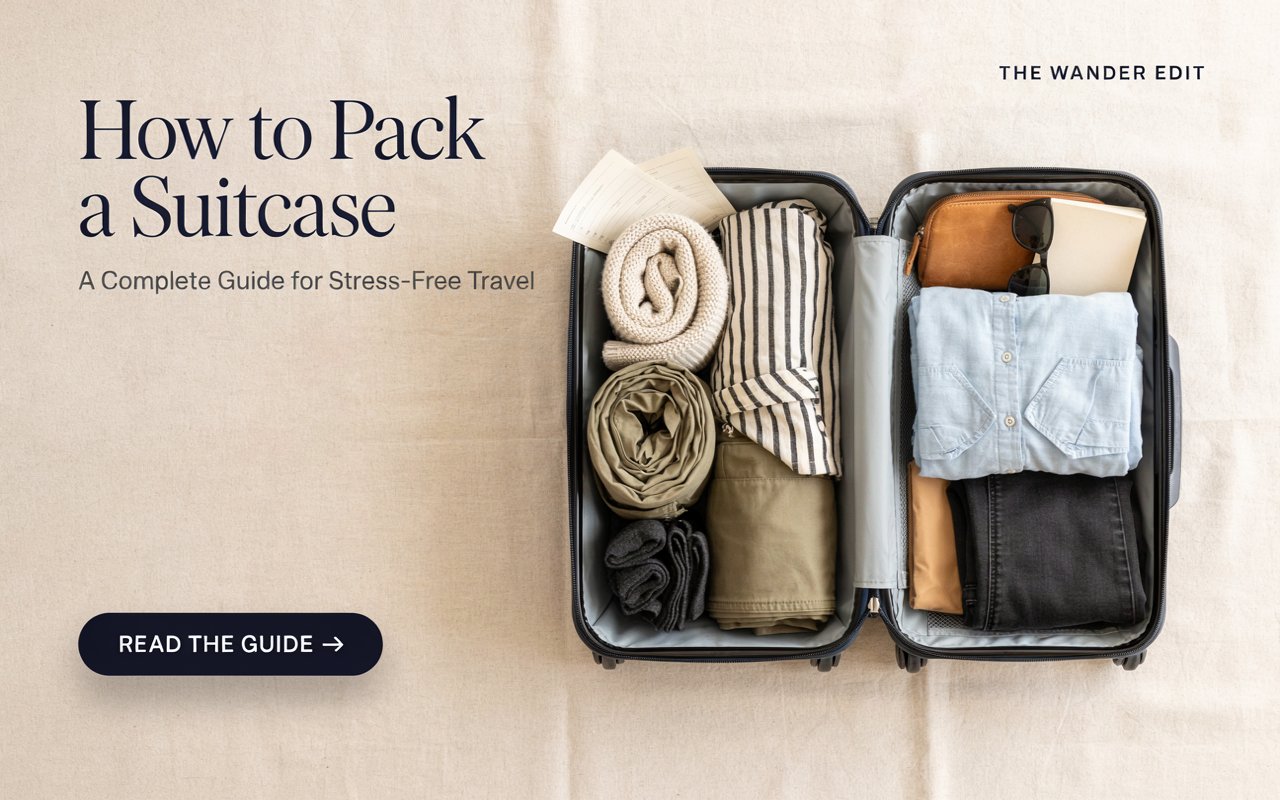
Rolling clothes can be useful for casual shirts, T-shirts, lightweight trousers, and similar garments. Rolled clothing can fit neatly into gaps and makes it easier to see individual pieces.
Traditional folding works well for structured garments, jackets, dress shirts, and items that need to maintain their shape.
For delicate or formal clothing, careful folding with tissue paper or a garment bag may help reduce creasing.
You can also use packing cubes to separate clothing by category. For example, one cube could hold tops, another underwear, and another sleepwear.
Packing cubes are especially useful because they turn a suitcase into a collection of smaller sections. Instead of digging through everything to find one item, you can open the appropriate cube.
Do not pack your suitcase like a solid block. Leave sensible access to items you may need during the journey.
The goal is organization, not simply maximum compression.
6. Pack Shoes the Smart Way
Shoes are often awkward to pack because they are bulky and can be heavy.
Try to limit yourself to the number of pairs you genuinely need.
A common combination might include:
- One comfortable walking pair
- One versatile casual or smart pair
- One activity-specific pair if necessary
Wear your heaviest pair during travel when practical.
Use the inside of your shoes. Socks, belts, chargers, or other small items can sometimes be placed inside footwear to use otherwise empty space.
Place shoes inside lightweight bags to keep clothing clean. Position heavier footwear toward the bottom of the suitcase, particularly near the wheels, so the case remains easier to handle.
Avoid bringing shoes simply because they look good with one outfit. A versatile pair that works with several outfits can be much more useful.
7. Organize Toiletries and Personal Items
Toiletries can create leaks, clutter, and unnecessary weight if they are not organized carefully.
Keep liquids in secure containers and place them in a suitable toiletry bag. If you are flying with hand luggage, pay close attention to the airport’s current liquid restrictions.
Separate potentially messy products from clothing whenever possible.
Items such as shampoo, conditioner, creams, lotions, and cosmetics should be sealed properly. A small leak can turn an organized suitcase into a major problem.
Consider whether you actually need full-size products. For a short trip, travel-sized containers may be sufficient.
You should also think about what your accommodation provides. Many hotels and other accommodations offer basic toiletries, although you should not rely on this if you have specific products you need.
Keep essential personal items accessible. Things you might need during the journey should not be buried beneath several layers of clothing.
8. Protect Electronics and Important Documents
Electronics and travel documents deserve special attention.
Phones, tablets, cameras, headphones, laptops, chargers, and power banks can quickly become tangled together.
Use a small electronics organizer or pouch to keep cables and accessories together.
Keep valuable electronics in your carry-on when traveling by air, rather than placing them in checked luggage, where appropriate and in accordance with airline rules.
Important documents should also remain easily accessible.
Depending on your trip, these might include:
- Passport
- Identification
- Boarding information
- Hotel details
- Travel insurance information
- Booking confirmations
- Emergency contact information
A digital backup can also be helpful. Store important information securely on your phone or another accessible device.
Never place something essential at the bottom of your suitcase if you may need it during the journey.
9. Use Every Bit of Available Space
Efficient packing is about using space intelligently rather than forcing more items into the case.
Small gaps between larger objects can hold socks, underwear, accessories, or other compact belongings.
The corners of a suitcase often contain unused space. Rolled clothing can sometimes fit naturally into these areas.
You can also use the suitcase’s internal pockets for smaller objects that would otherwise disappear among your clothes.
Think vertically and horizontally. Do not only consider the flat surface of the suitcase. Look at the spaces around and between your belongings.
However, there is an important limit: do not compress your suitcase until the zipper struggles to close.
A suitcase should close comfortably. If you have to sit on it while someone else pulls the zipper, you probably have too much inside.
10. Keep Your Suitcase Light and Balanced
A heavy suitcase can make travel exhausting.
You may have to lift it onto transportation, carry it up stairs, move it through stations, or place it into an overhead compartment. A few unnecessary kilograms can become surprisingly inconvenient.
Weigh your luggage before leaving home.
A luggage scale can help you avoid unpleasant surprises at the airport.
Pay particular attention to heavy items such as shoes, books, cosmetics, electronics, and accessories.
You should also distribute weight sensibly. Heavy objects should not all be placed on one side of the suitcase.
A balanced case is easier to roll and less likely to tip.
Think of your suitcase like a well-balanced backpack. If everything heavy is concentrated in one place, moving it becomes harder. Even distribution makes transportation smoother.
11. Prepare for Security Checks and Unexpected Needs
If you are flying, organize your carry-on so that security procedures are easier.
Liquids and electronic devices may need to be handled according to airport security rules. Requirements can vary, so always check the current guidance for your departure airport.
Keep frequently requested items easy to reach.
You should also prepare for unexpected situations.
Consider keeping a small set of essentials in your carry-on, such as:
- A change of basic clothing
- Essential toiletries
- Necessary medication
- Phone charger
- Important documents
- Valuables
This can be particularly helpful when checking luggage because delays or mishandled baggage can occasionally happen.
The idea is not to prepare for every possible disaster. It is simply to make sure that losing access to your checked suitcase temporarily would not ruin your trip.
12. Final Suitcase Check Before Leaving
Once everything is packed, do not immediately close the suitcase and walk away.
Perform one final review.
Check your travel documents first. Make sure you have everything required for your journey.
Then check clothing, toiletries, electronics, chargers, footwear, and personal essentials.
Look around your room. Travelers often remember forgotten items only after reaching the airport.
Check:
- Bathroom cabinets
- Bedside tables
- Charging points
- Wardrobes
- Desk drawers
- Laundry baskets
Then weigh the suitcase if necessary.
Finally, make sure your suitcase is identifiable. A luggage tag, distinctive strap, or another easy-to-recognize feature can make it easier to identify your bag.
13. Common Packing Mistakes to Avoid
Even experienced travelers can fall into bad packing habits.
One common mistake is packing for imaginary situations. You might think, “What if I suddenly need this?” and add another item. Repeat that thought twenty times and you have a suitcase full of things you probably will not use.
Another mistake is bringing too many shoes.
Shoes are among the least space-efficient items, so carefully consider every pair.
Packing at the last minute is another problem. When you rush, you are more likely to forget essentials or pack unnecessary things.
Avoid putting everything into the suitcase without organization. A little structure makes it much easier to find what you need.
Finally, do not ignore baggage weight limits. An oversized or overweight bag can lead to additional costs and unnecessary stress.
14. How to Unpack Easily After Arrival
Packing does not end when you close the suitcase. The way you organize your luggage can make unpacking much easier.
If you use packing cubes, you can move entire categories into drawers or shelves.
Hang clothing that wrinkles easily as soon as possible.
Place toiletries in the bathroom and chargers in one convenient location.
Do not leave everything scattered around the room. A simple organization system can make your temporary space feel more comfortable.
When it is time to return home, use the same system in reverse.
Before leaving your accommodation, check drawers, closets, bathroom shelves, charging points, and under the bed.
This final inspection can save you from leaving important belongings behind.
15. Conclusion: Make Packing Simpler
Knowing how to pack a suitcase is less about squeezing the maximum number of items into a bag and more about making thoughtful choices.
Start with a plan, choose versatile clothing, organize your belongings, use empty spaces wisely, protect valuable items, and keep important essentials accessible.
Most importantly, remember that your suitcase should serve your trip—not control it. You do not need to take your entire wardrobe with you. Pack what you need, organize it well, and leave some room for flexibility.
With practice, packing becomes less of a chore and more of a simple travel routine.
Frequently Asked Questions
1. How many clothes should I pack for a week-long trip?
For a seven-day trip, many travelers can manage with several versatile tops, a few bottoms, underwear and socks for each day, sleepwear, and one or two outer layers. Your exact needs depend on the destination, activities, weather, and access to laundry.
2. Is it better to roll or fold clothes in a suitcase?
Both methods can work. Rolling is useful for many casual and lightweight garments, while folding is often better for structured or delicate clothing. Combining the two methods can give you the best result.
3. How can I make more space in my suitcase?
Choose versatile clothing, reduce unnecessary items, use packing cubes, place small belongings inside shoes, and use empty gaps between larger items. Avoid packing things you are unlikely to use.
4. Should I put shoes at the bottom of my suitcase?
Generally, placing heavier shoes near the bottom and closer to the suitcase wheels can help with balance. Keep shoes inside bags to protect your clothing from dirt.
5. What should I keep in my carry-on bag?
Keep important documents, valuables, essential medication, electronics, chargers, and other items you may need during the journey in your carry-on. If you check a suitcase, consider carrying a basic change of clothes and essential personal items as well.