
Stationery is a small part of everyday life that often goes unnoticed. Yet think about how often you reach for a pen, write something in a notebook, organize documents, or use paper to make a quick list. These simple items help us study, work, plan, create, and communicate.
From traditional writing tools to modern desk accessories, stationery has developed into a huge and interesting category. Some people prefer simple and practical supplies, while others enjoy colorful notebooks, decorative stickers, elegant pens, and beautifully designed planners.
Whether you are a student, professional, parent, artist, or simply someone who enjoys staying organized, choosing the right supplies can make everyday tasks easier. In this guide, we will explore stationery in detail, including its history, popular types, uses, buying tips, organization ideas, and creative possibilities.
What Is Stationery?
Stationery refers to a wide range of writing, paper, organizational, and desk-related supplies. Common examples include notebooks, paper, envelopes, pens, pencils, folders, diaries, sticky notes, rulers, erasers, markers, and planners.
The word is sometimes misspelled as “statianary” or confused with “stationary.” The correct spelling for writing and office supplies is stationery. “Stationary,” on the other hand, generally means something that is not moving.
Stationery can be basic or highly decorative. A simple ballpoint pen and a plain notebook may be enough for someone who values practicality. Another person might prefer a leather journal, fountain pen, colorful highlighters, and decorative stickers.
Think of stationery as a toolbox for written communication. Just as a toolbox contains different tools for different jobs, a stationery collection contains different items for studying, planning, writing, drawing, and organizing.
Why is stationery still important?
Even with smartphones, computers, and tablets everywhere, physical writing remains useful. Writing by hand can make it easier to jot down quick ideas, create lists, sketch concepts, and organize thoughts without opening an app.
A Brief History of Stationery
The history of stationery is closely connected to the history of writing itself. Long before modern notebooks and pens existed, people recorded information on materials such as clay tablets, papyrus, parchment, and other natural surfaces.
The development of paper eventually transformed written communication. As paper became more widely available, people began using dedicated writing materials for letters, records, education, and business.
The printing revolution changed everything.
The spread of printing made written materials easier to produce and distribute. Over time, manufacturers developed specialized products such as envelopes, writing paper, notebooks, pencils, and other supplies.
The Industrial Revolution also made stationery more accessible. Mass production meant that writing tools could be manufactured in large quantities and sold to ordinary consumers.
Today, stationery combines centuries-old traditions with modern design. A fountain pen, for example, reflects a long history of writing technology, while a reusable notebook may combine traditional handwriting with digital scanning.
Common Types of Stationery
There is no single type of stationery that suits everyone. Different environments require different supplies.
Writing Instruments
Pens and pencils are perhaps the most familiar stationery products.
Popular choices include:
- Ballpoint pens
- Gel pens
- Rollerball pens
- Fountain pens
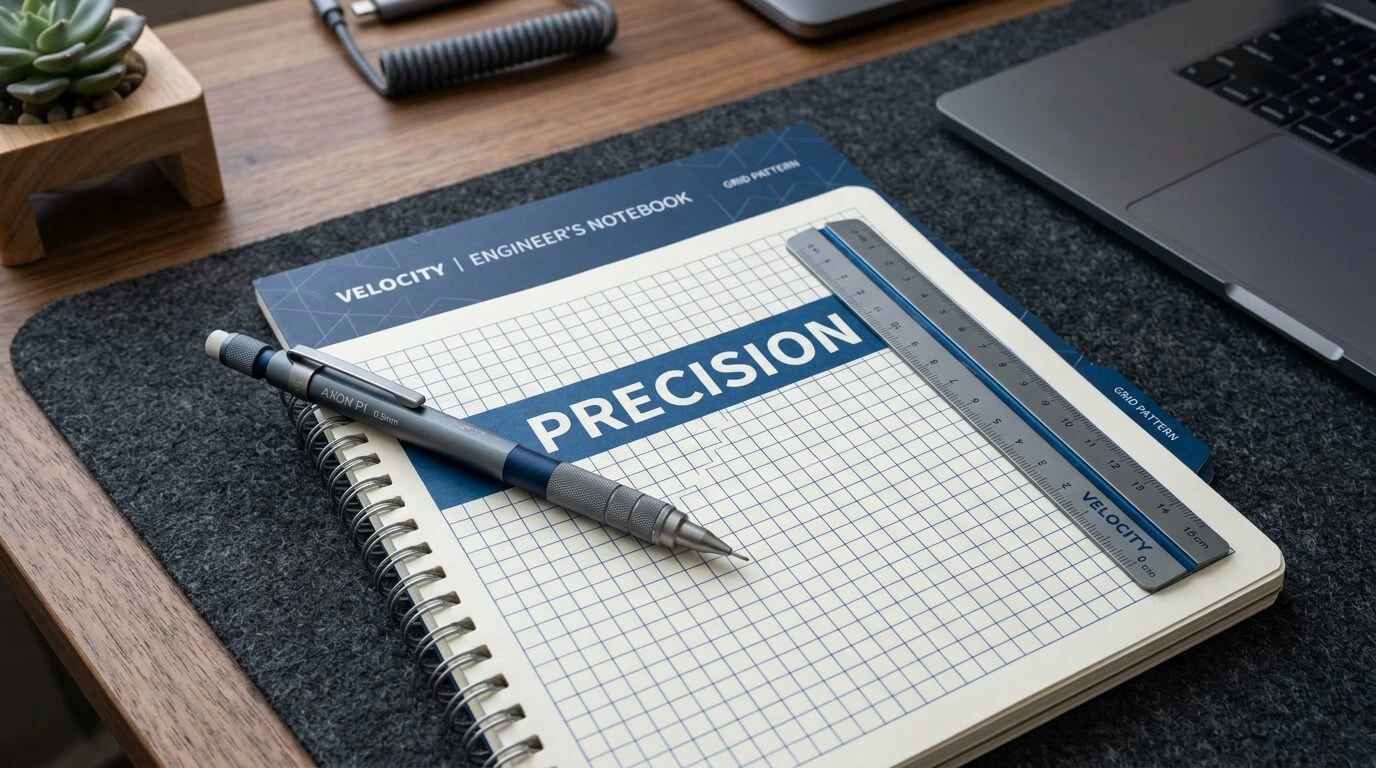
- Mechanical pencils
- Colored pencils
- Markers
- Highlighters
- Fineliner pens
Each tool offers a different writing experience. A ballpoint pen is convenient for everyday notes, while a fountain pen may appeal to someone who enjoys a smoother and more traditional writing style.
Paper Products
Paper remains at the heart of stationery.
Common paper products include:
- Notebooks
- Writing pads
- Letter paper
- Sketchbooks
- Index cards
- Sticky notes
- Memo pads
- Envelopes
- Printer paper
The right paper depends on how you plan to use it. Drawing may require thicker paper, while everyday notes can usually be written on lighter pages.
Organization Supplies
Staying organized becomes easier when everything has a place.
Folders, binders, document wallets, labels, clips, files, and planners can help keep important information together. For students and office workers, these products can prevent loose papers from becoming a confusing pile.
Stationery for Students
Students use stationery every day. From taking classroom notes to completing assignments, the right supplies can make studying more comfortable.
A basic student stationery kit might include:
- Pens
- Pencils
- Eraser
- Sharpener
- Ruler
- Notebook
- Highlighters
- Colored markers
- Sticky notes
- Pencil case
- Geometry tools where required
However, students do not necessarily need dozens of products. A practical collection is often better than an oversized one.
A student can also use different colors to organize information. For example, one color might represent definitions, another important dates, and another questions that need revision.
Why does organization matter?
Imagine opening a school bag and finding papers, pens, books, and notes mixed together. Finding one worksheet could take several minutes. A few folders and labels can turn that messy bag into something much easier to manage.

Office and Workplace Stationery
Stationery continues to play an important role in offices, even when most business communication happens digitally.
Employees may use notebooks for meetings, pens for signatures, folders for documents, sticky notes for reminders, and planners for scheduling.
Useful office supplies include:
- Notepads
- Pens
- Folders
- Binders
- Document wallets
- Staplers
- Paper clips
- Labels
- Envelopes
- Desk organizers
- Whiteboard markers
- Calendars
Good workplace stationery can also contribute to a professional appearance. A well-organized desk makes it easier to locate documents and complete routine tasks.
Businesses may also use branded stationery featuring a company name, logo, address, or contact details. Letterheads, business cards, envelopes, and presentation folders can help create a consistent visual identity.
Creative and Artistic Supplies
Stationery is not limited to writing and administration. It can also be a doorway into creativity.
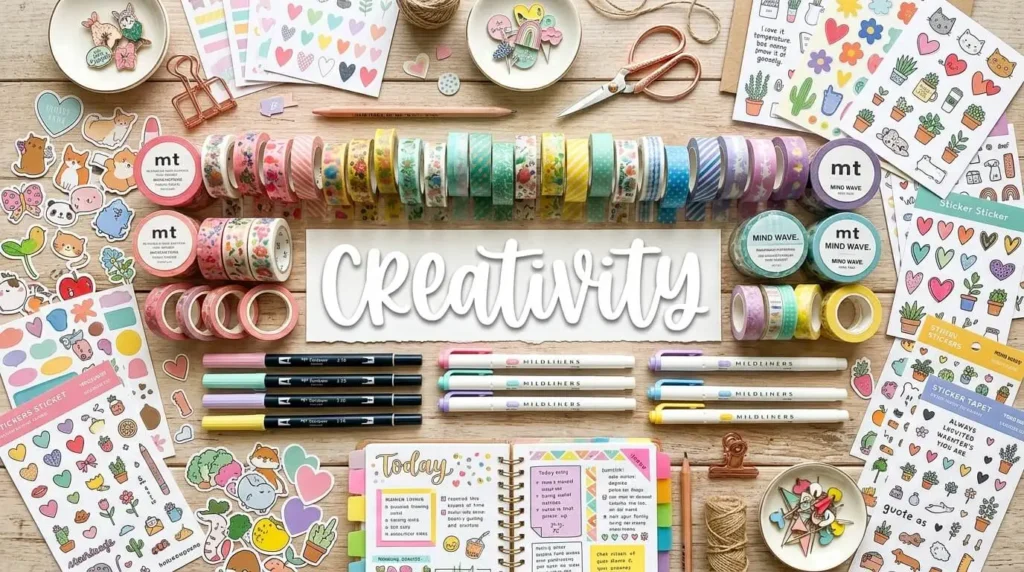
Artists, hobbyists, journal enthusiasts, and children may use sketchbooks, colored pencils, markers, watercolor paper, stickers, washi tape, and decorative pens.
Creative stationery can turn an ordinary notebook into a personal project.
Bullet journaling is one example. Instead of simply recording appointments, people can design pages for habits, goals, expenses, reading lists, projects, and personal reflections.
Scrapbooking is another activity that makes extensive use of stationery. Paper, photographs, stickers, decorative tape, labels, and handwritten notes can be combined to create personal memory books.
You do not need to be an artist to enjoy these activities. Creativity is less about producing something perfect and more about experimenting with ideas.
How to Choose Quality Stationery
Buying stationery can be surprisingly difficult because there are so many choices. A product may look attractive but perform poorly, while another simple-looking item may become a daily favorite.
Start with purpose.
Before buying something, ask yourself: What will I actually use this for?
If you need a notebook for everyday school notes, durability and comfortable paper may matter more than decoration. If you are purchasing a journal, appearance and paper quality may be equally important.
Consider these factors:
Paper Quality
Check whether the paper feels suitable for your pen. Thin paper may allow ink to show through, while thicker paper is generally better for certain pens and artistic techniques.
Comfort
A pen should feel comfortable during extended writing. Grip shape, weight, ink flow, and tip size can all affect the experience.
Durability
A notebook that will travel in a backpack needs a stronger cover and binding than one that stays on a desk.
Design
Appearance matters because stationery is something you may use repeatedly. Choose designs that you genuinely enjoy rather than buying something simply because it is fashionable.
Price
Expensive does not always mean better. The best stationery is usually the product that offers the right combination of quality, usefulness, and value for your particular needs.
Stationery and Personal Organization
One of the greatest benefits of stationery is its ability to support organization.
A notebook can become a place for daily tasks. A planner can provide an overview of upcoming events. Sticky notes can highlight urgent reminders, while folders can separate documents.
A simple organization system might include four sections:
- Today – tasks that need immediate attention.
- This Week – upcoming work and appointments.
- Ideas – thoughts and projects to explore later.
- Important – information that should not be forgotten.
The system does not have to be complicated. In fact, simpler is often better.
Writing something down can also provide a physical reminder that is easy to see. A note beside your workspace may be more noticeable than a notification buried among dozens of phone alerts.
The Rise of Personalized Stationery
Personalized stationery has become popular because people want products that feel unique.
Names, initials, favorite colors, illustrations, photographs, and custom designs can be added to notebooks, planners, cards, folders, and other supplies.
Personalization can make ordinary stationery feel special.
For businesses, customized stationery can strengthen branding. For individuals, it can express personality.
Personalized notebooks are particularly popular as gifts. Someone who loves writing may appreciate a journal featuring their name, while a student might enjoy a customized study planner.
The possibilities are broad. Minimalist designs can look professional, while colorful illustrations may appeal to younger users.
Eco-Friendly Stationery Choices
As environmental awareness increases, many people are thinking more carefully about what they buy and throw away.
Eco-friendly stationery can include recycled paper, refillable pens, reusable notebooks, responsibly sourced materials, and products designed to reduce unnecessary packaging.
Small choices can make a difference when repeated over time.
Instead of buying a new disposable pen every time one runs out, for example, a refillable option may reduce waste. Similarly, using both sides of a sheet of paper can reduce unnecessary consumption.
However, it is worth looking beyond marketing claims. A product described as “eco-friendly” is not automatically the best environmental choice. Consider its materials, packaging, lifespan, and whether it can be reused or recycled.
Durability is also important. A product that lasts for years may be preferable to a cheap item that needs to be replaced frequently.
How to Organize Your Stationery
A stationery collection can quickly become messy if everything is stored together.
The solution does not need to be complicated.
Use containers based on function.
Keep writing instruments in a pencil case or desk holder. Store paper products in one location. Put craft materials in another container.
You can also separate supplies by frequency of use.
Items you use every day should be easy to reach. Products used occasionally can be stored elsewhere.
Labeling can make a major difference.
If you have several boxes, labels such as “Pens,” “Paper,” “Art Supplies,” and “Office” make it easier to find things quickly.
Another useful habit is to review your collection every few months. Remove dried-out markers, empty pens, damaged paper, and supplies you know you will never use.
Organization is not about having a perfect desk. It is about making your belongings work for you.
Stationery as a Gift
Stationery makes a practical and personal gift because almost everyone can use it.
A simple gift set could contain a notebook, pen, sticky notes, and a small planner. For an artist, colored pencils and a sketchbook may be more appropriate.
Gift ideas can be matched to personality:
- For students: study notebooks, highlighters, folders, and planners.
- For writers: journals, quality pens, and writing paper.
- For artists: sketchbooks, markers, and drawing supplies.
- For professionals: elegant notebooks, planners, and desk accessories.
- For children: colorful pencils, stickers, activity books, and markers.
Presentation can make the gift even more attractive. A small collection arranged neatly in a box or reusable pouch can feel more thoughtful than a random selection of individual products.
How Stationery Supports Creativity
Writing by hand can provide a different experience from typing. There is something direct about putting a pen onto paper and watching an idea appear.
A blank page can be intimidating, but it can also be an invitation.
What could you put on the page?
You might write a story, draw a diagram, plan a business idea, record a personal goal, sketch a room, or simply make a list of things you want to accomplish.
Stationery can therefore become more than a collection of objects. It can become part of a creative routine.
Keeping a notebook nearby is particularly useful for capturing ideas quickly. Great ideas do not always arrive at convenient times. A small notebook can act like a net for catching those passing thoughts before they disappear.
Building a Simple Stationery Collection
You do not need an enormous collection to enjoy stationery.
A practical starter set could include:
- One reliable pen
- One pencil
- One notebook
- One highlighter
- One ruler
- Sticky notes
- A pencil case or organizer
From there, you can add products based on your actual needs.
Avoid buying simply because something looks interesting.
Ask whether you have a real use for it. This approach saves money and prevents your desk from becoming overloaded.
Once you understand what you use most, you can invest in better versions of those products.
The Future of Stationery
Technology will continue to change how people communicate, but that does not necessarily mean physical stationery will disappear.
Instead, traditional and digital tools are increasingly being used together.
Someone might write notes in a paper notebook and later photograph or scan them. A student may use handwritten flashcards alongside a digital learning platform. A designer might sketch an idea on paper before developing it digitally.
This combination offers flexibility.
The future of stationery is unlikely to be purely paper or purely digital. It will probably be a mixture of both.
New materials, reusable products, sustainable manufacturing, and smart writing tools may continue to expand the category.
Conclusion
Stationery is much more than pens and paper. It supports education, communication, creativity, planning, organization, and personal expression.
Whether you need a basic school kit, an organized office desk, an artistic collection, or a personalized journal, the key is to choose products that genuinely fit your needs. You do not need the biggest collection or the most expensive supplies. A few reliable and useful items can be enough.
In a world filled with digital screens, there is still something valuable about putting an idea onto paper. Sometimes, the simplest tools are the ones that help us think, create, and get things done.
Frequently Asked Questions
1. What is stationery used for?
Stationery is used for writing, studying, planning, drawing, organizing documents, communicating, and creative activities. Common examples include notebooks, pens, pencils, folders, paper, planners, and sticky notes.
2. What is the correct spelling: stationery or stationary?
For writing and office supplies, the correct spelling is stationery. Stationary generally describes something that is not moving.
3. What stationery should every student have?
A basic student collection can include pens, pencils, an eraser, sharpener, ruler, notebooks, highlighters, sticky notes, and a pencil case. Additional supplies depend on the student’s subjects and school requirements.
4. How can I keep my stationery organized?
Store similar items together, use containers or pencil cases, label storage boxes, and keep frequently used supplies within easy reach. Regularly remove empty or damaged items.
5. Is stationery still useful in a digital world?
Yes. Physical stationery remains useful for handwritten notes, planning, drawing, studying, brainstorming, and personal organization. Many people combine paper-based tools with digital technology for greater flexibility.