
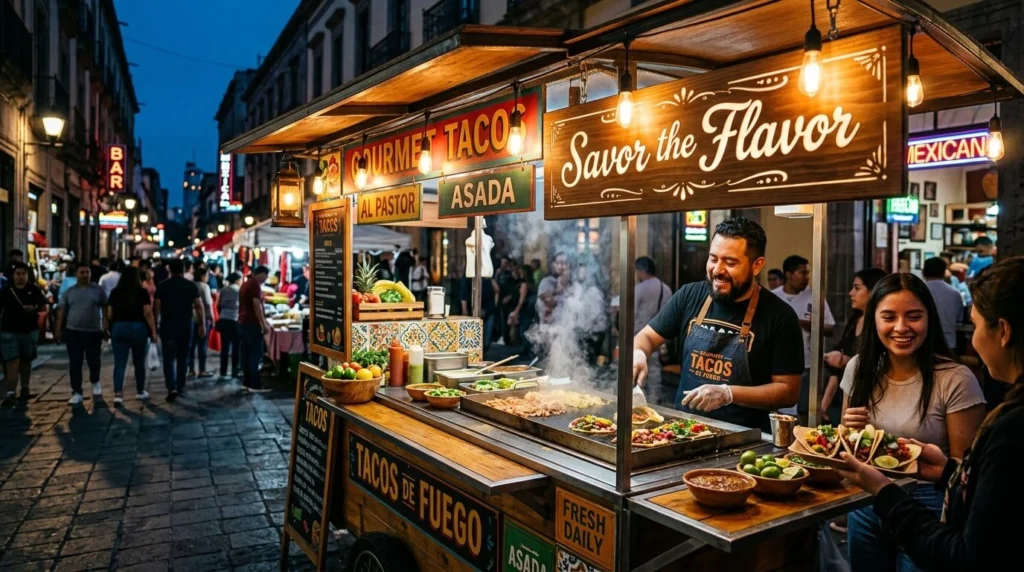
Most people picture a food cart as the little cousin of a food truck — cheaper, smaller, less serious. That assumption is exactly why so many vendors underprice themselves, pick the wrong location, or burn out in the first six months.
Here’s the truth: a well-run food cart can out-earn a food truck per square foot. Lower startup costs, faster setup, and the ability to test a menu without sinking your savings into a diesel engine make it one of the smartest entry points into the food business today. But “low cost” doesn’t mean “low effort” — the vendors who succeed treat their cart like a real business from day one.
This guide walks through everything you need to get a food cart running: realistic costs, permits, equipment, menu strategy, and the marketing habits that turn a weekend hobby into steady income. By the end, you’ll know exactly what to do first, what to skip, and where most new vendors waste money.
What Is a Food Cart, Exactly?
A food cart is a compact, often non-motorized food service unit — think hot dog carts, coffee carts, taco stands, or ice cream carts — designed to be pushed, towed, or set up in a fixed spot rather than driven like a truck. It’s smaller than a food truck, cheaper to buy, and generally faster to get licensed because it carries a shorter list of equipment for health inspectors to review.
Carts typically fall into a few categories:
- Pushcarts — manually moved, used for hot dogs, pretzels, or ice cream
- Trailer carts — towed behind a vehicle, offering more cooking space
- Stationary kiosks — semi-permanent setups at markets or fairs
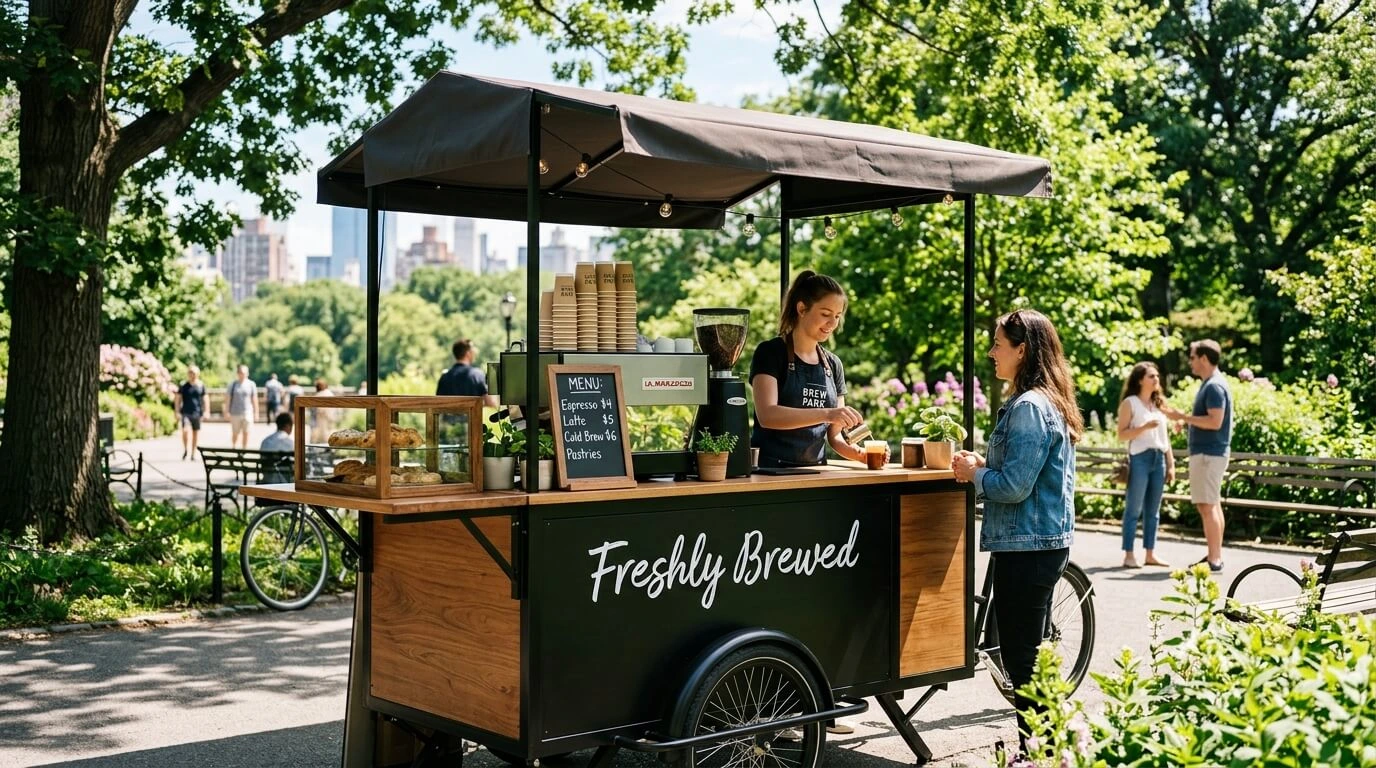
- Bike-powered carts — popular for coffee and cold drinks in dense urban areas
Choosing the right type shapes everything else — your menu, your location options, and your budget.
How Much Does It Cost to Start a Food Cart?
This is the question every new vendor asks first, and the honest answer is: it depends heavily on your menu and city, but most vendors get running for somewhere between $5,000 and $25,000.
Here’s a rough breakdown:
- Cart itself: $2,000–$15,000 depending on whether it’s new, used, or custom-built
- Permits and licenses: $200–$1,500, varying widely by city
- Initial inventory and supplies: $500–$2,000
- Insurance: $500–$1,500 annually
- Commissary kitchen fees (if required): $200–$600 per month
A used cart from a vendor who’s exiting the business is often the smartest first purchase. You get functional equipment at a fraction of retail price, and you can upgrade once revenue justifies it.
Hidden Costs New Vendors Forget
Beyond the obvious startup list, budget for propane refills, generator fuel, commissary storage, small equipment repairs, and — critically — a slow first month while you build a regular customer base. Vendors who plan for a lean first 30 days handle it far better than those who assume day-one profits.
Permits, Licenses, and Health Codes You’ll Need
This is where most first-time vendors get stuck, not because the process is impossible, but because it’s scattered across multiple offices. Requirements vary by city and country, but the general list looks like this:
- Business license — registers your cart as a legal business entity
- Food handler’s permit — usually requires a short course and exam
- Mobile vending permit — specific to selling food from a cart or stand
- Health department inspection — your cart and prep process must pass local food safety codes
- Fire safety approval — required if you’re using propane or open flame equipment
Call your local health department before you buy anything. Some cities require a commissary kitchen — a licensed commercial kitchen where you prep food before loading the cart — and that requirement changes what kind of cart setup even makes sense for you.
Picking a Menu That Sells (Not Just One You Like)
The biggest mistake new vendors make is building a menu around personal taste instead of what sells fast in a street-food format. A cart menu needs to be:
- Quick to prepare — customers on foot won’t wait ten minutes
- Easy to eat while walking or standing
- Built on 3–5 core ingredients you can prep in bulk and repurpose across items
- Priced to move — most successful carts sit in the $5–$12 range per item
Menu Ideas That Consistently Perform
Hot dogs and sausages remain reliable because prep is fast and margins are strong. Tacos and burritos work well in high-foot-traffic areas. Coffee carts thrive near office districts and transit stops. Dessert carts — churros, shaved ice, crepes — do especially well near parks, events, and tourist areas.
Keep your opening menu small. Five strong items you can execute perfectly will outsell fifteen items you’re constantly running out of ingredients for.
Finding the Right Location (This Decides Your Income More Than Anything Else)
You can have the best food in the city and still fail if you’re parked in the wrong spot. Foot traffic is everything for a cart, since you don’t have the mobility advantage a food truck has to chase crowds.
Strong locations typically include:
- Business districts during lunch hours
- Near college campuses
- Farmers markets and weekend events
- Outside transit stations during commute hours
- Festivals and fairs with vendor booths
Many cities require a specific permit for each vending location, so confirm before you set up. Scouting a spot for a few days — just watching foot traffic at different hours — tells you more than any guesswork ever will.
Marketing Your Food Cart Without a Big Budget
Carts have an advantage most restaurants don’t: visibility. People see you cooking, smell the food, and decide on the spot. Still, a few low-cost habits make a real difference:
- Post your daily location on Instagram or Facebook — regulars will look for you
- Keep a simple loyalty punch card for repeat customers
- Ask happy customers for a quick Google review on the spot
- Partner with nearby offices or event organizers for repeat bookings
Consistency matters more than clever marketing. Showing up at the same spot on the same days each week builds a customer base faster than any ad campaign.

Frequently Asked Questions
Is a food cart profitable? Yes, when run consistently. Most vendors report profit margins between 15% and 30% once past the first few months, largely because overhead is far lower than a restaurant or food truck.
Do I need a commissary kitchen for a food cart? In many cities, yes — especially if you’re preparing raw meat or complex dishes. Some jurisdictions allow full prep on the cart itself if it meets equipment standards, so check local health codes first.
How much can a food cart make per day? This varies by location and menu, but a well-positioned cart in a high-traffic area can bring in $300–$800 on a strong day, with slower weekdays averaging less.
What’s the difference between a food cart and a food truck? A food cart is smaller, cheaper, and usually stationary or manually moved, while a food truck is a fully equipped, driveable kitchen. Carts cost less to start but offer less cooking capacity and mobility.
Can I run a food cart part-time? Absolutely. Many vendors start on weekends or during lunch hours while keeping another job, then scale up once they’ve built a steady customer base.
Final Thoughts
I’ve spent time around enough cart vendors to notice a pattern: the ones who succeed treat the first three months as a learning phase, not a payday. They track which items sell out, which locations flop, and which days actually bring in customers — then adjust weekly instead of guessing. The vendors who struggle are usually the ones who copy someone else’s menu and location without testing what their own city actually wants.
Starting a food cart isn’t complicated, but it does reward patience. Get your permits sorted, keep your menu tight, pick your spot carefully, and show up consistently. That combination — more than any secret recipe — is what turns a cart into a real income source.
Ready to get started? Check your city’s health department website today for permit requirements, and start scouting locations this week. The sooner you’re set up, the sooner you’ll know what works.