
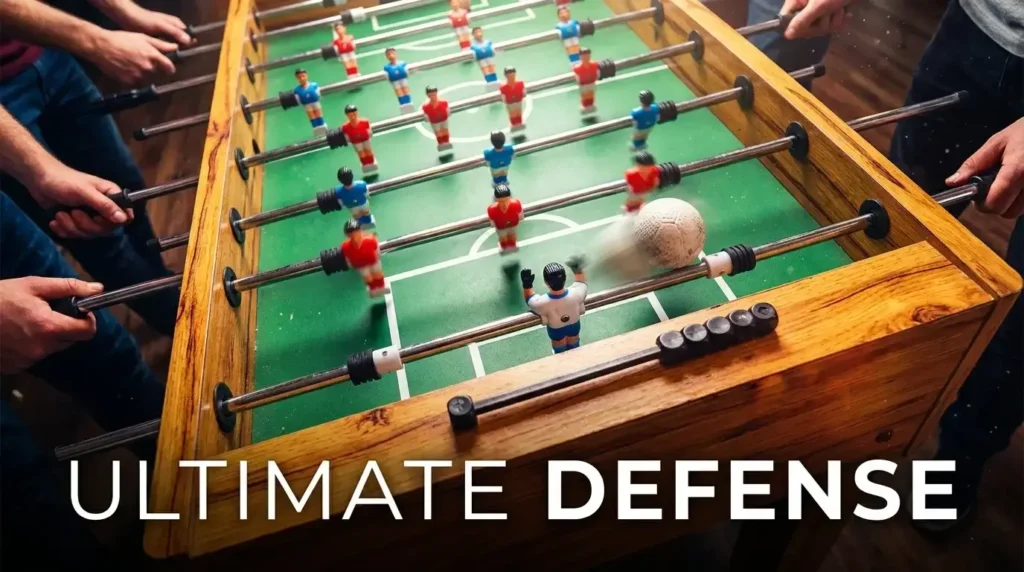
You walk into a friend’s basement, spot a foose ball table in the corner, and within five minutes you’re gripping the rods, spinning wildly, and losing 5-0 to someone who barely seems to be trying.
It happens to almost everyone. The good news is that foose ball is far easier to improve at than it looks. Once you understand a handful of basic rules and three or four core techniques, you stop flailing and start controlling the ball.
This guide covers how foose ball works, the rules, the shots that matter, how to pick a good table, and the mistakes that keep beginners stuck. Read to the end, because the last section contains the single habit that improves most players fastest.
What Is Foose Ball?
Foose ball is a tabletop version of football (soccer). Two sides, each controlling rows of small figures mounted on metal rods, try to knock a small ball into the opponent’s goal. You rotate and slide the rods to pass, block and shoot.
Quick answer: Foose ball is a two-sided table game where players use handles to move rows of figures and score goals against each other. Most games are played to 5 or 7 points.
The game goes by several names around the world, including table football, babyfoot and table soccer. The word “foosball” is also a common spelling, but the game is the same whichever name you use. It started in the early 20th century as a way to enjoy football indoors. Today you’ll find it in bars, offices, schools and family homes.
Foose Ball Rules Every Beginner Should Know
Rules vary between friendly games and tournaments, but these basics apply almost everywhere.
The Basic Setup
- Each side controls four rods: goalkeeper, defenders, midfielders and strikers.
- A game is usually played to 5 points, or 7 in casual and competitive settings.
- The ball is served from the side hole or placed at centre, depending on the table.
Core Rules in Plain English
- No spinning. Rotating a rod a full 360 degrees before or after hitting the ball is illegal in most formal play. It’s the most argued rule in casual games.
- Dead ball. If the ball stops where nobody can reach it, it is moved to the nearest open spot, usually the middle of the five-bar.
- No jarring. Shaking or banging the table to disrupt play is not allowed.
- Time limits. In organised play you must shoot within a few seconds of controlling the ball.
Agree on the house rules before the first serve. Most foose ball arguments are really disagreements about rules nobody discussed.
How to Play Foose Ball: Positions and Rods
Understanding what each rod does is where real improvement starts.
The Goalkeeper and Defence
Your goalkeeper rod has a single figure covering the goal area. Your two defenders sit just in front of it. Together they form your last line of defence. Keep the defenders slightly angled back so a ball can’t slip under them.
The Midfield (Five-Bar)
The five-bar has five figures and gives you the widest coverage on the table. It is your control centre, where you receive passes and set up shots. Good foose ball players treat the five-bar as the engine of the team.
The Strikers (Three-Bar)
The three-bar is your scoring rod. It has three figures and sits closest to the opponent’s goal. Most goals are scored from here, but only if the ball arrives under control.
The Foose Ball Shots That Actually Win Games
You don’t need dozens of tricks. These four cover most situations.
The Pull Shot
Trap the ball with the front of a figure, pull it sideways, then push it forward quickly towards the goal. It’s reliable, accurate and the first shot most coaches teach.
The Push Shot
This is the mirror image. You push the ball sideways, then drive it across towards the far corner. It works well when the defender has overcommitted to one side.
The Pass Between Rods
A smooth pass from the two-bar to the five-bar to the three-bar is the foundation of strong foose ball. Slow, controlled passing beats wild shooting almost every time.
The Block
A good block is as valuable as a good goal. Place the rod so the ball stops flat, then wait. Let the other player make the first mistake.
How to Get Better at Foose Ball Fast
Quick answer: To improve at foose ball, loosen your grip, slow the ball down, practise passing between rods, and stop spinning the handles.
Here is what makes the biggest difference.
Relax Your Grip
Beginners squeeze the handles like they’re hanging off a cliff. Hold them loosely with your fingers so your wrists can move freely. A tense grip means slow reactions and wild shots.
Slow Down Before You Shoot
Fast play feels exciting, but control wins matches. Trap the ball, look at the goal, and then shoot. Even half a second of calm improves accuracy noticeably.
Practise One Shot at a Time
Spend ten minutes on just the pull shot. Then ten on the push shot. Short, focused practice beats an hour of random play.
Watch Better Players
Watching a stronger player for a few games teaches you more than reading any guide. Notice how little they move their bodies and how often they simply wait.

Choosing a Foose Ball Table
If you’re buying a table for home, a few details matter more than the brand.
- Rods: Solid steel rods last longer and move more smoothly than hollow ones. Hollow rods are lighter but bend more easily.
- Playing surface: Look for a flat, well-finished field. Cheap tables often warp over time.
- Weight and stability: A heavier table stays put during fast play. Light tables rock and ruin the game.
- Handles and bearings: Smooth handles and linear bearings reduce friction and improve control.
- Size: Measure your room first. You need space around the table for the players to move.
For families with children, a smaller tabletop model is often a better fit than a full-size arcade table. For a game room where adults play regularly, a sturdier tournament-style foose ball table is worth the extra cost.
Common Foose Ball Mistakes to Avoid
- Spinning the rods. It looks flashy, gives you no control and is banned in most competitive play.
- Slamming every shot. Power matters less than placement.
- Ignoring defence. Many beginners attack constantly and leave the goal wide open.
- Staring at the ball only. Watch your opponent’s rod positions too, because they show where the shot is coming from.
Foose Ball FAQs
Is foose ball the same as table football?
Yes. Foose ball, foosball, table football and table soccer all describe essentially the same game, though some regional tables differ slightly in size and rod design.
How many points do you need to win a foose ball game?
Most casual games go to 5 points, while tournament matches usually go to 7. Agree on a target before you start.
Is spinning allowed in foose ball?
Not in most organised play. Spinning the rods makes the ball hard to control and is usually penalised, though some friendly games allow it.
What is the best way to practise alone?
Drop a ball on your side of the table and practise trapping it, then pulling and pushing it into the goal. Repeating the same shot builds muscle memory faster than playing random games.
Is foose ball good for children?
Yes. It builds hand-eye coordination, patience and teamwork. Smaller tabletop versions suit younger players.
Conclusion: Start Playing Smarter Today
Foose ball rewards patience, not panic. Learn the rules, loosen your grip, practise the pull and push shots, and treat passing as your main tool. Within a few sessions you’ll notice the ball doing what you want instead of what it likes.
Here’s the habit that helps most: before every shot, stop the ball first. Control it, breathe, then shoot. Try it in your next game and see how quickly your results change.
Ready to improve? Challenge a friend this weekend, pick one technique from this guide, and focus only on that. If you found this helpful, share it with your foose ball partner and let them know their winning streak is over.