
Most men own a dozen ties and a drawer full of watches, but only a handful of people notice when someone gets their cufflinks exactly right. That’s the point. Cufflinks are a quiet detail. They don’t shout, yet they tell everyone in the room that you pay attention.
If you’ve never worn them, or you own a pair that has sat in a box since a wedding, this guide will help. You’ll learn which types exist, which shirts they work with, how to match them to your outfit, and the mistakes that make even expensive cufflinks look wrong.
What Are Cufflinks and Why Do They Still Matter?
Cufflinks are small fasteners that hold the cuffs of a dress shirt together. Instead of a button sewn onto the sleeve, you slip the cufflink through two holes in the cuff and secure it.
They date back to the 17th century, when men used decorative ribbons and strings to close their cuffs. Buttons and metal fasteners followed, and by the 19th century cufflinks were a standard part of formal dress.
Today, nobody needs them. A button does the same job. But that’s exactly why they work: choosing to wear cufflinks is a style decision, not a necessity. They add personality to a suit, and they can make a plain shirt look considered.
Do Your Shirts Work With Cufflinks?
This is where many beginners go wrong, so check this before you buy anything.
French cuffs (double cuffs) are made for cufflinks. The cuff is twice as long and folds back on itself, so the holes line up and the link sits on show. If you only buy one cufflink-ready shirt, make it a white French cuff shirt.
Single cuffs with cufflink holes exist too, sometimes called “convertible” cuffs. These have both a button and an extra buttonhole, so you can choose either. They’re a useful option if you’re not sure about committing to the full look.
Standard button cuffs cannot take cufflinks. Please don’t try to punch a hole in one. It will fray, and it will look it.
Types of Cufflinks Explained
Knowing the main types of cufflinks helps you choose a pair that’s easy to use and suited to the occasion.
Bullet Back Cufflinks
A small barrel swivels and flips flat once it passes through the cuff. They are the most common style and the easiest to put on, which makes them a sensible first pair.
Whale Back Cufflinks
These use a flat, paddle-shaped bar that you flip into place. They hold firmly and are very similar to bullet backs in everyday use.
Chain Link Cufflinks
Two decorative faces joined by a short chain. They sit neatly and move with your wrist, giving a traditional look.
Stud-Style Cufflinks
Instead of two visible faces, one side is a button-like stud. Often used with formal and tuxedo shirts, these are worth knowing if you attend black-tie events.
Fabric Knot Cufflinks
Silk knots on elastic. They’re inexpensive and casual-friendly, which is good for a relaxed look, but they don’t suit strict formal dress.

Choosing the Right Material and Finish
The material changes both the look and the price, so it helps to think about how often you’ll wear them.
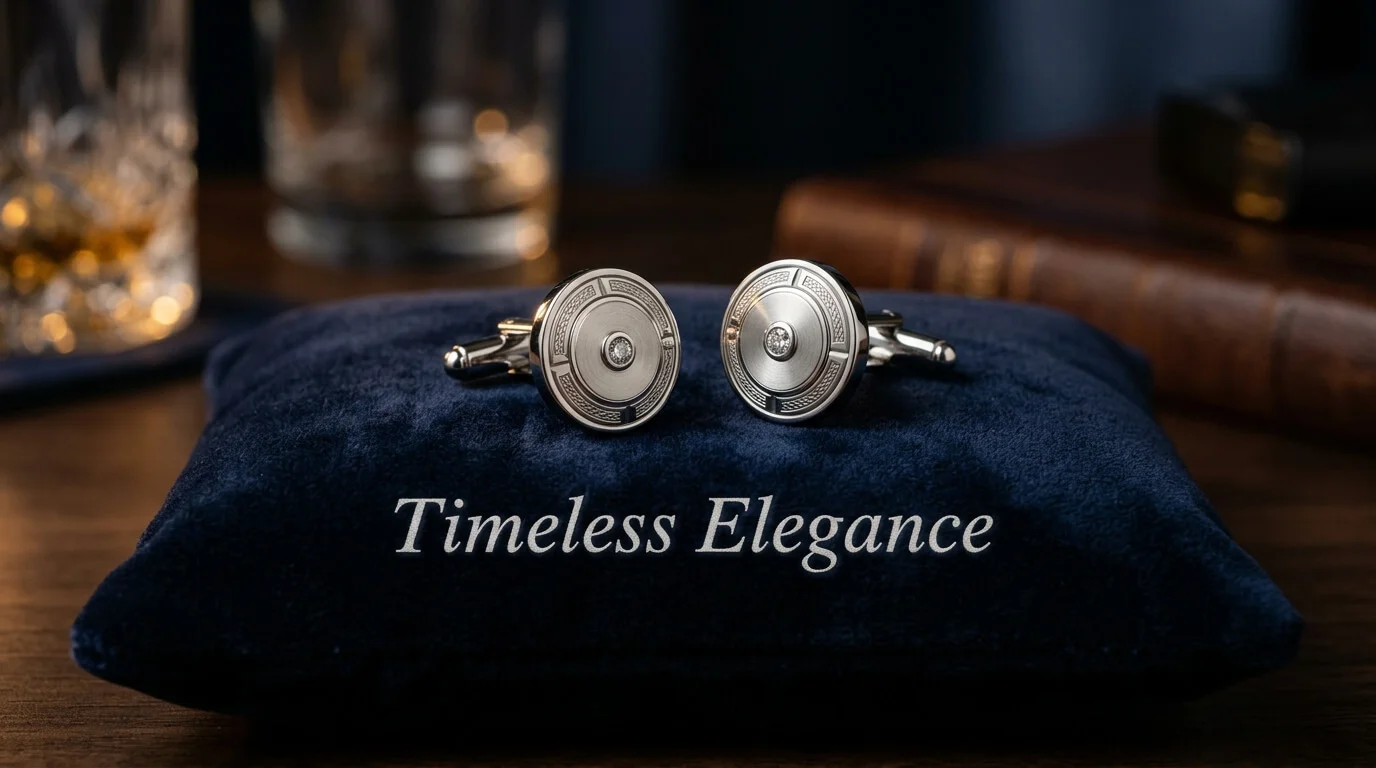
Sterling silver is the classic choice. It’s versatile, holds up well and looks sharp with grey, navy and charcoal suits. Expect it to tarnish over time. A quick polish keeps it fresh.
Stainless steel is practical and affordable. It resists tarnish and scratches, so it’s great for daily office wear.
Gold and gold-plated pieces add warmth and make a stronger statement. Solid gold is a long-term investment, while plating is more accessible but can wear over the years.
Enamel, mother of pearl and stone inlays bring colour and texture. Mother of pearl looks excellent with a white shirt for weddings.
A simple rule: match your metals. If you’re wearing a silver watch and a silver tie bar, silver cufflinks will keep everything coordinated. Mixing metals is possible, but it takes practice.
How to Wear Cufflinks Step by Step
Putting them on takes about a minute once you’ve done it a few times.
- Fold the French cuff back on itself so the edges meet.
- Line up the holes on both sides.
- Push the cufflink through from the outside so the decorative face shows on the outer side of the cuff.
- Flip or turn the back piece to lock it in place.
- Make sure the faces point outward and the sleeve sits neatly beneath your jacket.
A helpful tip: put your cufflinks on before you put on your jacket, and do the less dominant hand first. Fastening the second link with your weaker hand is the trickiest part.
How to Match Cufflinks to the Occasion
For the Office
Keep it understated. Plain silver or steel, simple geometric shapes and muted colours suit a business setting. Novelty cufflinks might raise an eyebrow in a conservative workplace, so judge the room.
For Weddings
This is where cufflinks can be personal. Groomsmen often get matching pairs as gifts. Mother of pearl, engraved initials or a subtle colour that echoes the wedding theme all work well.
For Black-Tie Events
Choose simple, dark or classic designs. Onyx, mother of pearl and plain metal are traditional picks. Avoid anything flashy.
For Casual or Creative Settings
Here you have freedom. Playful designs, hobby-inspired shapes and bright enamel can show your personality, as long as they sit comfortably with the rest of your outfit.
Common Cufflink Mistakes to Avoid
- Wearing them with the wrong shirt. Only French or convertible cuffs work.
- Going too big. Oversized links overpower the sleeve and catch on jackets.
- Mismatched metals without a plan. Pick a lead metal and stay consistent.
- Ignoring comfort. If a pair digs into your wrist, you will stop wearing it.
- Storing them carelessly. Throwing them into a drawer scratches the finish. A small box keeps pairs together and protects them.
Cufflinks as a Gift
A good pair of cufflinks is one of the more reliable gifts for graduations, promotions, weddings and anniversaries. The best gifts are personal: initials, a meaningful date or a design linked to a hobby. Just make sure the person wears French cuff shirts before you buy. If they don’t, the gift will sit unused.
Frequently Asked Questions About Cufflinks
Can you wear cufflinks with any shirt?
No. Cufflinks need a shirt with cuff holes, which means French cuffs or convertible cuffs. Standard button cuffs aren’t designed for them.
Are cufflinks formal or casual?
Both. Classic metal designs are formal, while colourful or novelty cufflinks suit relaxed settings. The shirt, jacket and event decide how dressed up they look.
Should cufflinks match your watch?
They don’t have to, but matching the metal tones keeps the outfit tidy. If your watch is silver, silver or steel cufflinks are the safest option.
How much should you spend on your first pair?
A well-made pair in steel or sterling silver is a good start. You don’t need to spend heavily at first. Choose something simple you’ll actually wear, then build a small collection over time.
How do you clean cufflinks?
Wipe them with a soft cloth after wearing. For silver, use a gentle polishing cloth. Avoid harsh chemicals on enamel or stone details.
Final Thoughts
Cufflinks are a small investment that makes a noticeable difference. Start with one versatile pair, wear it with a crisp French cuff shirt, and notice how much more polished the whole outfit feels. As you get comfortable, add colour, texture and personality.
Ready to try them? Check your wardrobe for a French cuff shirt, pick a simple pair in silver or steel, and wear them to your next meeting or event. Tell us in the comments which style you chose and how it went.