
Best Baby Toys by Age: What Actually Helps Your Baby Grow
Walk into any toy shop and you’ll see a wall of flashing, singing, battery-hungry plastic, all promising to make your baby smarter. Most of it ends up in a basket, ignored, while your baby happily chews a wooden spoon.
The truth is that the best baby toys are usually simple. Babies learn by looking, grabbing, mouthing, shaking and dropping things, and the right toy supports whichever of those they’re working on right now.
In this guide you’ll learn how to choose baby toys that are safe, what to buy at each stage from newborn to 12 months, which toys to skip, and how to avoid wasting money.
What Makes a Good Baby Toy?
A good baby toy does three things: it’s safe, it fits your baby’s current stage, and it lets your baby do the work. If the toy does all the entertaining, your baby only watches. If your baby can shake it, squeeze it, stack it or bang it, they’re learning.
Look for these qualities:
- Safe materials: smooth edges, non-toxic finishes and no loose parts
- Easy to grip: small hands can’t hold anything bulky or slippery
- Open-ended: it can be used in more than one way
- Easy to clean: everything goes in the mouth, so washable matters
Safety First: What to Check Before You Buy
Safety matters more than any developmental claim on the box. A few checks take seconds and prevent serious problems.
Choking hazards. Anything that fits inside a toilet paper tube is too small for a baby under three. Check for parts that could snap off, such as eyes, buttons and wheels.
Button batteries and magnets. These are among the most dangerous items for young children if swallowed. Choose toys with battery compartments secured by a screw, and avoid loose magnets entirely.
Cords and strings. Anything long enough to wrap around a neck is a risk. Keep cords short, and remove toys from the cot or crib at sleep time.
Second-hand toys. These are fine in principle, but check for cracks, worn paint and missing parts, and look up recalls if you can find the model.
Always check that a toy carries the safety mark for your region, such as CE or UKCA in Europe and the UK, or ASTM compliance in the US. These marks aren’t a guarantee, but a toy without one is a red flag.
Best Baby Toys for Newborns (0–3 Months)
Newborns can’t reach or grasp yet, and their eyesight is still developing. What they want is something to look at and someone to look at them.
- High-contrast cards and books: bold black-and-white patterns are easier for young eyes to pick out.
- Soft rattles: gentle sounds help them link noise with movement once they start swiping at things.
- Play gyms: a mat with hanging toys gives them something to watch and, later, to bat at.
- A baby-safe mirror: babies are fascinated by faces, including their own.
Don’t over-buy at this stage. Your face and voice are still the best entertainment.
Best Toys for 4–6 Month Old Babies
This is when things get interesting. Babies discover their hands, start reaching, and put everything in their mouths.
Teething and Chew Toys
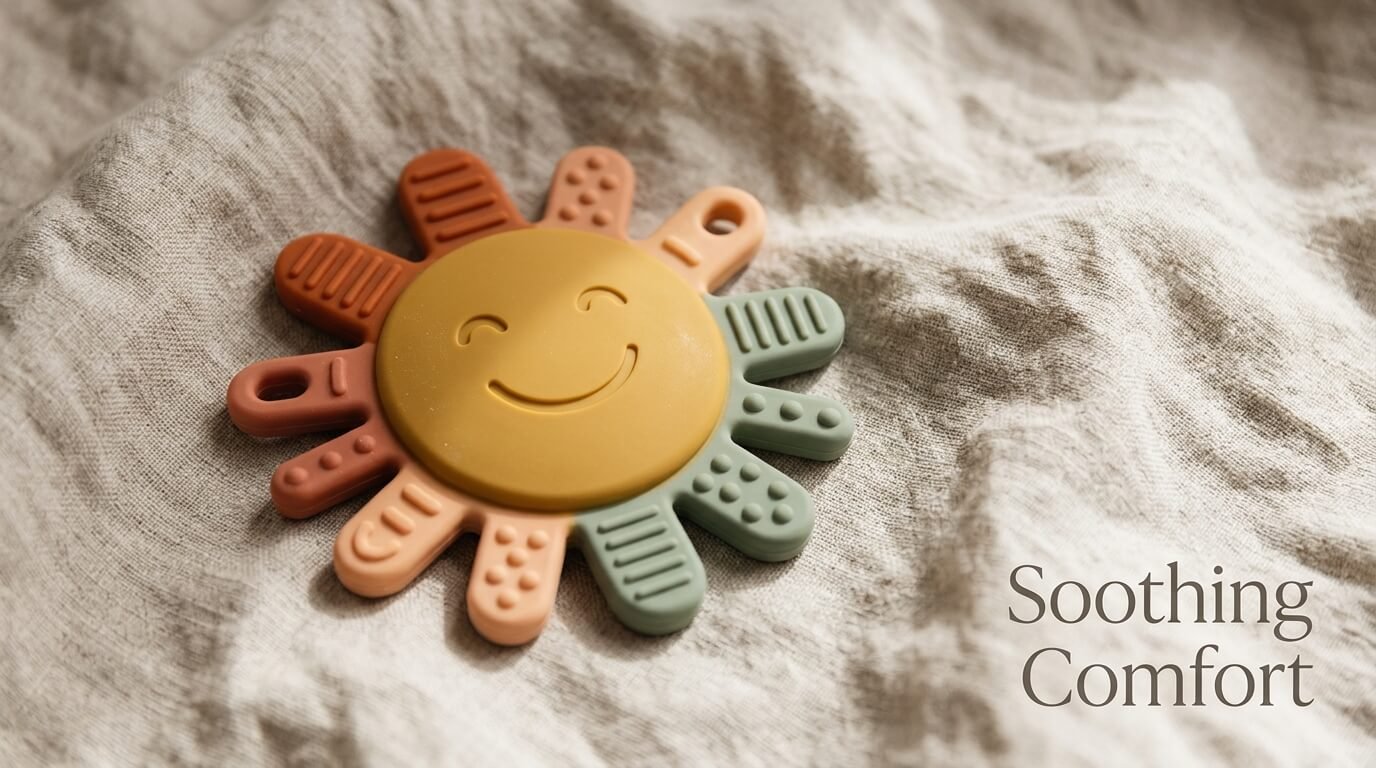
Teething rings made from solid silicone or natural rubber give sore gums something safe to work on. Chilling them in the fridge, not the freezer, can add some comfort. A frozen ring can be too hard on tender gums.
Grasping and Shaking Toys
Light rattles, soft rings and textured balls help build grip strength and hand-eye coordination. Choose pieces small enough for tiny hands but too big to swallow.
Soft Books and Crinkle Toys
Fabric books with different textures and crinkly pages introduce language and touch at the same time. Read aloud even if your baby just chews the corner.
Best Toys for 6–9 Month Olds: Sitting, Banging and Exploring
Once your baby sits up, their world opens. Both hands are free, and they love cause and effect: bang a block, hear a sound.
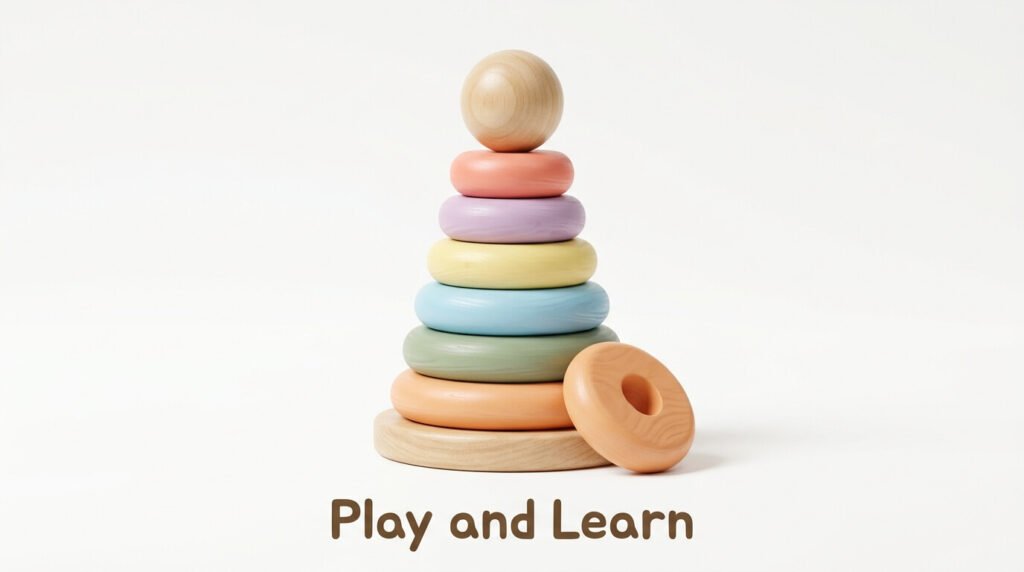
- Stacking cups: they nest, stack, rattle and hold water in the bath. One toy, many uses.
- Soft blocks: easy to grab, safe to throw, and good for early building.
- Sensory balls: bumpy, squishy or noisy balls encourage reaching and, soon, crawling.
- Bath toys: cups, floating animals and squirters turn bath time into play. Dry them well after use to prevent mould inside hollow ones.
Best Toys for 9–12 Months: Crawling, Pulling Up and Problem Solving
Mobile babies want to move, and toys that encourage movement are perfect now.
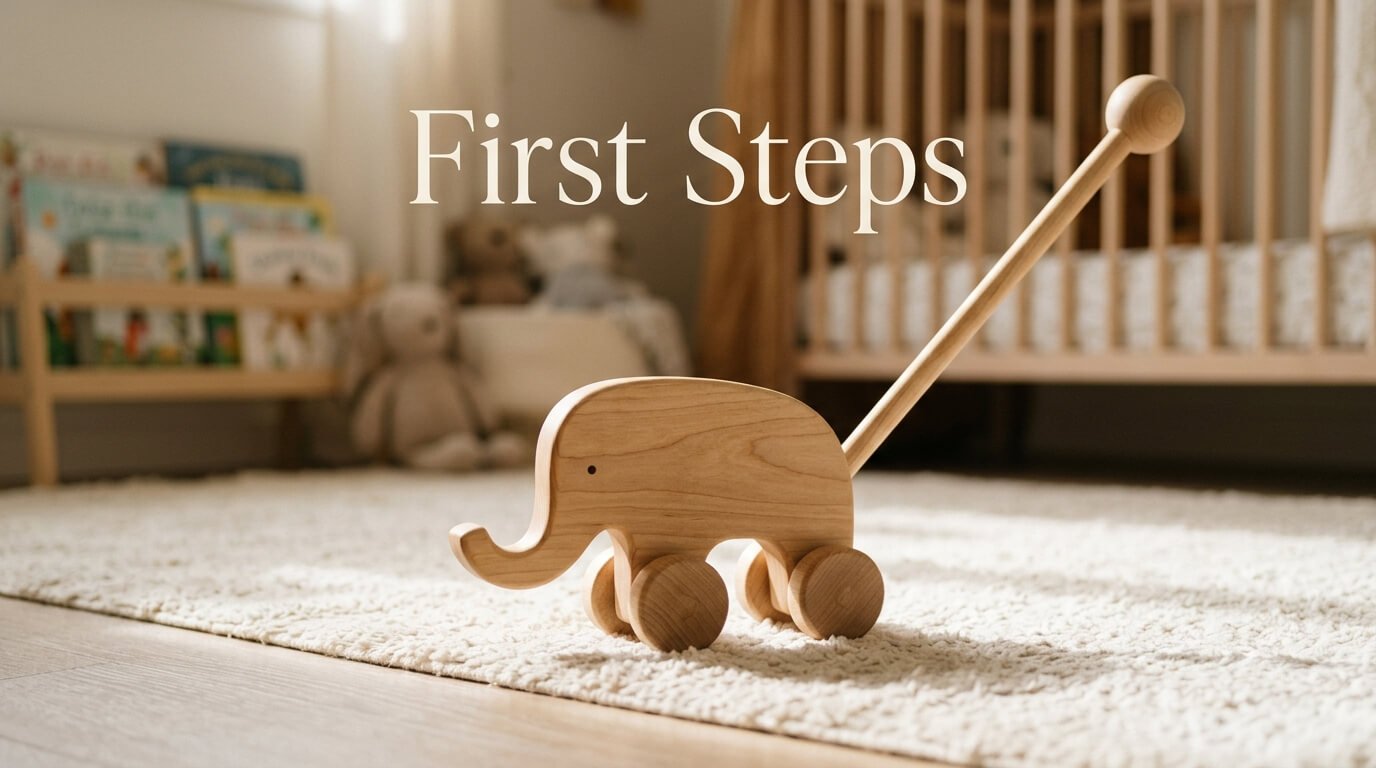
- Push toys and walkers: a sturdy push toy gives new walkers something to hold. Pick one that’s weighted so it doesn’t skid away.
- Shape sorters and simple puzzles: these teach early problem solving. Expect lots of frustration and then a proud grin.
- Balls and rolling toys: chasing a rolling ball is great motivation to crawl.
- Board books: chunky pages survive chewing and are easy to turn.
Pay attention to what your baby gravitates towards. If they love dropping things, buy things that make a satisfying noise when they land.
Baby Toys to Skip
Not every popular item earns its place on your shelf.
- Noisy electronic toys: constant lights and music can overstimulate, and they usually do the playing for the baby.
- Toys with tiny detachable parts: even if they’re labelled for older children, keep them away.
- Anything with long strings: pull toys with cords should only be used under supervision.
- Overly large sets: a handful of good baby toys beats forty mediocre ones. Rotate a few every week or two to keep things fresh.
How to Choose Baby Toys on a Budget
You don’t need to spend much. Many of the best baby toys are everyday objects: a wooden spoon, a set of plastic measuring cups, a scrunchy cloth or an empty (sealed) plastic bottle with a bit of rice inside. Supervise closely, and check that nothing can come loose.
When you do buy, spend on durable basics such as a play gym, stacking cups and a few soft toys. Buying second-hand from friends or family is also a good way to save, as long as you do the safety checks above.
Frequently Asked Questions
What are the best baby toys for a newborn?
High-contrast cards, a soft rattle and a play gym are the best baby toys for newborns. At this age, simple visual stimulation and your own voice matter more than any product.
When should I start giving my baby toys?
You can introduce simple visual toys from birth. Most babies start reaching for and holding toys at around three to four months, which is when rattles and teething rings become useful.
Are wooden baby toys better than plastic?
Neither is automatically better. Wooden toys tend to last longer and feel good to hold, while plastic ones are often lighter and easier to wash. What matters is smooth finishes, no small parts and non-toxic materials.
How many toys does a baby need?
Far fewer than you’d think. Five to ten well-chosen baby toys are plenty, and rotating them keeps your baby interested without clutter.
How often should I clean baby toys?
Wash toys that go in the mouth regularly with warm soapy water, and wipe hard toys down more often if your baby is ill. Follow the care label for fabric and electronic ones.
Final Thoughts
The best baby toys aren’t the most expensive or the most advanced. They’re safe, simple and suited to what your baby is learning right now. Start with the basics for their age, watch what they love, and trust your instincts. If a toy looks risky, it probably is.
Ready to build your baby’s toy collection? Start with the age section above that matches your little one, pick two or three items from the list, and skip the rest. Have a favourite toy that worked wonders for your baby? Share it in the comments to help other parents.