
You’ve just pulled out a box of dominoes. The tiles look simple enough, a few dots on each one, yet when someone says “your turn,” you freeze. Which tile goes where? What do the numbers mean? How do you actually win?
Don’t worry. Dominoes is one of the easiest games to learn and one of the hardest to put down once you get going. This guide covers how to play dominoes from the first shuffle to the final score. You’ll learn the basic rules, the two most popular game versions, how scoring works, and a few tips that will help you beat friends and family.
What You Need to Start Playing Dominoes
Before learning how to play dominoes, you need to know what’s in the box.
A standard set is called double-six and contains 28 tiles. Each tile, also called a bone or a stone, is split into two halves. Each half shows between zero dots (a blank) and six dots. Every possible pairing appears exactly once, from 0-0 up to 6-6.
A tile with the same number on both halves, like 4-4, is called a double. Doubles are usually placed sideways across the line of play, so they stand out on the table.
You also need two to four players, a flat surface, and something to keep score, like paper and a pen.
Larger Domino Sets
Some groups prefer bigger sets. A double-nine set has 55 tiles, and a double-twelve set has 91. They work well for larger groups, but the rules are the same. If you’re new, start with a double-six set.
How to Play Dominoes: The Basic Rules Step by Step
Here is the quick answer. To play dominoes, each player takes turns placing a tile so that one of its ends matches the number on an open end of the tiles already on the table. The first player to use all their tiles wins the round.
Now let’s break that down.
Step 1: Shuffle the Tiles
Place all tiles face down on the table and mix them thoroughly. This is called “shuffling the boneyard.” Make sure nobody can see the dots.
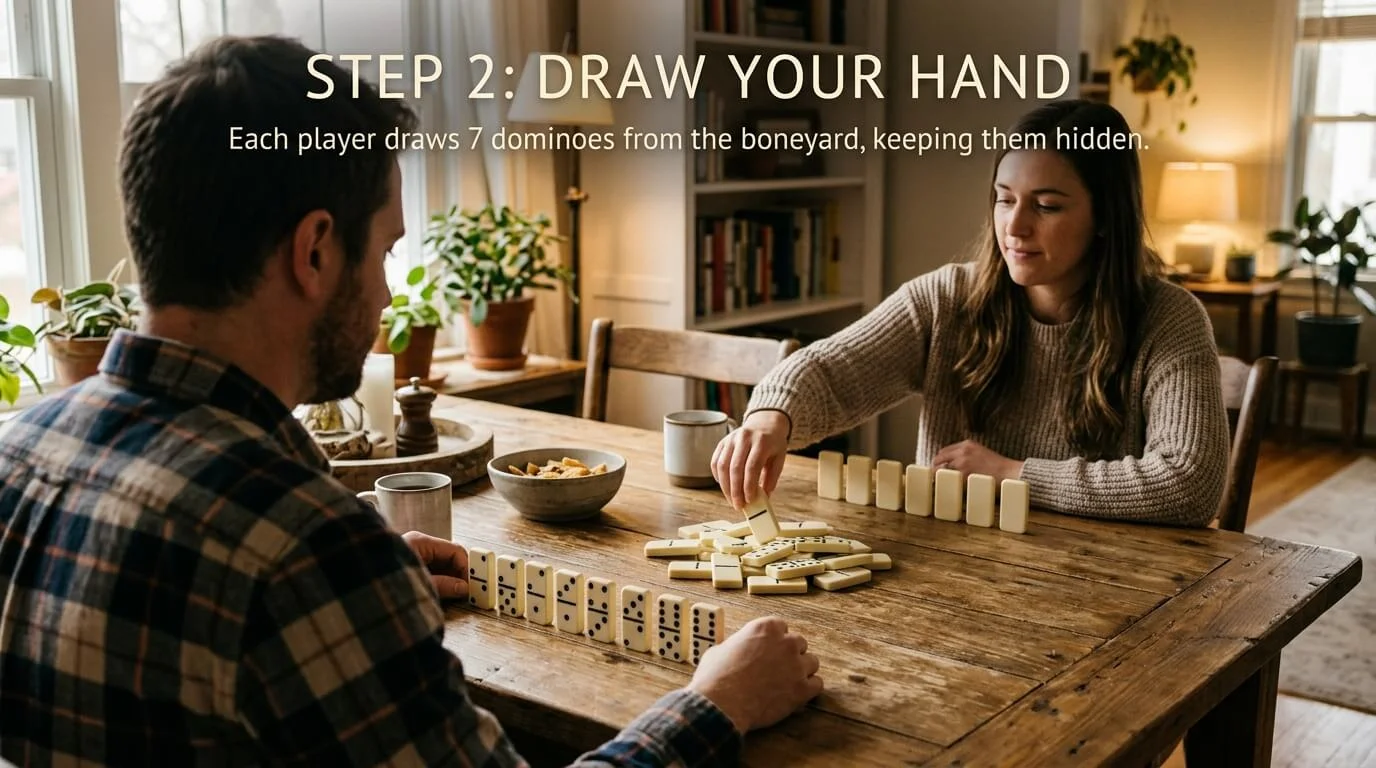
Step 2: Draw Your Hand
The number of tiles each player takes depends on how many people are playing:
- Two players: 7 tiles each
- Three or four players: 5 or 7 tiles each (agree on this before you start)
The tiles left over stay face down in the middle. This pile is the boneyard or stock.
Step 3: Decide Who Goes First
The usual rule is that the player holding the highest double starts. If nobody has a double, the player with the heaviest tile (the most total dots) goes first. That player places the tile in the middle of the table.
Step 4: Take Turns Matching Tiles
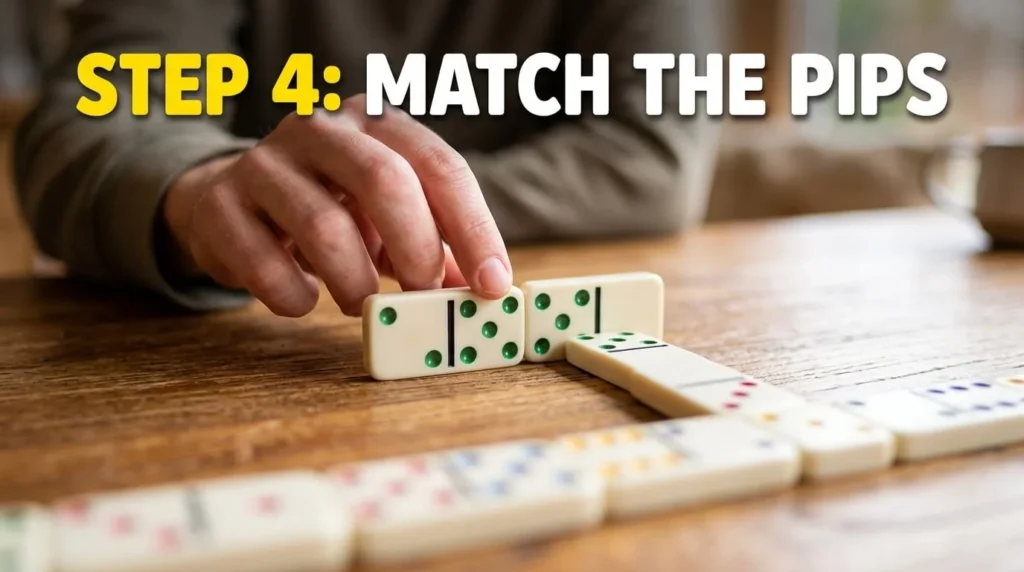
Going clockwise, each player must place a tile that matches one of the open ends. If the line shows a 3 on one end and a 5 on the other, you can play any tile with a 3 or a 5.
The line can grow in both directions. Some groups also allow branches off a double, but beginners should skip this at first.
Step 5: Draw or Pass
If you don’t have a matching tile, you can’t play. In the draw version, you pick tiles from the boneyard until you find a match. In the block version, there is no drawing, and you simply pass your turn.
Step 6: Win the Round
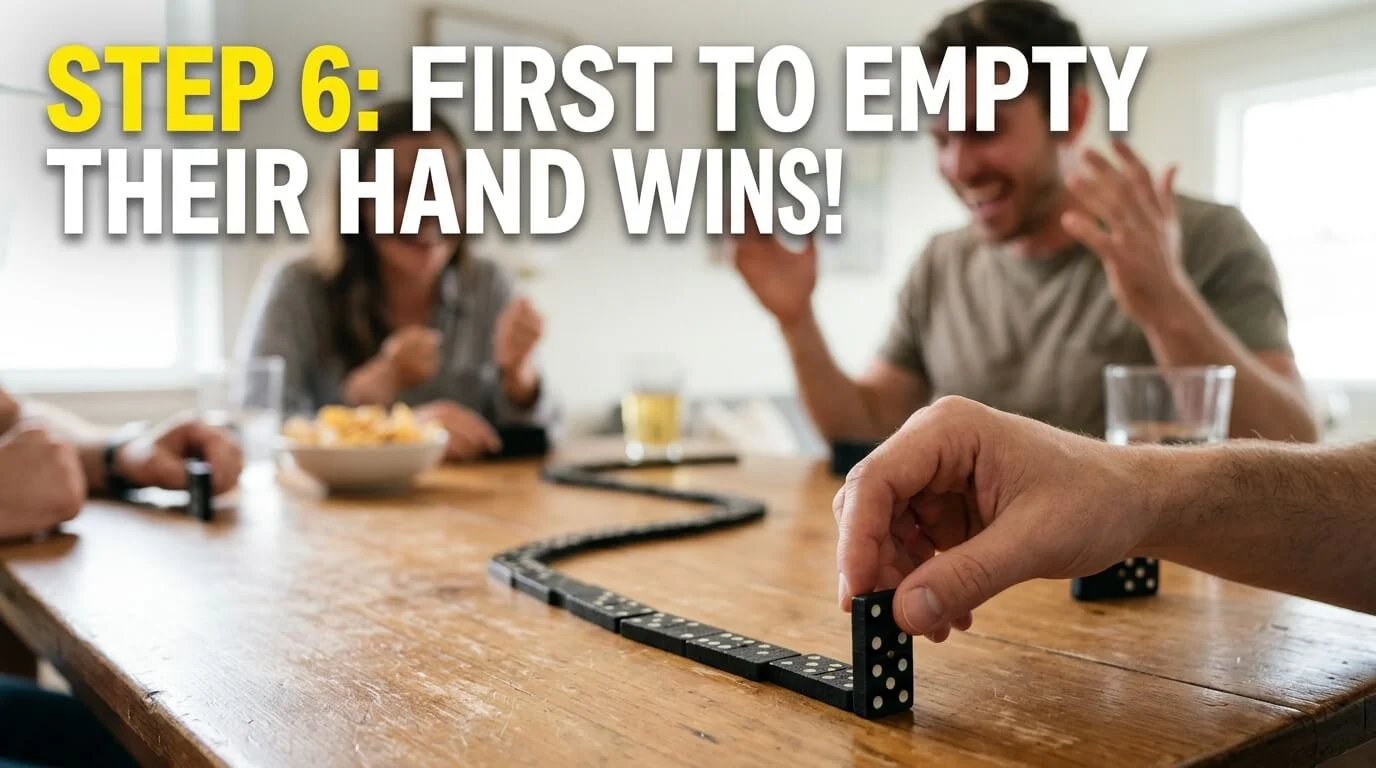
The round ends when a player plays their last tile, or when nobody can move at all. That second situation is called a blocked game. In a blocked game, the player with the lowest total dots usually wins.
Two Popular Ways to Play: Block and Draw Dominoes
Once you understand how to play dominoes at a basic level, you’ll notice most home games follow one of two styles.
Block Dominoes
Block dominoes is the simplest version. Nobody draws extra tiles. If you can’t play, you pass. It’s quick and works well for kids or first-timers. Because you only ever have your starting tiles to work with, memory and planning matter a lot.
Draw Dominoes
In draw dominoes, you keep picking from the boneyard until you find a playable tile. This makes the game slower and a little more luck-based, but it rarely leaves anyone stuck. Most families who play casually prefer this style because it keeps everyone in the game.
How Scoring Works in Dominoes
Scoring changes depending on the version you play, but here is the most common method for a friendly game.
Round winner scores the points left in the other players’ hands. When you go out, add up all the dots on your opponents’ remaining tiles. That total is your score for the round.
In a blocked game, the player with the lowest hand wins and scores the difference between their total and the opponents’ totals.
Most groups play to a target score, usually 100 or 150 points. The first player to reach it wins the match.
A Quick Scoring Example
Say you go out first. Your opponent is left holding a 6-2 and a 3-1. Add those dots: 6 + 2 + 3 + 1 = 12. You score 12 points for that round.
Other Domino Games Worth Trying
After you’ve learned how to play dominoes in the basic form, you can explore other styles:
- Fives (Muggins): Players score points whenever the open ends add up to a multiple of five. It’s a favorite for people who like a little math in their games.
- Mexican Train: Each player builds their own “train” of tiles from a central double. It’s lively and works well for groups of four or more.
- Chicken Foot: A fun group game where doubles open up three extra branches that look like a chicken’s foot.
- Domino Spinners: The first double played becomes a “spinner” that opens four directions.
Each variation uses the same matching idea, so you won’t have to relearn everything.
Simple Tips to Win More Dominoes Games
Knowing the rules is one thing. Playing well is another. These habits will help you pull ahead.
Get rid of heavy tiles early. Tiles with lots of dots hurt you if the game ends suddenly. Play your 6-6 or 5-6 while you safely can.
Hold on to doubles carefully. Doubles can only be matched in one way, so they’re hard to place late in the game. Play them when the chance appears.
Pay attention to what’s on the table. If you’ve seen several 4s played already, there are fewer left in your opponents’ hands. Counting the tiles for each number is the single best habit for improving.
Watch your opponents’ passes. If someone can’t play on a 2 or a 5, they probably don’t have those numbers. Use that to your advantage by leaving those ends open for them to struggle with.
Keep a mix of numbers. If your hand has only one or two numbers, you’ll get stuck quickly. A varied hand gives you options.
Common Mistakes Beginners Make
Almost everyone makes these errors when first learning how to play dominoes:
- Playing the highest tile every time without thinking ahead
- Forgetting to count how many of a certain number are already out
- Holding too many tiles of the same number
- Not agreeing on the rules before starting, such as whether branching is allowed
A short chat about the rules before your first game saves a lot of arguments later.
Frequently Asked Questions
How many dominoes do you start with?
In a two-player game, each player starts with seven tiles. With three or four players, you can start with five or seven, depending on your house rules.
Who goes first in dominoes?
The player with the highest double begins. If nobody has a double, the player with the tile that has the most total dots goes first.
What happens if nobody can play a tile?
The game is blocked. In this case, everyone adds up the dots on their remaining tiles, and the player with the lowest total wins the round.
Can you play dominoes with just two people?
Yes. Dominoes works very well as a two-player game. Each player takes seven tiles, and the rest go into the boneyard if you’re playing the draw version.
Is dominoes a game of luck or skill?
It’s a mix of both. Luck decides which tiles you draw, but skill decides how you use them. Counting tiles, planning ahead, and reading your opponents all make a real difference over several rounds.
Conclusion
Once you’ve seen it in action, learning how to play dominoes takes only a few minutes. Match the numbers, play your tiles wisely, and be the first to empty your hand. From there, the real fun comes from strategy, a little bluffing, and the friendly competition around the table.
Start with block or draw dominoes, play a few practice rounds, and then try a variation like Fives or Mexican Train. Before long, you’ll be teaching the rules to someone else.
Ready to play? Grab a set, invite a friend or family member, and deal your first hand tonight. Share your favorite way to play in the comments below.