

You zip the suitcase, sit on it, and it still won’t close. Ten minutes later you’re pulling out a jumper you probably won’t wear anyway.
Almost everyone has been there. The good news is that learning how to pack a suitcase properly is a skill, not a talent. With a few simple habits you can fit more, keep clothes crease-free, and find what you need without emptying the whole bag at your hotel.
In this guide you’ll learn the exact order to pack, when to roll and when to fold, how to protect fragile items, and the mistakes that quietly waste half your space.
The Quick Answer: How to Pack a Suitcase in 6 Steps
If you just want the short version, here it is:
- Lay out everything you plan to take, then remove about a quarter of it.
- Put heavy items (shoes, toiletry bag) at the bottom, near the wheels.
- Roll soft clothes like T-shirts and jeans. Fold structured items like shirts and blazers.
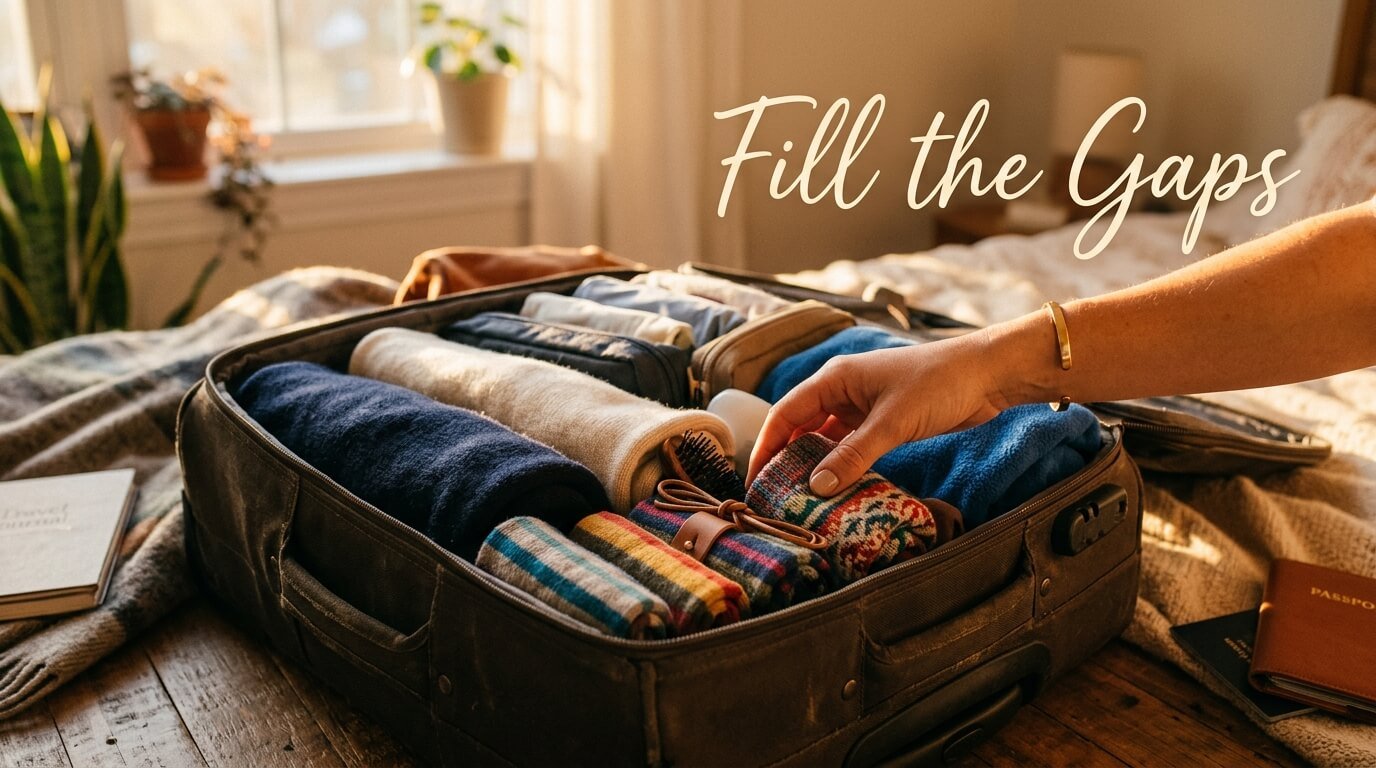
- Fill every gap, including inside shoes, with socks and small items.
- Place delicate and wrinkle-prone clothes on top.
- Keep documents, chargers, and valuables in your hand luggage.
Now let’s go through each step so it actually works in practice.
Step 1: Plan Before You Pack a Suitcase
The most effective packing happens before anything touches the bag. Check the weather for your destination, write down what you’ll be doing each day, and plan outfits around that.
A simple rule that works well: pick a colour palette of two or three neutrals plus one accent. When everything matches, you need fewer items because each piece works with several others.
Choose the Right Suitcase Size
Packing more into a bigger bag is tempting, but a large case simply invites overpacking. Match the bag to the trip:
- Carry-on (about 35-40 litres): 3 to 7 days
- Medium check-in (about 60-70 litres): 1 to 2 weeks
- Large check-in (80 litres and up): 2 weeks or longer, or trips with bulky gear
Always check your airline’s size and weight limits before you buy or pack, as they differ between carriers and change from time to time.
Step 2: Lay Out Your Items and Cut the Extras
Put everything you think you need on the bed. Then take away roughly 25%. This is the single most reliable trick I know for lighter luggage, and most people find they never miss what they left behind.
Ask yourself one question for each item: Will I wear or use this at least twice? If the answer is no, and it isn’t essential (like a rain jacket or medication), it stays home.
Step 3: Rolling vs Folding — Which Is Better?
This is the most argued question in packing, and the honest answer is that it depends on the clothes.
When to Roll Clothes
Rolling works best for soft, stretchy fabrics: T-shirts, jeans, leggings, jumpers, and sportswear. Rolled items are easy to slot into gaps and let you see everything at a glance.
When to Fold Clothes
Fold shirts, blouses, trousers, and anything structured. A neat fold along natural seams helps them keep their shape. Stack folded items flat in the bottom half of the case so they don’t get crushed.
The Bundle Method for Formal Wear
For suits, dresses, and wrinkle-prone garments, try bundle wrapping. Lay the longest item flat, place smaller items in the centre, then fold the outer layers around them. Because nothing has a sharp crease, wrinkles are far less likely.
Step 4: The Correct Order to Pack a Suitcase
Order matters as much as method. Think of your bag in layers.
Bottom Layer: Heavy Items
Shoes, toiletry bags, and electronics go at the bottom, close to the wheels. This keeps the weight balanced so the suitcase doesn’t tip over when you pull it upright.
Middle Layer: Everyday Clothes
Add your rolled and folded clothing here, packed tightly with no loose space. Tuck socks, underwear, and belts into gaps around the edges.
Top Layer: Delicate and Formal Items
Blazers, dresses, and anything that wrinkles easily should sit on top, where nothing presses on them. Put the items you’ll need first (pyjamas, a change of clothes) here as well.
Step 5: Use Every Bit of Space
Stuff Your Shoes
Shoes take up more room than almost anything else, so make them work. Fill them with socks, chargers, or small accessories. Put each pair in a shoe bag or shower cap so dirty soles don’t touch your clothes.
Try Packing Cubes
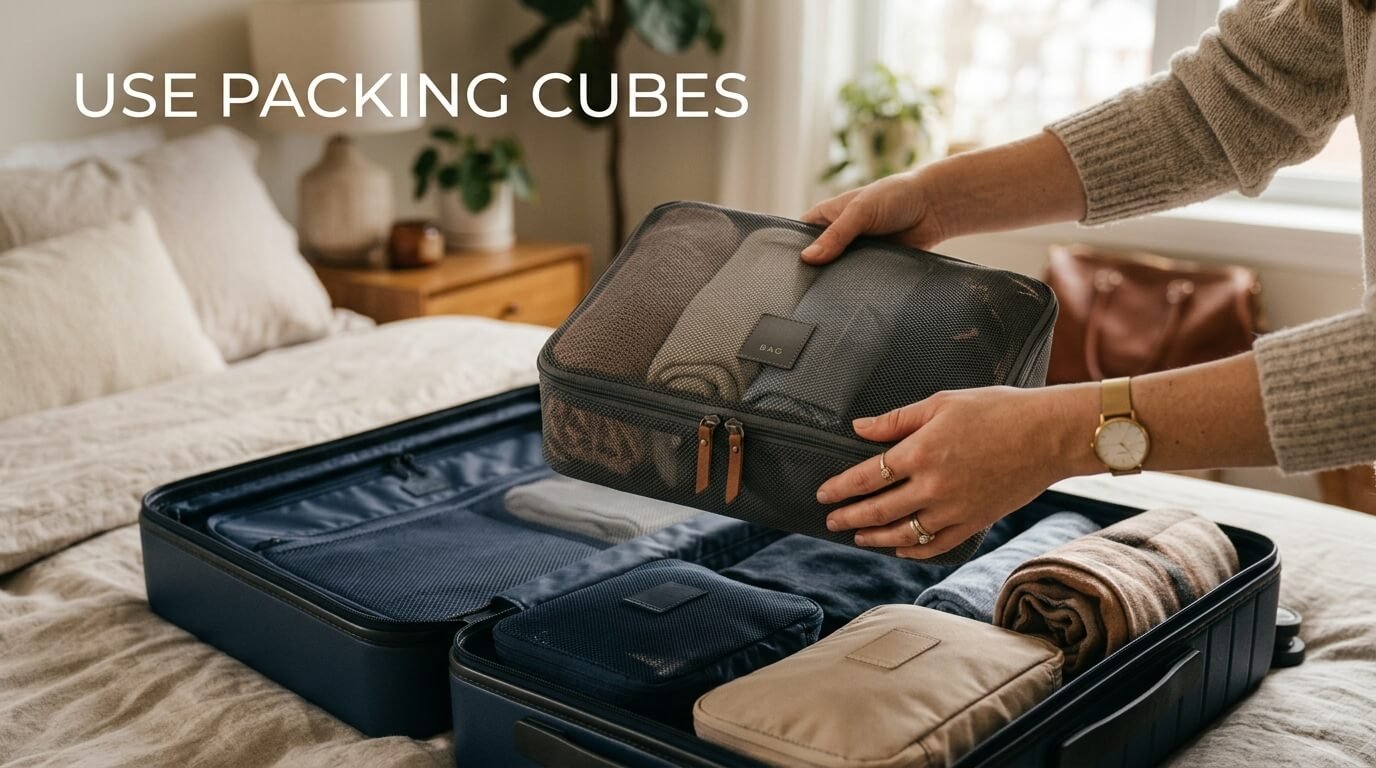
Packing cubes are one of the few travel gadgets that genuinely earn their place. They keep categories together (tops, bottoms, underwear), and compression versions squeeze out extra air. They also make it easy to grab what you need without unpacking everything.
Pack Toiletries Safely
Leaks ruin trips. Press the air out of bottles, tape the caps, and seal each one in a zip-top bag. If you’re flying with hand luggage only, remember the liquid rules: containers usually need to be 100 ml or smaller and fit in one clear resealable bag. Rules vary slightly by country, so check before you go.
Step 6: How to Pack a Suitcase Without Wrinkles
Creases are a common complaint, but they are manageable:
- Choose wrinkle-resistant fabrics like polyester blends or merino wool.
- Place tissue paper or a dry-cleaning bag between delicate layers.
- Don’t overfill; packed too tightly, clothes crease under pressure.
- Hang clothes in the bathroom while you shower. The steam relaxes light wrinkles.
Step 7: Protect Fragile and Valuable Items
Wrap breakables (perfume, souvenirs, glass) in soft clothing and place them in the centre of the case, surrounded by padding. Never pack cash, passports, jewellery, medication, or laptops in checked luggage. These go in your hand luggage, always.
Common Mistakes When Packing a Suitcase
After years of watching people struggle with this, the same errors come up again and again:
- Packing “just in case” outfits you’ll never wear
- Bringing full-size toiletries when hotels provide basics
- Leaving empty space at the corners, which lets everything shift
- Forgetting room for souvenirs on the way home
- Packing the night before, which leads to rushed choices
Frequently Asked Questions
What is the best way to pack a suitcase to fit more?
Roll soft clothes, fold structured ones, and fill every gap with small items like socks and chargers. Using packing cubes with compression adds a little more space, and removing a quarter of what you first planned to bring saves the most.
Is it better to roll or fold clothes in a suitcase?
Neither wins outright. Rolling saves space and suits casual fabrics, while folding protects shirts, trousers, and formal wear. Most experienced travellers use a mix of both.
Which items go at the bottom of a suitcase?
Heavy items such as shoes and toiletries should sit at the bottom, near the wheels. This keeps the case stable and stops heavy things from crushing your clothes.
How can I stop clothes wrinkling in a suitcase?
Pack wrinkle-resistant fabrics, place delicate garments on top, use the bundle method for formal wear, and avoid overstuffing. Steam from a hot shower removes light creases on arrival.
How early should I start packing?
Start planning two or three days ahead and do the final pack the evening before. This gives you time to wash anything missing and avoids last-minute panic.
Final Thoughts
Knowing how to pack a suitcase well is really about three things: bringing less, packing in the right order, and using every bit of space. Once you’ve done it a few times, it becomes almost automatic, and you’ll arrive with clothes that are ready to wear and a bag that’s easier to carry.
Ready to try it? On your next trip, lay everything out, cut a quarter, and follow the steps above. Then share your best packing tip in the comments. It might help another traveller.